• About

always returning

~ a journey from head to heart

always returning

Author Archives: tonysee

Finding and Restoring

02 Sunday Sep 2018

Posted by tonysee in The Next Mile

≈ Leave a comment

What is the catalyst for a person to stop believing in God? More likely it is because of the laws of the Church and less likely it is because of believers being good to them by loving them unconditionally. When a person leaves the Church, it is often in disillusionment over the acts of self-righteous believers. Rarely will one run away from being truly loved.

Believers are not all the time wrong. In fact they is a lot to admire and learn from their passion and conviction in believing. Non-believers and people who have left the Church are also not wrong. We need to be compassionate and understand the extenuating circumstance or environment they are in for them to respond in disbelief. We are after all human. It is precisely because we are human that we need laws, but not to rule us but to guide and protect.

There is actually only one law given and needed, and observing it immediately guide and protect every person. This commandment is to love one another with no buts. “It is all that is good, everything that is perfect, which is given us from above; it comes down from the Father of all light; with him there is no such thing as alteration, no shadow of a change.” (Second Reading).

But there is also no such thing for our human nature not to alter. It is tough to remain uncontaminated by the world. We ring fence ourselves with self-love and this is a change that cast long shadows obscuring the spirit of this law. From the Father of all light, he sent his Son into the weakness of human nature not to abolish the law but to fulfil it.

When we go out in search of the lost and the drifted, we are called not to preach the law with words but to fulfil it with action. It always degenerate into an endless argument of self-values between believer and disbeliever when only words and doctrines are used. When we do not address the heart, we argue without God in the equation. Action balances the emotional heart with the thinking intellect. Action fulfils the law: it allows love to flow, and to touch. It turns words into convincing experience, laws into the spirit of it.

When we find the lost and the drifted, the first restorative action is be compassionate. When a person is searching for God, the person want to be found. And when a person left because of Pharisee-like behavior pertaining to the law, this person will hide from being found if they feel judged or condemned as sinful. The fulfilment of the law of love excludes this.

When we go out to find and restore, we will go with the wisdom that the extenuating circumstance or environment that led them away have now mired them in a more desperate situation where they are now willing to seek God. The believer must bring God’s restorative action to them. They must see the compassionate face of God in the believer and not the face of a Pharisee. Otherwise they will be disappointed and disillusioned all over again.

“Pure, un-spoilt religion, in the eyes of God our Father is this: coming to the help of orphans and widows (the broken of this world) when they need it, and keeping oneself uncontaminated by the world.”

Finding and Restoring

Searching for the lost and drifted: Finding and Restoring

22nd Sunday in Ordinary Time
Drifted and Lost

26 Sunday Aug 2018

Posted by tonysee in The Next Mile

≈ 2 Comments

Many people have gone away from the Church. Some have chosen not to believe in God anymore. Some just do not have enough belief in themselves to patiently remain in faith, hope and trust. Plus the world is fast changing. First internet, now social media, opinions, arguments, analysis, persuasion; they are fast changing our values and morals. Today the gulf between believers and disbelievers is wider than ever before.

We are into a world of instant solutions and perhaps unrealisingly into self-gratification. When we go away, we go at optic fibre speed letting go of our anchor in God and floating into an ocean of realities. Realities come wave after wave and as long as we surf on the crest of each wave, we are okay without God … until a big wave hit us to leave us drifted and lost.

“If you will not serve the Lord, choose today whom you wish to serve.” (First reading)

The tug of war between believers and disbelievers take place in the reality of life on a platform of personal issues. In the past, when we are down and out it used to be easier to come back to God because there were few other alternatives, and we were deeper in our culture of belief. Today it has become more complex due to the endless multiple alternatives available and the tug away from God is far stronger.

The Church continues to be open and welcoming. It is physically present in many places. We preach from the pulpit about salvation presenting persuasive knowledge for people to come back to believe in God. We stand at the door telling everyone to come in but in reality, they aren’t even passing by anymore. Words without action is hollower than ever before. We must not remain lost in the cloud of knowledge.

We need to get out into that widening gulf to reach the drifted and lost. We need to make faith an experience. We must realize that knowledge or catechism is not the first thing they need. They need a helping hand to address their personal issues. They will do better if they first have an encounter with love. They must experience that the Lord has not abandoned them. Believers are agents of this spirit.

Many people are caught in their own disbelief. When the waves take them out, often they are spiritually and emotionally too weak to find God on their own. The church by then is too far away from them. We are the church and when we go to meet them on the platform of their personal issues, we bring the Church to them. When we do so, they experience an unconditional acceptance for who they are. Only then can they begin their journey back into believing.

Knowledge is important but it is an encounter with the Lord that convinces. Only when the heart is convince will the disbeliever then be open to knowledge. It is also only after an encounter with the Lord when we hear his question, “What about you, do you want to go away too?” When we stay to believe we will no longer drift but are found.

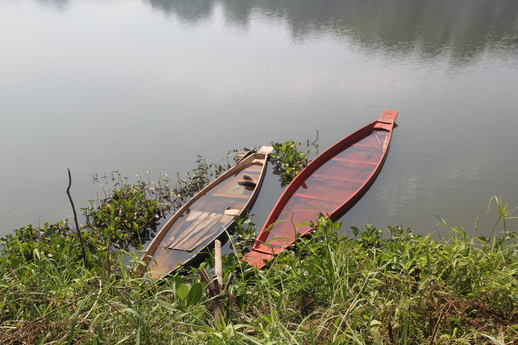
drifted and lost

Drifted and Lost

21st Sunday in Ordinary Time

Bread of Wisdom

19 Sunday Aug 2018

Posted by tonysee in The Next Mile

≈ 1 Comment

When I was distressed by the expectations to get good grades in school, a wise person shared that in a class of 40 pupils, only one can top it and unfortunately another has to end up in fortieth. In life, she went on to say, some will become doctors while some will humbly accept their vocation as cleaners. Both vocations are however important and necessary for the world to function. Her wisdom stemmed from her experiences that in life God has a place and a role every person.

Wisdom is to know our position in the natural hierarchy of life. Wisdom is the humbleness to accept our role. Wisdom is the confident self-empowerment to make meaningful contributions to the lives of others. Wisdom is the selfless action of sharing our gifts with others. Wisdom is not the cunning heart devising ways to climb the ladder of life at the expense of the other. Wisdom is to know that the will of God resides in us.

“Be very careful about the sort of lives you lead, like intelligent and not like senseless people. This may be a wicked age, but you redeem it. And do not be thoughtless but recognize what is the will of the Lord.” (Second reading)

The will of God calls for us to live good, meaningful lives. We are created to complement one another. We have different skill sets that we are to selflessly use for the common benefit of everyone. The will of God is that we live in this harmony.

But everyday this harmony is broken because of the weak will of man. Instead our desires cause us to compete with one another. We jostle for higher positions in this ladder of life. We encroach on the space of the other squeezing them to struggle to fit into space that is rightfully theirs. Wisdom says that this is not the right way.

Wisdom is the compass to help us navigate through Man’s desires while preserving the harmonious relationship God wills for all of us. But inevitably relationships will suffer simply because we are not perfect. Wisdom is the ability to separate necessary friction from unnecessary fallouts.

Every day we are fed wisdom. Our experiences as we go through life is bread for wisdom. Experiences tweak our heart. They work the accuracy of the compass. As we grow older we can grow in wisdom. ‘Can’ because it is our choice if we will allow God to remain in our life.

Every day we are fed the bread of life. We are not created to be left defenselessly alone. God is with us. And he comes to us daily in a special way to remain in us and invite us to remain in him. Wisdom resides in us.

“He who eats my flesh and drinks my blood lives in me and I live in him. As I, who am sent by the living Father, myself draw life from the Father, so whoever eats me will draw life from me.” (Gospel)

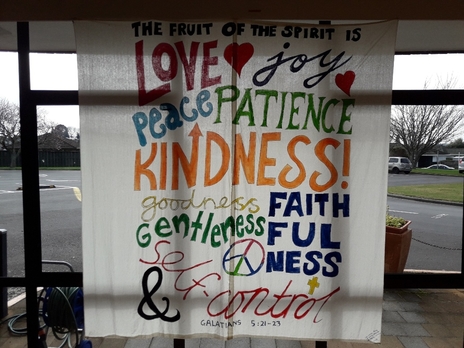
He is the bread of wisdom. Eat it and be nourished with love, joy, peace, patience, kindness, goodness, gentleness, faithfulness and self-control. When we have all these we will accept ourselves and be truly happy for who we are. It really doesn’t matter which position we are in the classroom of our worldly life.

Fruit of HS

20th Sunday in Ordinary Time

Bread of Reconciliation

12 Sunday Aug 2018

Posted by tonysee in The Next Mile

≈ 1 Comment

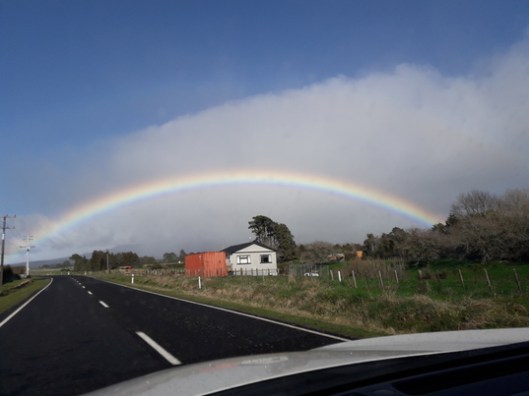
I was on the road this week and was greeted by this beautiful rainbow. What promise did this rainbow hold for me? I had grown up with rainbows symbolizing a promise of life having been taught about that great arc which appeared over Noah’s ark. The road I travelled reminds me of my earthly journey through life. The beauty is there to be appreciated but relationships with our fellow travelers are an essential part of it.

Relationships are the colors of the rainbow. Good relationships fill our personal life with love. Louis Armstrong sang, “The colors of the rainbow so pretty in the sky are also on faces of people passing by. I see friends shaking hands saying how do you do. They’re really saying I love you”.

Colors fade very quickly when we do not have true love for one another. The nature of this earthly journey is that it is fraught with challenges. Throughout life these will create burning friction with one another. Every relationship goes through storms, sometimes it even floods. Love is the balm to cool and soothe the burns. It restores the rainbow after the rain.

“Never have grudges against others, or lose your temper, or raise your voice to anybody, or call each other names, or allow any sort of spitefulness. Be friends with one another, and kind, forgiving each other as readily as God forgave you in Christ”. (Second reading)

Forgiveness is like a valve in the heart. It must always remain open otherwise the heart cannot give life. Bitterness is to allow ill feelings to fester refusing the balm of life. Bitterness is like a disease that affects the valve. Reconciliation is the cure to this disease. When people say sorry, they’re really saying I love you.

Reconciliation fulfils the promise of new life. It restores us. And from lessons learnt we embrace a new wisdom to navigate the challenges ahead in our relationships. Reconciliation is like yeast in making bread and if we do not get rid of every bit of bitterness, however tiny, the bread of life will not rise in us.

Frankly, relationship IS life. Our daily happiness, inspiration, courage, strength and hope come from happy relationships. But we must first understand the source of the balm that is love. And it comes from God personified in Christ, “forgiving each other as God forgave you in Christ”. He gives us the bread of life. We must eat it. Otherwise we will continue to travel the road of our earthly journey like the walking dead.

In today’s Gospel, Jesus said, “Stop complaining to each other” and then he went on to say, “I am the bread of life. Your fathers ate the manna in the desert and they are dead; but this is the bread that comes down from heaven, so that a man may eat it and not die”.

Eat the bread of reconciliation and restore our beautiful rainbows. There is truly a pot of gold at the end of the rainbow: it is eternal life.

rainbow

19th Sunday in Ordinary Time

Bread of Affirmation

05 Sunday Aug 2018

Posted by tonysee in The Next Mile

≈ 1 Comment

It is in our human nature to be always hungry for affirmation and thirsting for recognition. We look for signs to affirm ourselves that we are well liked and are successful. The more affirmed we are, the better we feel about ourselves. Affirmation lead us into happiness.

Some people believe in God, some people don’t. Regardless, God believes in every human person. I will always have a huge respect for people seeking the Divine in other religions especially when the life they live is full of goodness. Today I like to focus on people who have encountered the Word of God but choose rather to live on bread alone. Worldly bread.

Some people are distanced from their belief in God because they are enjoying the affirmation they receive for their worldly achievements and possessions. They are happy, they feel good and God is not relevant in life. They continue to fuel this worldly happiness by following illusory desires. Until the path of worldly happiness they follow reaches a cul-de-sac.

Man’s affirmation we realize will become harder to achieve the further we wander down the path. It is simply because the target keeps shifting. We either shift it ourselves or society move it for us. Having more always become needing more. This desire is illusory, deceitful.

God’s affirmation is easier to attain for any person. It is always there, a constant. He is always encouraging us especially when we struggle in life and when we missed that target of worldly happiness. But for some of us, we do not see him until our path reaches the cul-de-sac. Whenever that will be, the guarantee is that God will be there waiting.

So what sign should we look out for to believe in God? It is precisely this. We must embrace this affirmation that whoever we are today we are good enough for God. Once we do, believe it or not, his acknowledged presence in us will be like the yeast in bread.

Desires in worldly things will begin to decrease. Worldly life becomes a bit less complicated while desires for God’s works increase in us. This is yeast-like transformation that gives us new life. It begins with saying that “I want to believe in you” because God truly believes in us.

With new life, we are exchanging old desires for new desires, old self for a new self. We live better because we no longer need to compete for affirmation in worldly things. We are no longer hungry nor thirsty because we now have the bread of life.

“I am the bread of life. He who comes to me will never be hungry; he who believes in me will never thirst”

This is the bread of affirmation. It is yeast to true and lasting happiness.

bread viet 3

“Man must not live on bread alone but on every word that comes from the mouth of God”

18th Sunday in Ordinary Time

Small tiles

29 Sunday Jul 2018

Posted by tonysee in The Next Mile

≈ Leave a comment

Every small act of good we do carry an impact far greater than we can imagine. I believe in the presence of the Divine in our life. Our small good acts are used in another person’s life to counter their negative experiences. Sometimes small acts are catalysts of a major transformation. The Divine does not cause bad things to happen to us but He uses the good of this world to allow us to feel his presence.

When our time on earth comes to an end, our life is completed. When we sit in heaven and look back on life we will see the many good acts of others, often smallish, used by the Divine to intervene in our life to redress the bad and put us back on the path of our salvation. We will see how our own good acts have been used to affect others often to a magnitude beyond the expectations of our humble offering.

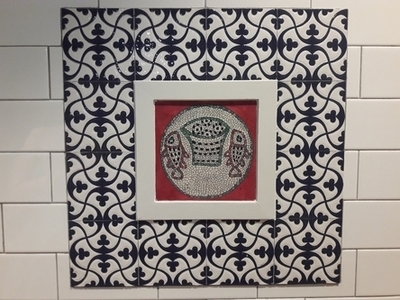
Our lives are intertwined. Whatever we do will impact not only the people around us but is far reaching even to people we are not acquainted with. Our lives are like a large orchestra, each playing a small note seemingly unimportant but together make the music great. We are also like small tiles, some plain some designed, all indivually different in what we can offer. When the world comes to an end there will be an enormous beautiful mosaic intricately made up of us small tiles depicting how we were interwoven into each other’s lives.

The small boy in today’s gospel wasn’t really thinking too much about the whole big picture. We too should not be self-conscious especially into thinking what we can only offer is too little, too small. Or worse, we must not live in fear of losing everything when we start to do good by giving.

A key diver who helped in the rescue at Tham Luang magnanimously said the divers are no heroes but are merely people with a different skill set and are humbled and happy to give something back to the community. They offered what they had in their basket, their own 5 barley loaves and 2 fishes. I keep mentioning Tham Luang because there is so much to learn. There is so much to see and meditate on if we look deeper at the completed picture of that whole story.

The cleaners and cooks, the drivers and the washer women, and many more came like ‘small boys’ never imagining the eventual big picture but only humbly offering selflessly what they have. The end result, can we say, is like the multiplication of the 5 loaves and 2 fishes that fed a love story to the entire watching world? Can we claim this love story to be scripted by the Divine who took each person’s humble offering, blessed and shared it for the whole world to be satisfied of a hunger for a way to live?

We live side by side like small tiles in a mosaic. “Bear with one another charitably, in complete selflessness gentleness and patience” (second reading). We cannot fit into the mosaic of life when we do not love the other, when we are selfish and not selfless. We must smoothen our edges with gentleness by doing good to one another, and be patient for the eventual outcome of life. We must act with the innocent mind of that small boy.

We must also be like the people in the crowd eager and expectant, listening and searching, wanting to believe that the Divine is present in our every day life, patiently knowing that we are all part of his big picture.

We are merely small tiles but looked after and polished by the master artist. We fit perfectly into the beautiful mosaic of life eternal when we trustingly give away our very own 5 loaves and 2 fishes.

tile

Small tiles coming together framing the multiplication of the offerings of our humble skill sets in the good we do.

17th Sunday in Ordinary Time

Kao jai mai

22 Sunday Jul 2018

Posted by tonysee in The Next Mile

≈ Leave a comment

In Thai this phrase ask, “Do you understand?” Here is something thought provoking when we have the literal translation: ‘Kao jai’ mean ‘enter into heart’. Not being a language expert, I shall not venture beyond this literal translation. Here is the provocation: to learn and to understand, especially about morals and values, requires more heart than head. Any teaching imparted must touch the heart.

Tham Luang cave touched our hearts. It taught humankind a better way to live. It showed us a better route for our earthly journey. Hearts were moved with pity, and pity moved humans into action. We were taught something about life, not with words but with deeds. Words were not necessary as we had ‘kao jai’ the teaching. It had already entered our heart.

We hear debates everywhere in public places sometimes degenerating into arguments. Scholars intellectually trying to prove a point. Believers trying to convince disbelievers. Church goers trying to woo back those who had wandered away. Standing on an intellectual mount has its dangers. Head alone risk us descending to being condescending and judgmental, immediately contradicting the morals and values we are trying to teach. Our overzealousness to prove everything by words will only result in further distancing the heart of those we are wooing.

The gospels were written post-Jesus. Act came first, words followed. Language used to try to explain the lessons of life taught by the action of Jesus. Today’s gospel passage tell us that Jesus sat down to teach because he was “moved by pity”. Love flowed from his heart for him to impart his teachings into the hearts of those listening. Deed is a better vehicle than word.

Taking from a friend’s post this week, Fr Ambrose Vaz said, “Our theology is complete and sound. We just lack the language to fully express it”. Spot on. If we are always moved by pity, we will be much closer to fully expressing it.

Humankind has progressed intellectually by leaps and bounds, so much so that we believe more in our own powers of persuasion. In trying to convince a disbeliever we sometimes play with the power of words but without action. When we do not practice what we preach and are not moved by pity, we put more distance between the disbeliever and us. In this widening divide, we hear the echo of the first reading, “Doom for the shepherds who allow the flock of my pasture to be destroyed and scattered” (first reading).

Christ came to woo the hearts of the disbelievers. He closed up the distance not by word but by act. “In Christ Jesus, you that used to be so far apart from us have been brought very close, by the blood of Christ” (second reading). The blood of Christ is the pity that flowed from him. It is an act which theology is based on but language unable to fully express. Are the words, “it is an ultimate act of selflessness” enough to give life? Barely enough to match the impact a small act of self-giving will have on the other.

We are all called to be shepherds, all of us part of humankind wandering like sheep in search of a better way to live, to find a better route for our earthly journey. If we are truly believers, we must fully express it in acts of selflessness by allowing pity to flow through us to the other person. And pity can only flow through deed.

Remember the saintly quote, “Preach the Gospel at all times, if necessary use words”. If I am a disbeliever, I am more likely to be won over by an experience of faith and an encounter with pity rather than from a debate of the intellect. In those ways the heart of the disbeliever is touched. Every teaching must enter into heart.

Kao jai mai.

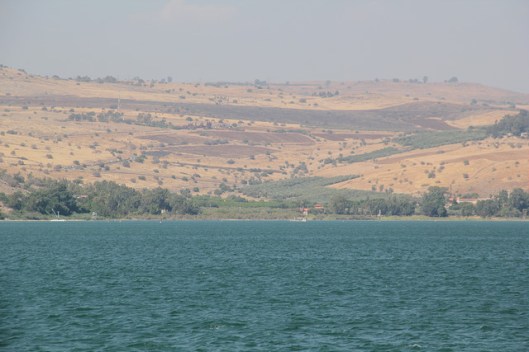
Lolling hils

On the Sea of Galilee and the gentle rolling hills where Jesus “moved with pity” taught

16th Sunday in Ordinary Time

“Hooyah”

15 Sunday Jul 2018

Posted by tonysee in The Next Mile

≈ Leave a comment

We were fixated these past two weeks as our hearts were drawn into Tham Luang cave. We were gripped in anxiety until tension dissolved into ecstasy. In this episode of life, something quite extraordinary came out of humankind. At the jubilant end, Thai Navy Seals posted, “We are not sure if this is a miracle, a science, or what. All the thirteen Wild Boars are now out of the cave”. I choose “miracle”.

I have always lived with the belief that there are no coincidences. Luck is the far-sightedness of the Divine. It was reported that the British diver who found the boys was laying guide lines in the water and his rope had come to an end coincidentally at the place where the boys were. Coincidence or a moment the unseen guiding hand of the Divine became visible? Nonetheless, prayers were answered, search became rescue.

This is an incredible story of hope and love. We were captivated by the human spirit, charmed by the love that flowed out of it. From the divers to the cleaners, there were multiple little stories of courage and bravery, of kindness and generosity. They came from all over Thailand and from the world. No one came to profit, only to give. One, Sanam Gunan came and gave his life. One human virtue stood above all: selflessness.

This is a timely lesson for all of us in a world falling out of orbit, gravitating towards self-centeredness. In modest Mae Sai, poor people taught the rich how to live. A small village showed the big world that there is a better way. Out of the poverty as one individual, there was richness in simply coming together when everyone selflessly put together what they know how to do, however humble that skill set may be.

We encountered great examples of selflessness. Valeepoan Gunan who lost her husband urged the boys not to blame themselves. Coach Ek, a convenient figure to lay blame on was instead appreciated by parents like an angel sent to be the guardian of the boys and was touchingly told, “When he comes out, we have to heal his heart. My dear Ek, I would never blame you.” Then there were the poor farmers who allowed their rice fields to be flooded, many rejecting compensation wanting simply to give.

No claims of glory, no blame, no costs, no personal rights, no compensation. Just gratefulness. There is something powerful for humanity here. Love at its purest flowed. When mission impossible became mission possible, leader of the rescue operation, Mr Narongsak said, “This mission was successful because we had power. The power of love”. Indeed, and who and what or can science dispute this?

Love has its source in God. God does not claim for us to believe in Him. He does not rule us with an authority that forces us into submission. It is our free choice. We can choose to see him or to hide him in disbelieving coincidences. We can choose to walk away from Tham Luang cave not believing that God does exist.

In a chaotic finale to the rescue, as the last rescuers walked out of the cave it suddenly began to flood rapidly. Locals believed it was divine intervention, “It was protected until the end”. I guess they chose “miracle” too.

God will just continue to try to win our hearts. If He doesn’t, He will just shake off the dust from his sandal and continue to wait in hope for us. At Tham Luang, we saw the kingdom of God in our midst. We experienced what the world would be like when true love freely flows. We do not need science or miracle, just our true uncorrupted human spirit of selflessness. This is what we carry in our backpack through the journey of our earthly life. This is the power of love. Hooyah.

“The basic human virtue of helping one another in a spirit of generosity and love, is in itself a power of formidable strength which can make humankind go on living together in everlasting peace.” – His Majesty, King Vajiralongkorn.

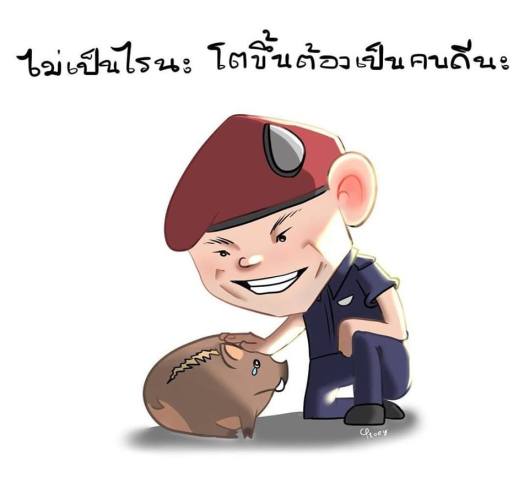
Saman Gunan

A drawing in tribute of Sanam Gunan telling the kids not to worry but grow up as good people. Such is the touch of love, an invaluable lesson we learn from Tham Luang.

15th Ordinary Sunday

Wasn’t he the one always at the bar?

08 Sunday Jul 2018

Posted by tonysee in The Next Mile

≈ 2 Comments

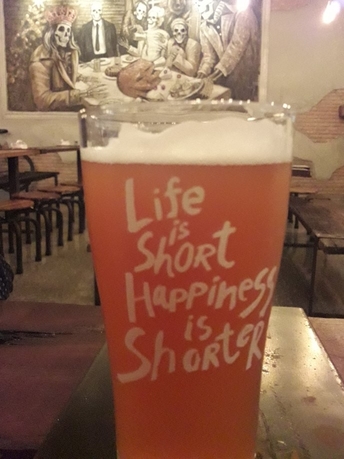
I used to proclaim that, “Happiness is a pint of beer away!” Life was a carnival. Bright lights, boozy nights. Young, in good health, and success trending up, there was a feel of invincibility. Enter a bar and your favorite beer is immediately thrust into your hand. They know me. They make me feel special. Image is important. It feeds the ego.

I was brought up living a good Catholic life. But in the early years of my working life, I lost my way. I was materially successful before I became spiritually matured. The image of invincibility did not include an image of God. It is embarrassing to proclaim that you go to church. God is kept hidden and at a distant, my Catholic identity buried. ‘It’ is just a religion.

I situate myself into today’s Gospel but with a personal slant. “A prophet is only despised in his own country, among his own relations and in his own house”. I reflect on my return to active church ministry after years of living with my Catholic identity hidden.

How and why I came back is a story for another day. Today’s passage somehow reminded me of the sheepish embarrassment I felt when I began physically spending more time in church and disappearing from my regular drinking haunts. It was too uncool to proclaim that I was serving the church. I felt awkward at my double identity in my own network of business associates, among my own relations and friends and in my own home. “This is the carpenter, surely”. This is the one always at the bar, surely?

Embarrassment is like a capsule. You want to stay in and hide but it feels so restrictive. Yet you are too shy to emerge from it. We hide because we don’t want to lose that strongman image. We are embarrassed because of our past life style. But many of us are embarrassed simply because we feel we are not qualified. We are not fit, not capable, not competent, not skilled and not experienced to do God’s work maybe because of our low educational background or our low social standing. We are mistakenly embarrassed because we have never excelled in anything we did.

Embarrassment is more like a cocoon. Embarrassment keeps us hidden and force us to internalize the changes in us. During this time, God’s graces are busily working to restore us, repairing our low spiritual self-esteem. Then the graces work to affirm us, to tell us and empower us that we can do it. Embarrassment is a time period when graces flow deep into us to complete our transformation. When we are ready, He pushes us out of the cocoon and we emerge a colorful butterfly.

“‘My grace is enough for you: my power is at its best in weakness.’ So I shall be very happy to make my weaknesses my special boast so that the power of Christ may stay over me, and that is why I am quite content with my weaknesses, and with insults, hardships, persecutions, and the agonies I go through for Christ’s sake. For it is when I am weak that I am strong.” (Today’s second reading).

My colorful past used to embarrass me but is now a valuable catalogue of experiences I share with others in their cocoon. I came out of my own cocoon some time ago and found true happiness in life. His graces have dramatically changed my life, not by taking away who I am but by making me fuller for who I am, even utilizing all my weaknesses to make me strong. It is quite evident that parts of me are left untouched; He never took away my pint of beer. Indeed, happiness is still a pint away!

beer

14th Ordinary Sunday

Live life off the Cross, not on it

01 Sunday Jul 2018

Posted by tonysee in The Next Mile

≈ Leave a comment

In life we know that in order to find true happiness we need to be generous to others, in ways both materially and spiritually. I think most people in honesty want to. But people are such that we need to accumulate enough for ourselves before we consider giving some to others. We try to figure out how much enough is really enough. Often, we get lost in our surpluses.

“This does not mean that to give relief to others you ought to make things difficult for yourselves: it is a question of balancing what happens to be your surplus now against their present need, and one day they may have something to spare that will supply your own need”. (Today’s second reading)

This is not a new savings plan with a guaranteed return. At least, not materially where we can draw back what we have given when we are in need. To use a ‘people term’, this is an investment, but a spiritual investment. It pays out fulfilment and it is life giving to others and self.

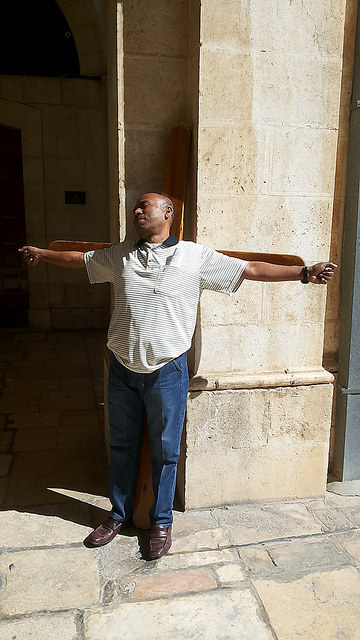
What holds most people back to give generously to others (mistakenly) is sometimes the image of the crucifix. To become good people – “to give relief to others” – does not mean a life of suffering. Too often, we practice our faith stuck at the foot of the cross. We are not called into ritualistic penance. Becoming good people of faith does not mean to live our life on a cross.

The crucifix is a reminder of his love that will give relief to our lives. Blood poured in that image to take away anything that brings death to our life. Love flowed to give us true happiness. He rose to conquer all death. “Death was not God’s doing, he takes no pleasure in the extinction of the living” (first reading). He takes pleasure to see us alive, to live life happily and joyfully. He wants us to live off his Cross.

However in reality we do get lost in the surpluses of this world. When we do not know when enough is enough, we disconnect ourselves from the flow of his love and our faith life hemorrhages. Slowly happiness is bled out of us. It may take 12 years, or sometimes even longer. Until desperation, sometimes accompanied by physical pain, drives us deep into submission to want to admit God back into our life. Desperate hope tells us it’s enough if we can just touch his clothes.

We are never alone in our desperation. When our spiritual surpluses run dry, someone will come with something to spare for our own need. God will send a Jairus to us to lead and plead on our behalf because we ourselves have become too poor spiritually. God takes no pleasure in seeing us live a life devoid of true happiness. He will always say “Talitha kum!” and continue to love us as though we are just a little girl in faith. Live and be rich in our spiritual life!

The world today is hemorrhaging simply because people cannot tell when enough is really enough. Going this way will only guarantee that we will live life on a cross. Be generous, allow his blood to flow through our lives, and live life off the Cross.

adam


13th Sunday in Ordinary Time

← Older posts
Newer posts →

Recent Posts

  • Total giving
  • Mission involves moving out
  • Re- manifestation
  • Resolution to return to faith life
  • Christmas: Bringing the Gift of Change

Categories

  • The Next Mile
  • Uncategorized

Recent Comments

John Bennett's avatarJohn Bennett on Encounter
Fr. Aangelo's avatarFr. Aangelo on Advent:  Faith – Prepare a way…
Katy's avatarKaty on Encounter
Anthony Wong's avatarAnthony Wong on You MUST rejoice

Archives

Blog at WordPress.com.

  • Subscribe Subscribed
    • always returning
    • Join 69 other subscribers
    • Already have a WordPress.com account? Log in now.
    • always returning
    • Subscribe Subscribed
    • Sign up
    • Log in
    • Report this content
    • View site in Reader
    • Manage subscriptions
    • Collapse this bar
 

Loading Comments...