Meaninglessness

The search for happiness is somewhat like a dog chasing its own tail. It will never catch it, we will never find it. Unless we discover the meaning of this life. For many of us, life is stuck in a routine. I felt this way in my mid-life. Then, I had a young beautiful family and a job that pays for a few luxuries but yet deep inside me there was an emptiness. I questioned an existence that revolved around a job to pay the bills, and just to have do it all over again every month. I was not truly happy.

In today’s first reading, “Job began to speak: ‘Is not man’s life on earth nothing more than pressed service, his time no better than hired drudgery? Like the slave, sighting for the shade, or the workman with no thought but his wages’”.

There is a lot in that emptiness. During the initial months I could not even identify it as an emptiness. Not being happy was a symptom. Progressively, despite the material comforts, I felt a meaninglessness about my life. It was much more than boredom, more than drudgery. There was an emptiness, strangely intense, that was calling out to be filled. Meaninglessness began to feel like an illness.

I searched to fix it but they were all short-term fixes. I took on new hobbies but they didn’t last. My illness was getting worse. The last place I thought of searching was the Church. I already had a Sunday relationship with it. I thought it was enough, but it wasn’t. A voice began to echo in my emptiness. It was calling out for me to serve in a church ministry. That echo could not be quelled.

Where is the meaning of life? If we live life only to gratify self, we will soon find ourselves suffering in the meaninglessness of it all. Meaning in life can only be found if we do things that are life-giving. This is the only path to true happiness. To be life-giving is to find life, and to find it is to receive life. We must get stuck in this routine.

The second reading points us there. “I do not boast of preaching the gospel, since it is a duty which had been laid on me”. And our new drudgery is defined as, “So though I am not a slave of any man I have made myself slave of everyone so as to win as many as I could. I made myself all things to all men in order to save some at any cost; and I still do this, for the sake of the gospel, to have a share in its blessings”.

Many of us are today inflicted by meaninglessness. In today’s gospel, Jesus went into the house of Simon and Andrew to cure Simon’s mother in law. To cure the illness of our meaninglessness, we must allow Jesus into that emptiness. It is too simple just to say to allow him into our heart. We must allow him inside our families and our jobs, inside every issue we face and everything we do. Because with him present in all we get a truer perspective of what we are doing and chasing. With that, the dog will stop chasing its tail.

Life will continue to be meaningless if we continue to be slaves of self-gratification. Pay attention to the voice echoing in the emptiness inside us. He is calling us into a fullness of life; to replace meaninglessness with the meaning of life. Only then can we catch true happiness.
 

Meaninglessness

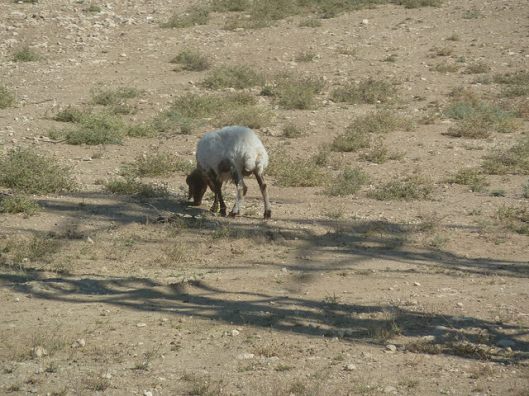
“Meaninglessness” creates a spiritual emptiness in life. While we grapple with it, we find ourselves like a lone sheep lost in a desert. But it is in this spiritual lost-ness that we hear the voice of Jesus our shepherd calling to lead us into the true meaning of life.


5th Sunday in Ordinary Time

Little Demons, Little Prophet

Exorcism. The casting out of unclean spirits is a dramatic but extreme aspect of faith. Very few of us would have experienced or even witnessed this. It evokes great fear because we will be frightened by the powerful forces at play even though we know and believe in the one authority that will prevail.

“’Here is a teaching that is new’ they said ‘and with authority behind it: he gives orders even to unclean spirits and they obey him.’”

Fortunately our everyday faith isn’t quite as dramatic. But this is not to say we do not deal with unclean spirits every day. None of us is perfect. Perfection comes from within. Within us we battle little demons that block our path to become a better person. Impatience, anger, un-forgiveness, bitterness, vengefulness are some fruits of the unclean spirits in us.

But the authority over them is also in us except that we need to cooperate with this authority; we need to desire to want to be better, to follow his teachings. This teaching is all about love. And the bigger little demons that stand in the way are selfishness, self-centredness and self-righteousness. When we put self above love, our actions will betray the teaching authority.

Imperfect as we are, with little demons in us, the beauty of this love is that we too are entrusted with the responsibility to teach. We have opportunities every day to cooperate with this authority. Words without action is hollow. Today we are better skilled at choosing the right words but they are more harmful if they camouflage the demon of self-centredness.

Jesus was sent to be among us. The first reading, “The Lord your God will raise up for you a prophet like myself, from among yourselves, from your own brothers; to him you must listen.” It adds, “But the prophet who presumes to say in my name a thing I have not commanded him to say, or who speaks in the name of other gods, that prophet shall die”.

We too are sent to be “among yourselves”, in the midst of our families, friends, colleagues and people God has put in our life. We are sent as instruments of his teaching and to demonstrate the action required to add authority to his teaching. This authority, this powerful force that overcome the unclean spirits is Love. We carry this message to others and express it by demonstrating it through action.

We are sent to be prophets, to be little prophets amongst the people in our own little world. We battle the little demons in us to produce better fruits. When our actions are felt and experienced, it gives authority to our teaching. We cannot underestimate the dramatic and remarkable consequence of how ours and another person’s life can changed through the power of love. We as little prophets, no doubt with little demons, are instruments of this.

We too can leave a deep impression on the life of others. “And his teaching left a deep impression on them because, unlike the scribes, he taught with authority”.

Capernaum

4th Sunday in Ordinary Time

Qualified as Fishers of Men

“Follow me ….. and I will make you into fishers of men”. This is a call today that goes out to every one of us, not just a pre-selected few. It says “I will make you into” meaning that if we accept this call and change our life to follow him, He will turn our vocation in life into being “fishers of men”.

The first reading speaks of Jonah who initially rejected this call until he had his encounter with the whale. Most of us are like Jonah; we wish not to hear any call. We don’t want changes, and we certainly don’t want a tougher life. Call someone else, but please we pray, make our life better. Until we encounter our own whale.

We also enter into an argument with the Lord by showing him our busy daily schedule suggesting that our vocation in life is elsewhere. Lastly we will say we don’t know enough and truly we are not good enough. But the truth is “I will make you into” brings to life what we have always been hearing, “God does not call the qualified, He qualifies the called”.

Becoming a fisher of men is the coming into a more meaningful life. Life becomes infinitely better when we discover its true meaning. This meaning lies hidden amongst the so many desires we have in our human life. We have desires because we search for happiness. We, like Jonah, go in all directions in search of this. But only the true meaning in life can bring us joy, fulfilment and true happiness.

The direction has never been hidden. He says clearly, “Follow me”. The disciples in today’s gospel showed us how, “At once they left their nets and followed him”. They certainly did not know what the call meant. Perhaps they might even have thought that it was just some different activity that they would do for the afternoon. They would not have thought then they would become apostles and saints. For them and for us, it begins with a smallish faith to say yes.

The consequences of “at once they left their nets” were only gradually revealed. They did not have the benefit of seeing the big picture and its rewards. Their lives changed. They found meaning in what they did. It was fulfilling. As days wore on, as faith grew and as hope beckoned, they were able to permanently let go of their fishing nets and exchanged their vocations to become “fishers of men”.

Unlike Jonah and the disciples then, we have the benefit of hindsight. We know where “Follow me” leads to. It leads to fulfilment and takes us above the challenges in human life. Our prayers will be answered. Life will be better and there is no other vocation to achieve this but to be a “fisher of men”.

The only qualification is our desire to be one. With that desire, He will make us into one. There is no need to leave our jobs, only a need to leave the way we think about our jobs. If we follow him, he will show us that all other vocations are meant to give us the means to live our human life but the vocation he gives us as “fishers of men” is the true meaning of this life we live. Joy, fulfilment and true happiness awaits and we are all qualified to have them.


fisher-of-men

This is a repeated photo on this blog. It is a photo that sits in my living room reminding me of the call to become a “fisher of men”. (Photo taken at Nam Khan River in Luang Prabang, Laos)


Third Sunday in Ordinary Time

Come and See

Somewhere within our inner self is the answer that will lead us to a more meaningful and fulfilling life. We are invited in the most gentle of ways to explore this invitation. This is a call to faith. When we have no faith, it is a call to come. When we have given up, it is a call to come back. When we have some, it is a call to come and serve. “Come and See” is today’s invitation.

Whichever stage we are at in faith, God’s hand is always present, gently guiding, comforting and protecting. Always, he is nearer than we imagine. In the quiet, stillness of our inner self we feel a gentle nudge at our conscience and a soft voice that calls on us to come closer to Him. This soft, inner voice is amplified by the happenings and the people in our life. It also gets louder in the turmoil of life.

When we first hear this call, typically we are filled with doubt. Changes are never easy for anyone. We find it extremely difficult to let go of a current lifestyle or situation. Also a call to faith somehow short circuits the brain to think that answering the call will mean more sacrifices and sufferings. We are muddled in a complexity of fear, guilt and unworthiness. We hide. But the soft voice continue to echo in our inner self, “Come and See”.

Today’s world hurries us into decisions. We gain credit for speed of thought, we must hurry to be ahead of the other. To progress into a better position promising a better lifestyle, we have to qualify, satisfying a set of criteria. We have to be ahead of who we actually are. But this is all in complete opposite of this call to come closer to faith.

God calls us today, right now in our current state. Feeling unqualified to be holy, he calls us as who we are in our present state. There is no need to be ahead of our self. And he is not expecting a hurried decision. He expects that his welcome, despite who we are, will be an encouragement to come. He expects that his gentleness will soothe our doubts and fears. Because much as we want to know, ‘What’s in it for us?’ he knows that we can never comprehend, due to our human limitations, ‘What I have in store for you’.

So he gently says, “Come and See”.

We must personify this call. Our ways to welcome one another, ourselves included into another stage of faith, must be filled with this gentleness. Reconciliation is a process, not a short, sharp, hurried decision. When a person appears out of a spiritual wilderness and desire to come home to Church, we must avoid the judgmental advice of “Go for confession”! If we do that we short circuit God’s intention of being gentle.

Our challenging life can become a meaningful and fulfilling life when we walk the gentle path of faith. When we hear the soft voice, we must be like Samuel and answer, “Speak Lord, your servant is listening”. Come and taste the goodness of our Lord. Come and see the gentleness of our Lord. “Come and See”


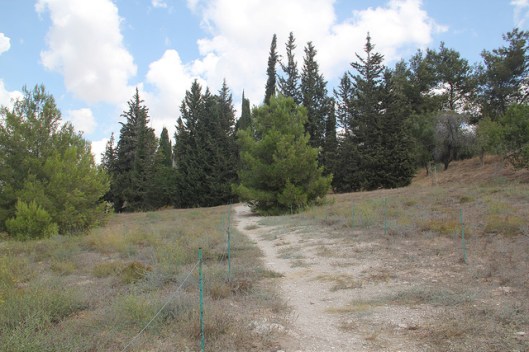
gentle slope

“Come and See” – the gentle path to enlightenment. (Photo: Emmaus Nicopolis, Holy Land)


Second Sunday in Ordinary Time

The Beginnings of a Faith Journey

The beginnings of everything and anything is always very small and slow. Often unseen or even unrealised at the very start. The miracle of life begins in a tiny human egg. Today is the Epiphany of Our Lord; the manifestation of Jesus to the whole world began as such with only a few wise men and the good news travelled slowly on the back of camels. Since then faith has exploded in magnitude reaching the ends of the earth.

An epiphany is defined as “a moment of sudden intuitive understanding; flash of insight” or a faith experience of “the manifestation or appearance of a divine reality”.

Today we take down the tree and pack away our Christmas decorations for another year. We can consciously choose to be like the magi and bring the Christmas light to the people who make up our world or we can sub-consciously extinguish it by returning into the routine of our secular life.

How lighted and bright is our faith life? Is our faith life only manifested by our routine appearance at church on Sundays? Often we did not mean for our faith life to be in such routine appearance. The flow of our personal life had just brought us to a stage where faith is such for us. It is routine and nothing too exciting. But when we do not consciously attend to our faith life it will slowly drift into darkness.

Today the Epiphany of Our Lord happens in this context. When we drift away from faith we enter a spiritual darkness. As we go further away the light that we know begins to fade. Soon, without realising we are enveloped in darkness and we lose connection with God and the church. Hence we must consciously search for our own personal epiphany.

When people to return to church or when they become more active in their faith life, we find that their newness always begin from a personal epiphany. Returning Catholics experience divine reality when they find love. Often they find it in a welcoming and non-judgmental environment that culminates in experiencing the divine in the sacrament of reconciliation. This is the moment when the child Jesus appear in the details of their personal life. This encounter becomes a conversion experience.

An epiphany is an encounter with God. Often it is found in the more vulnerable chapters of our life. Sometimes out of shame we have pushed them into the hidden recesses of our heart. An epiphany make us feel loved, initially unbelievingly so, as we feel so unworthy. We find it incredible that God is forgiving every weakness of ours so much so that we need time to come to terms with experiencing his unconditional love. It takes away shame and brings about healing. We cannot believe that God is so near. Then comes the realisation that he has always been there in our daily life, unseen and unrealised, waiting for us to experience an epiphany.

We must search for our epiphany; this explosion of faith that will be the beginnings of a new, meaningful and fulfilling faith journey. There is a desire in every heart for an epiphany, small and tiny that desire may be. To begin our search, we only need to be conscious to this desire to bring it miraculously to life.

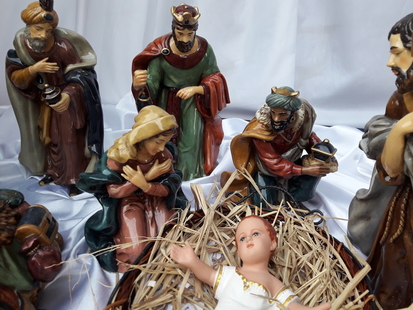
magi 1

The Epiphany of Our Lord

The Family Door

I remember growing up as a child. We live in a rented flat and our door was always open. So was our neighbour’s. The children used to run into both flats, into kitchens and bedrooms. There was no restricted access. There was no need to preach about ‘being in community’, it came about quite naturally.

Today all doors are closed, securely locked. As we achieved progress and modernise, we became insecure. Perhaps we now have things to lose. We jealously guard them. Fear of not having the best make us competitive with one another. And plus, we need our privacy too.

What goes on behind closed doors? Family lifestyles would have surely changed in the last 30 to 40 years. We needed to. We could not have stood still in time. But perhaps in the excitement of embracing everything new, we became unguarded about protecting our family values and our part among other families around us. When we closed our door, did we also close out relationships and love for those around us? Did we turn neighbours into strangers?

We all want to do the best for our families. There is nothing wrong with this; in fact it is one of our major vocation in life. But often we get confused by wanting the best for our families. The danger is that we start to hide behind the noble intention for family and our every action is solely dedicated to our family, even at the expense of our spiritual values. We become competitive because we understand that ‘to be first and to have’ is for the good of our family.

Who is the family unit? If this is just an extension of ‘self’ in the sense that we only care for our family, then would that not be an extension of selfishness? Of still only caring for ‘self’ but with family members included in the definition of ‘self’?

The family unit is where we first encounter love. It is where we first experience being loved and taught to love. As a grandparent there is no greater fulfilment of life than to see the children loving their children. This is the way true love will flow. One receive to give. From parent to child, from Father to Son. The more we give, the more we receive. Love grows us all.

Behind those closed doors, we must rethink our family lifestyles and their spiritual values. When we close the family door to others apart from our own family members, we may think that we doing good by keeping maximum love for our family. When love does not flow, love dies. Darnels grow on fertile ground alongside wheat. We must be careful not to allow the darnel of selfishness to grow alongside the wheat of family love.

The nature of love cannot be harboured but must flow on. Often we are asked to serve in church ministries and often our replies suggest that we are too busy with family. We are engrossed in our career because we want the best for family. Perhaps a better reply may simply be to open the family door. A family who are capable to love beyond themselves is a holy family.

Have a happy and holy 2018!


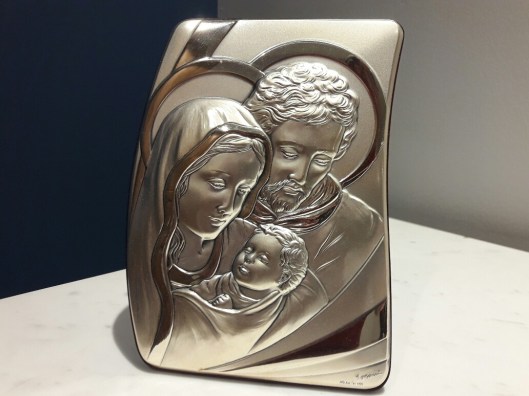
holy family

A family who are capable to love beyond themselves is a holy family.


The Holy Family

Every Christmas is Different

“Every Christmas is different” shared a homilist this week. Each year we arrive at Christmas in the midst of an evolving but different set of realities. Our Christmas experience can be very different as the realities of our personal life impact how we experience what each Christmas promises; love, joy, hope and peace.

Christmas is difficult to celebrate alone. The season is festive. It is a time of get-togethers especially with loved ones, family members and close friends. It is an occasion for reunions. At parties we celebrate friendships and feel grateful for one another. In the hangover of the morning after, we reflect on love and perhaps on how far we have come in life this Christmas.

But Christmas can also be lonely. We could have arrived at Christmas having gone through a tough year. We could be facing the realities of unemployment or the challenges of ill health. It could also be that a loved one is no longer around. Christmas can also be very different if in reality our relationships with family or friends are estranged. When relationships are broken, we are isolated and disconnected from the spirit of Christmas.

But at every Christmas, in any corner of the world there will many joyful get-togethers among family and friends once estranged from each other. There will gratitude for a better life having overcome the many uncertainties. There will be people celebrating a re-discovery of their faith life and renewed relationship with God in communities where love freely flows. Christmas always open doors to reconciliation.

The spirit of Christmas is generous. We all can help make Christmas better.

The spirit of Christmas is always at work. These gatherings of joy are made possible because people acted on the call of reconciliation. Each of us are called to be a catalyst to mend estranged relationships, especially if we are part of it. The other party might just be waiting to embrace the offering of peace.

At Christmas we are called to be like Mary to change lives. Our ‘yes to be the handmaid of the Lord’ will change the lives of those around us and make a different and better Christmas for them and us. Christmas is the birth of the Child Jesus into the reality of our personal life. Changed lives are a fulfilment of the Christmas promise of love, joy, hope and peace.

Wishing you a holy and blessed Christmas!


Xmas Trees

Each Christmas is Different

4th Sunday of Advent


This Christmas, Give the Gift of Change

This Christmas we should change our gifts to each other and give the gift of change. Advent is a time reminding us to draw closer to God, a time to take stock and renew our faith life. The second reading says, “Rejoice always. Pray without ceasing. In all circumstances give thanks”. But for many of us, our Advent, our preparations for Christmas is party without ceasing.

Advent is a good time to reflect on how lukewarm we are in our faith. Prayer versus party. Are we rejoicing for the right reason for the season? Yet Advent is not a time of judgement even if we party more than we pray. It is a season of reminders. Above all it is a time of welcome when we are invited to come closer into the presence of our Lord, to be re-connected to God so that our lives can be for the better.

Many of us remain lukewarm simply because there is nothing much happening spiritually in our average life. God is somewhere there and there is no need to be that close to Him. Until perhaps a crisis occurs and we suddenly feel a need to be in a relationship with Him. And then we discover that we simply cannot connect.

Advent is a period of opportunity. Many lukewarm in faith will appear in the many events we are invited to. For some, Christmas is the only mass they will attend in the year. Advent becomes an opportunity for mission to bring the gift of Jesus into the lives of many who so lukewarm that they are lost and are spiritually disconnected.

All of us can give this gift of Jesus which is a gift that will change the life of others. As we wrote last week, this is the gift of our faith story, a testimony of our real life experiences of Jesus.

There is no teaching and we should not preach. There should be no hint of condemnation. Our sharing and discussion with them should not be judgmental. We must welcome them in their doubt and gently lead them, step by step, to see the hand of God in their life, and the shadow of a faithful God ever present despite them not knowing how to acknowledge and appreciate His presence. The only book that we can refer to are from the chapters of our own life story. We must dig deep and be vulnerable, share our hurts and our subsequent healing. Our honest testimony an effective way to clear their doubts.

Our faith story will help make God more relevant in the lives of many who are lukewarm. Our stories will encourage them to go back into the history of their life and begin tracing their own footsteps through the personal events of their life; small and big. These events altered the course of their life and hopefully they see in them the silent, guiding hand of God. When they do we have given them the gift of Emmanuel, ‘God is with us’.

When we manage to clear up a bit of their doubts and create a clearing for them to find a path out of the lukewarm state, we continue the work of John the Baptist, “I am a voice that cries in the wilderness: Make a straight way for the Lord”.

And so this is our gift of change, our own personal story that changed us. We “bring good news to the poor, to bind hearts that are broken: to proclaim liberty to captives, freedom to those in prison”. Our faith story can do exactly this: to bring Jesus to those in poverty in their faith life, those broken and in need of healing, and those entrapped by their unbelief.

We can go to as many parties as we want but we must remember that first and foremost we are there because we are party to this mission.


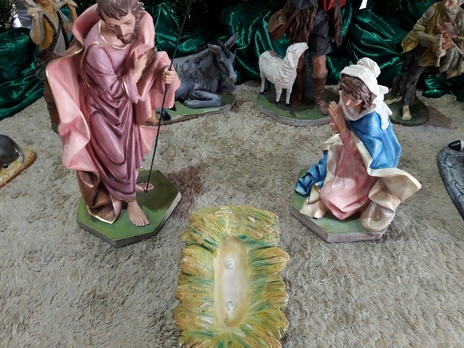
Crib 1

Will Jesus be present in the many parties we will attend this Christmas?


3rd Sunday of Advent

You, Me and John

You and I may never be canonized as saints. Our life may just be a bit too wild for that but it does not mean that we cannot do saintly things. No one person is all bad. Even if we feel more bad than good, more distanced from God, there is something inside that keeps tugging at us towards being good. “A voice cries out in the wilderness”. And surprisingly, a lot of spiritual value can be tapped from our wild side. There is good in everything, even in bad.

Christmas is coming. How so? Advent is the waiting and the preparation. For the many of us not saintly perfect, Advent is the time to make the small corrections, to try to come out from the wilderness and return a bit closer to God to a more meaningful faith life.

As part of our preparation, it would be good to reflect on where we are in our faith life. Speak to family and friends and we will discover people at different points in their faith life. Some will be in the wonder of an oasis while others are wandering in the desert. What will be common though is that everyone would have at some point experience their faith life in the wilderness, a period of time distanced from God.

People today seek God but lose him when they cannot find him relevant to their life. Information alone is no longer enough to convince. People now relate better to real life experiences. There is great value in our life stories especially if we were once distanced from God but have since moved closer to him. Our journey out of our own spiritual wilderness is a powerful tool to impact the life of others. Often it shows real tangible proof of God’s hand in the many happenings in our life.

For many of us lost in the spiritual wilderness, we cannot see the hand of God on our own. But we can relate and be fuller on hope when we hear from someone who had been down the exact same path and ended up with a richer and more meaningful faith life. For many of us, it is in the desert where we re-discover our God and come away stronger for that experience.

This is where spiritual value can be tapped from our wild side. Here, the sharing of our stories is a simple act with gigantic, saintly proportion. When we share the reality of our vulnerabilities and how we re-discovered God in our brokenness, we share God in the reality of our life actively tugging us closer to him especially so when we were lost in the wilderness. We share a God relevant to life.

By simply sharing we effectively, “Prepare a way for the Lord, make his paths straight”. Our stories open up this path for many to return to a closer relationship with God; to see God very relevant in daily life. This is the saintly thing we can do, to be a ‘John the Baptist” to someone we know.

There is no teaching involved. By sharing our faith life, however rich or poor it may be, we allow the Spirit of Christmas to work, to make Christ be born again in the lives of those who are in the wilderness. It is true that you and I are “not fit to kneel down and undo the strap of his sandals” but you and I can make straight for each other the path to return to know Christ in this earthly life. Let us be that instrument tugging at others. You and I can be as saintly as John the Baptist this Advent simply by telling our faith story.


locust 1

A diet of locusts and wild honey can do wonders to our faith life


2nd Sunday of Advent

Falling Asleep while Waiting

We will inevitable fail to stay awake when we focus all our attention to only keep awake but do nothing else to preoccupy ourselves. And it becomes impossible to stay awake in this way waiting for an event when we do not know when this event will occur. As we enter the first day of Advent in preparation for Christmas we are told precisely this, “Stay awake!”

Christmas celebrates the coming of Christ into the world. It is an historical fact. Through our baptism we have open the door to allow Christ to be born in our hearts. For those of us baptized, that too is an historical fact.

We celebrate Christmas to remind ourselves that Christ has come once and he will come again. And our life in fact is in between these two comings. Our waiting is not for Christmas Day but for his second coming into our life. We are called to prepare for this. “So stay awake, because you do not know when the master of the house is coming, evening, midnight, cockcrow, dawn; if he comes unexpectedly, he must not find you asleep.”

Trying to stay awake by doing nothing will quickly result in us falling asleep while waiting. Even doing something but doing it routinely will also result in us falling asleep. We may just have to ask ourselves how many times we have gone for Sunday mass obediently fulfilling our Sunday obligation for years but find ourselves physically present but spiritually asleep.

“Stay awake!” is not about being Christian in name and status. It is a pro-active stance. If we do nothing about our faith life, if we do not lift a finger to help those around us in need especially when we have the gifts to do so, even if we do not do bad things, we are still falling asleep in the presence of Christ. We have left him outside as he knocks on the door of our heart.

In between the two comings, life often take us away from Christ. We can be too pre-occupied by our desires of this world. We must be careful not to be complacent in our spiritual life. Calling ourselves “Christian” and going to Church every Sunday will not be enough if Christ is left outside our heart. “Stay awake!” is a pro-active effort to make sure that Christ is always in the centre of our heart and the compass of our desires.

To “stay awake” is the constant search and check for the presence of Christ in our desires, priorities and in all we do. Not all of us can maintain this presence constantly in everything we do. For most of us, spiritual life is a pendulum swing between good and bad. To “stay awake” is to be aware of the swing towards bad and to actively re-direct ourselves toward good. To “stay awake” is to be aware of our need to constantly return to God. The first reading laments, “Why, Lord, leave us to stray from your ways and harden our hearts against fearing you?”

“Stay awake!” is to be aware of God’s generosity. He has made himself available not only for one day in the year but in every moment marked by our every breath. To be aware and to try to return to him each moment is stay awake while waiting.


Chistmas Tree

As we enter the first day of Advent in preparation for Christmas we are told precisely this, “Stay awake!”


1st Sunday in Advent