$1 Canteen

The ministry that I belong to use to operate a “$1 canteen” once a year after Sunday morning masses where every delicious food item was sold for a king’s ransom of only one dollar. Almost every item was sold below the cost of making or obtaining them. We did brisk business at a loss.

An elderly be-spectacled gentleman well into his 70’s helped along in the supporting arms of his wife shuffled up to us needing to say these words, touchingly mumbled “Thank you sir for selling at a dollar for otherwise my wife and I would not afford to eat such good food”.

That night as we laid in bed this passage flashed across our minds, “For I was hungry and you gave me food; I was thirsty and you gave me drink; I was a stranger and you made me welcome”. “Lord” we asked, “When did we see you hungry and feed you?” At that moment the face of that elderly gentleman appeared. “You saw me in the canteen”.

We are no saints. We had argued over the logic of it all. We could not reconcile selling our homemade food items at such a low price after all we used quality ingredients. We struggled when we saw seemingly rich people take advantage of the $1 price by taking away larger quantities. But by the end of the morning many people came up to express appreciation, gratitude and happiness. And we in return felt joy, fulfilment and satisfaction.

We learned a valuable lesson that morning. The success of a Sunday canteen is never measured by how much money we make but by how much happiness it brought to people by an act of pure, unconditional, non-judgmental giving. Rich or poor, people will always be touched by kindness. Rich or poor, kindness from God is available to all.

“I myself will pasture my sheep, I myself will show them where to rest – it is the Lord who speaks. I will look for the lost one, bring back the stray, bandaged the wounded and make the weak strong. I shall watch over the fat and the healthy. I shall be a true shepherd to them.”

Today we celebrate the Solemnity of Christ the King. His is a kingdom established on kindness – a kingdom established for all people without judgement. This was a King who ransomed his life for all of us without a price.

As subjects in his kingdom we can always see the face of our King and be in his company through kind acts especially to strangers. “I tell you solemnly, in so far as you did this to one of the least of this brothers of mine, you did it to me.”

We saw in the face of the be-spectacled elderly gentleman the face of our King. No doubt he too saw the same face of the King in our faces. The King was present in the canteen. No wonder we felt joy, fulfilment and satisfaction.

We would both have missed that encounter if we had charge more than $1 for food.
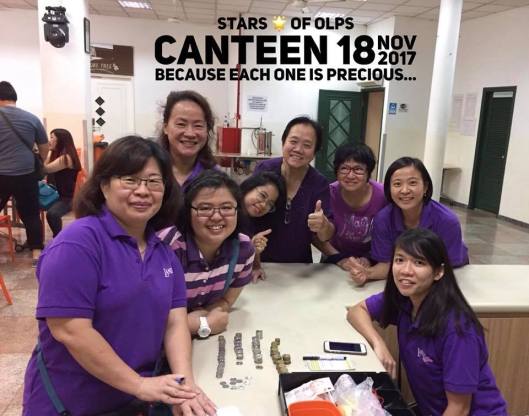
canteen

The Solemnity of Christ the King
Dual Purpose Talents

We were all born with some raw talent. We could not have chosen the type and number of talents. These are all gifts from God. We use these talents and develop abilities. We invest time and effort into these abilities. For some of us our abilities acquired for us professional skills.

For to everyone who has will be given more, and he will have more than enough; but from the man who has not, even what he has will be taken away.”

This is part of today’s Gospel passage. Ironically from a secular viewpoint we understand this better. We continue to make use of our talents and our professional skills to accumulate more for ourselves and our families. We leverage on what we have and who we are. The more we have, the more we can attain. We start to build our own kingdom of comfort.

But what about the Church we belong to? Who will serve in the parish ministries? Who will build the kingdom of heaven? Often we excuse ourselves because we do not have the required skill set to do church work or simply we are too busy with our secular life. But the Church does not require all of us in our professional capacities. God gave each of us some talent when we were born. It is that person God calls, not the professional we have become. Neither is he calling us to quit our secular vocations.

To build the kingdom of heaven in the secular world calls for the use of the same raw talents we have and used to build our secular life. The Church is not calling us as accountants, lawyers or doctors but call for us to use the talents that made us into accountants, lawyers and doctors. These are talents in stewardship, leadership, organization, man-management, public speaking, personality, salesmanship, public relations, artistic talents and a host of so many other raw talents. These are what God want from us to use to build his kingdom on earth.

We can do this while we fulfil all our earthly vocations. God is not taking away what we have achieved in life through the use of the talents he gifted us. He is telling us that there is a dual purpose for the talents we are blessed with. These same talents that we have developed to bring us thus far in our secular life, he ask that we trade them to bring the kingdom of heaven along.

We have talents to build friendships. These he ask to build communities. We have talents to contribute to companies. These he ask to contribute to parish ministries. We use our talents to build our own little kingdoms. These he ask to build the kingdom of heaven. It is not so much to give up one for the other but to realize the dual purpose of our gifted talents.

When we realise about this dual purpose to our talent then the purpose for the kingdom of heaven must not be buried and hidden. We must unbury it and use it without fear for we will not lose anything by using it for his kingdom. For everyone who has will be given more.

declan 2

A magician is born with raw talent which he uses to acquire his professional skill. God calls him to remain a magician but God also calls for his talent to be used to build his kingdom. (Photo: Declan Tan, magician)

33rd Sunday in Ordinary Time

Life in a Lamp

“Five of them were foolish and five were sensible: the foolish ones did take their lamps, but they brought no oil, whereas the sensible ones took flasks of oil as well as their lamps.”

We can at times be incredibly dim. Amidst every uncertainty in life, there is but one certainty which is that we will all die. One of those uncertainties is that we do not know the hour when death comes calling. Yet we can remain incredibly complacent in our preparations for this eventuality.

“So stay awake for you do not know the day or the hour”

Life can offer us a lot of comforts. Some of us are blessed with a good life; material comforts and happy relationships. So much so that we can afford the luxury of debating how much control we want to hand over to God, how much do we want to live our life according to his blueprint, his wisdom of living in spiritual poverty of being entirely dependent on him. In our comforts we can become spiritually complacent and put God aside as we do not feel a strong need for him.

God remains generous and will continue to pour blessings in our life. Who we are today is due to his generosity. What he has given, he will not take back. That comes only when death opens the door for us to meet him. We need then to be accountable for how we have used all his blessings. The same set of talent we used to climb corporate ladders and build wealth are also talents that can be effectively used to climb the stairway to heaven and build his kingdom here.

We all have a lamp. It is to prepare us for entering the kingdom of heaven for eternity. When the hour cometh for us it must be lighted. This light is the presence of God in our life, the centralization of the Gospel in our values. The oil we use to keep the lamp burning is the lifestyle we embrace. The more we give of ourselves, the more we surrender to the will of God to love our neighbor, the more detached we are from the things of this world, the more the oil is topped up in our flasks.

It is not a contradiction of generosity and selflessness when the five sensible bridesmaids did not want to share their oil with the other five foolish bridesmaids who did not have oil. Much as they may have wanted to, they could not. This oil is the life we have lived with God present in everything we did. Only “I, myself” can produce my own oil to keep my own lamp burning.

We can allow the culture of materialism to shape and decorate our lamps. I don’t think God begrudges us that. We can live a materially comfortable lifestyle, if we are so blessed, but it cannot be devoid of a desire for God that must be reflected in our lifestyle to care beyond ‘self’ and to build his kingdom. “For you my soul is thirsting, O God my God”. This life with its oil must be in our lamp.

“Wisdom is bright, it does not grow dim”. Give me oil in my lamp, keep it burning till the end of day. We may need to wise up.


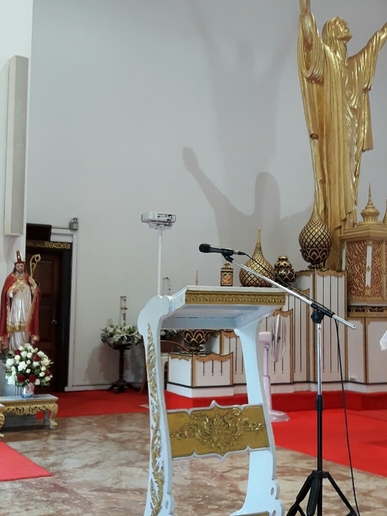
Lamp

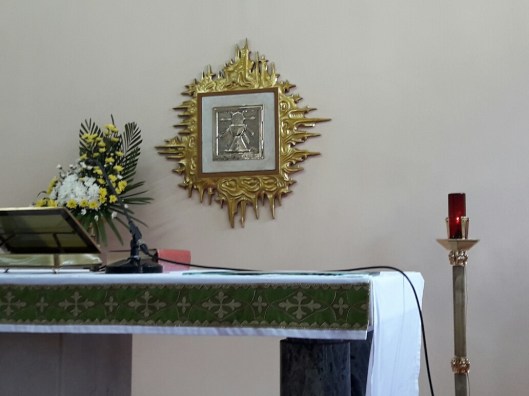
A life lit up by the presence of God, central in our daily life (Photo: Cappellania Italiana, Salesian Convent, Bangkok)


32nd Sunday in Ordinary Time

The Trains have arrived

“Since they do not practise what they preached”

New technologies, the digital world, the internet, social media have turn up like a train arriving too quickly barging into our once simpler lifestyle. For better or for worse, it has changed our world. For sure, it has altered our train of thought and changed our decision making process. Specifically today, it has influenced how we live the faith we profess.

Secularisation for a long time have also been arriving on another track accelerated now by the digital speed we are blessed with today. As we speed into modernisation, we are told that it is better to leave behind our traditional religious beliefs. Coupled together it threatens to derail our faith life.

It is recommended that we separate our faith life from our worldly life. Secularisation plus our altered thought process and a new average speed of our lifestyle have together widened the gap between our worldly life and our faith life. However we know that these two worlds are actually one and inseparable. And that our one world must be guided by our traditional religious beliefs.

This does not mean traditional methods. Methods we must alter to address the changed world. The new evangelisation seeks to address this widening gap. It encourages a new ardour, a new method and a new expression to continue to uphold the same constant message of all religious beliefs. And this traditional message is to live our worldly life with love and through love. Love is the tradition of our religious belief and this train must chug along uninterrupted.

When we were simpler, we simply accepted our belief. We expressed our religious beliefs in rituals steeped in tradition. We lived by the law of love. Preaching and teaching then was very sufficient. There were few alternatives until the trains of modernity started arriving hemming in our faith life into a narrow corridor choking life from it.

We started to question faith, searching for answers. Many of us fell into the widened gap, confused by the pull of both worlds leaving us lost in between.

Preaching is no longer sufficient. It is no longer enough to bridge the gap. The modern mind has too many questions and at the same time has too much information or misinformation readily available in the digital world. It struggles to crystalize everything coming at speed and is confused that living a faith life is having to live in tradition that modernity with all its promises of happiness will leave behind.

Today we must heed the call to practise what is being preached, more so than ever before. Love in firstly an experience; teaching and preaching love without facilitating an experience of love is utterly hopeless. It is only when we experience love real in our life will we experience the truth of the need for our faith to be prominent in our worldly ways. Practice fulfils the preaching.

The train of the new evangelisation has also arrived. On it is the call for a new method for love to be interactive in this digital age. Tradition and modernity will go hand in hand only if rooted in the practise of love for the other person. Practising love, not merely preaching, keeps us on track.


Train

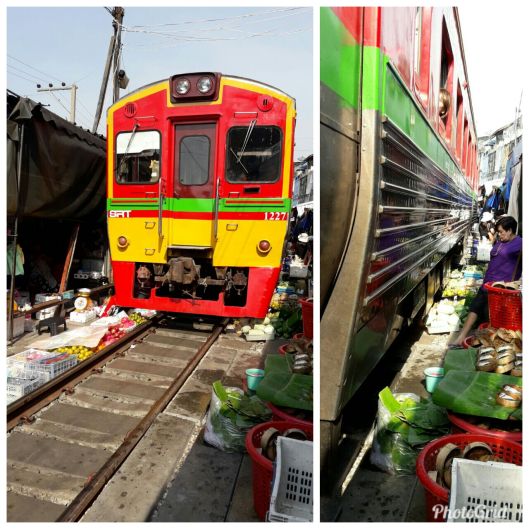
“There were few alternatives until the trains of modernity started arriving hemming in our faith life into a narrow corridor choking life from it.” (Photo: Maeklong Railway Market, Samut Songkhram, Thailand)


31st Sunday in Ordinary Time

Let Love Flow

We are a consequence of other people’s actions. We are affected by the decisions of the other person. What others do, even if it is for themselves, can and will affect us. Actions and decisions by others have direct and indirect bearings on our personal life. They create circumstances and form environments and these in turn shape our personal responses, actions and decisions.

Life can suddenly in an instant turn for the worse if we are the victim of an unfortunate accident. Often it is no fault of ours. Totally innocent we are sent down the path of a more challenging life. This is the reality of our world in which every person is inter-linked and inter-dependent. And what we do affect others too.

“You must love the Lord your God with all your heart, with all your soul, and with all your mind. This is the greatest and first commandment. The second resembles it: You must love your neighbour as yourself. On these two commandments hang the whole Law, and the Prophets also”. This is the commandment of Love to love and on it hangs peace and true happiness for all of us.

God often takes the blame for the unfortunate circumstances in life. If he is God, why did he allow it? He did not but he gave us a free choice in this world to decide and act. Then God poured into the world an unconditional love to help us navigate the choices of others. He also poured into our personal life this love to help us make our choices.

God does not create sufferings. Often it is the result of selfish and inconsiderate choices. We cannot control the choices of others but we certainly can control our own. Our choices must always hang on this Law of Love.

God is the source of love. Love cannot be harboured. It needs to be given away. Freely it comes, freely it must go. When it passes through us and into others, it creates a newness and a freshness to life. It makes perfect the imperfect, it change bad to good. True love is unconditional and it brings forgiveness. Love only affirms and never condemns. No one is unworthy of God’s unconditional love whatever bad choices we may have made in the past. Let love flow through us.

We are all bearers of the gift of God’s love. We are vessels filled to the brim. Our acts are outlets for this love to flow. We will never be emptied. The more flows out of us the more we will receive. Because the source of love is Love himself.

There is no need to feel unworthy, no need to disqualify ourselves. We are all stained vessels, dirt coming from bad choices we made. Yet the love of God flows into us to help us along till we reach the end of our earthly journey. It is on the other side of death where we will never be stained, where sufferings will not exist. As we make our way there, let love flow.


love flows

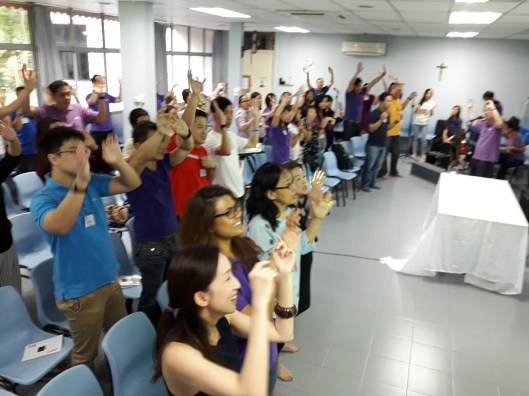
Experiencing “Let Love Flow” at a Landings retreat (October 2017)


30th Sunday Ordinary Time

We need to be naked

“Give back to Caesar what belongs to Caesar”. Loosely interpreted, we commonly hear that “We come into the world with nothing and we will leave the world with nothing. Hence we should not be too attached to the things of this world”. This is a half-truth.

We came into the world with the gift of life, clothed in the image of our Creator. We were chosen. “I have called you by your name”. We are born with a capacity for good, to contribute and make a difference in this world. When we are done with ‘Caesar’s world’, we need to “give back to God what belongs to God”. What belongs to God is the gift of life and when we are done we give back to him an account of how we too have been this gift of life; of how we have been life-giving to people in this world.

We are born naked. The first gift we receive from ‘Caesar’s world’ are clothes that will protect us from the physical elements. It covers us up, both protecting and at the same time, exposing our self-consciousness. As we grow into Caesar’s world, we grow in our consciousness of self. It is in this growth that what belongs to Caesar and what belongs to God comes into sharp contrast. By becoming too conscious of self, we invite into God’s world elements of self-gratification, selfishness, greed and other moral elements that contribute to the contrast.

We are born into Caesar’s world to co-exist. Not everything is bad in this world. With the gift of life, we are born into a responsibility of preserving the goodness of life, that which belongs to God. However to fulfil this responsibility we need to be naked.

Our spirit must remain naked. We must be naked from self-giving love. We have to shed the clothes of self-consciousness and expose ourselves and be vulnerable. To love that stranger, to call him neighbour and to give from self, demands from us a generosity that we need to draw deep from our capacity to be good. We were created this way for this purpose. We were all like that once before until the snake came along with the apple.

We need to navigate Caesar’s world to give back to God what belongs to God. We need to negotiate our way amidst the danger of the many snakes and inevitably we will fail at times and eat the apple. “What belongs to God” in us will tell us when we do what is not good. We will react by reaching for the fig leaf to cover our shame. This is good self-consciousness and this awareness help pick us up again and again and to drop that fig leaf.

Drop that fig leaf and remain naked. Caesar’s world runs a tough test for us to preserve what belongs to God. If we do not continue to shed the fig leaf and be naked in self-giving, we will soon realize that an accumulation of fig leaves will clothed us in moral wrongdoings. We will shed life, lose the capacity for good and die in Caesar’s world.

When we stand at the door of the heavenly banquet hall, we must come without our fig leaf, naked and clothed only in the likeness of our Creator. It is true that we are born with nothing and we die with nothing. It is nothing from Caesar’s world but we came with something from God: Life and goodness. We must still have these to give back to him what belongs to him at the end of time in “Caesar’s world”.

Coin with Christ

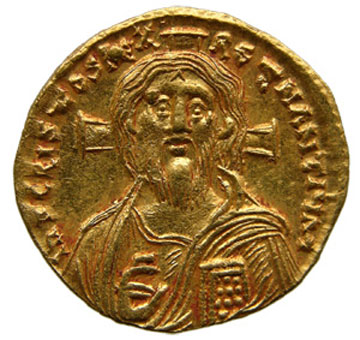
They handed him a denarius, and he said, “Whose head is this? Whose name?” “Caesar’s” they replied. He then said to them, “Very well give back to Caesar what belongs to Caesar – and to God what belongs to God”.


29th Sunday in Ordinary Time

A well-made garment

There is an abundance of tailors in Bangkok. In one shop window there is quite an amusing slogan, “God made Man, tailor make gentlemen”. The poor guy in today’s gospel parable was thrown out of the wedding banquet for not being properly attired; he did not wear a wedding garment. Either he didn’t have a tailor or he wasn’t a gentleman.

We are born into this world and there is but one target destination of our earthly journey. We want to get into that wedding banquet; we want to enter the kingdom of heaven at the end of our life here. But we need to be clothed in a wedding garment.

To be clothed in the wedding garment is to be clothed in the likeness of Christ. The cut of the cloth is our belief and purity of intention. The cloth itself is our actions of our life in this world. And we are given our entire lifetime to tailor this wedding garment.

This cloth does not come from the cupboard of our material wealth. Neither is it cut from the wealth of our knowledge. Instead it is cut from the poverty of our spirit where we live in the belief of God and allow our life to be the expression of this belief. We are poor in spirit because we are totally dependent on God. And to become an expression of this belief is to make sure our every action in life is an act of true love; unselfish and life-giving.

The invitation to this grand banquet is opened to everybody. In the parable, the king sends his servants out repeatedly to invite the guests to come; God repeatedly calls, reminds and invite us all to enter the kingdom of heaven. Although he really wants us to come, he gives us a free choice.

We have a free choice to choose where we want to go at the end of our life on earth. We have a choice between a worldly life with or without God. We can choose between being interested or not interested. We can choose to allow our work ambitions to take us away from God. We can choose to allow our busy schedules to bury us. So much so that when buried in the choices we make, we become emotionally violent at the mention of God.

We have a lifetime to tailor our wedding garment. Bad choices are not dead choices. They may lead us away but they do not disqualify us. “So these servants went out on to the roads and collected together everyone they could find, bad and good alike; and the wedding hall was filled with guests”. We are given our lifetime to make bad choices into good choices. We are not limited in the number of times we can try. It is just that we don’t know when we will appear at the door of the banquet hall.

At that point, we will have no more time. We must have on our wedding garment. It is made from the fabric of our life, a cloth made and a garment tailored by our good deeds. The love we have for God and for others must flow in the threads that hold the garment together. We have to make sure it’s a well-made garment. For sure, God made Man and he wants to clothe us into fine ladies and gentlemen to join in the wedding banquet.


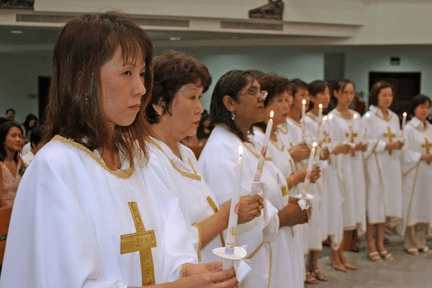
white garment

“You have become a new creation, and have clothed yourself in Christ. See in this white garment the outward sign of your Christian dignity. With your family and friends to help you by word and example, bring that dignity unstained into the everlasting life of heaven”.


28th Sunday in Ordinary Time

Little Vineyards

When we were created God made us into little vineyards. He fenced it round defining our individual identity. He dug a winepress in it enabling us to be productive and bear fruit for our labour. He built a tower from where we can watch over the vineyard; he gave us a heart to watch our life to discern good from bad.

The parable in today’s gospel reminds us that God is the owner of the vineyard. God made us into a vineyard on a fertile hillside. He dug the soil, cleared it of stones, and planted choice vines in it; he created us in his likeness with a full capacity to be good. Then he leased it to his tenants; then God gave us the freedom to choose how we manage our vineyard, what we choose to do with our life on earth.

The owner of all the vineyards is all about good. We are expected to produce good fruits. We are fertilized daily with talents and blessings, graces sufficient for the day. We are to work with ‘other vineyards’ to produce good for we all belong to the Kingdom of God.

Some of us are able to live a good life on earth, obedient to God’s will and producing good fruit and glorifying him. Good tenants. But most of us are caught in the revelry of a good harvest. We become bad tenants by making wrong choices. Over time, we keep the good fruit for ourselves or live with such neglect that we start producing bad fruit. We start to forget the source of our life and hence keep God outside our fence.

When we choose to wander far away from God, or when we choose to shut our gates to his presence, God choose to send us messengers to remind us of who he is. “When vintage time drew near he sent his servants to the tenants to collect his produce”. The message is always gentle but sometimes our reaction can be quite violent. This can be quite familiar for those of us away from Church when a loved one or a friend suggest that we return to Church. We are agitated and angry until the messenger is afraid and silenced.

But God does not give up on us, even if we had given up on him. Things happen in our life. God uses such personal events to continue to send messages to us especially in the silence of our heart, the tower from which we watch over our vineyard. Of course good events are sometimes harder to listen to as they are lost in the din of our revelry. But it is in bad events where we hear because often a crisis in life leaves us lonely and alone. In this silence we hear a lone voice, in this aloneness we become acutely aware of his presence.

Today’s message is this. If we are not already producing good fruit for him with our life, we must urgently heed the messages he is sending to us through his servants and in the events of life. His messages will never cease as he has forever but we don’t have forever as our time will run out when our life comes to an end.

When that happens we must be ready to give an account of our little vineyards. Our vineyard must have produced more of good than bad. We must leave behind a legacy of vintages of the good wine that helped build the Kingdom of God.


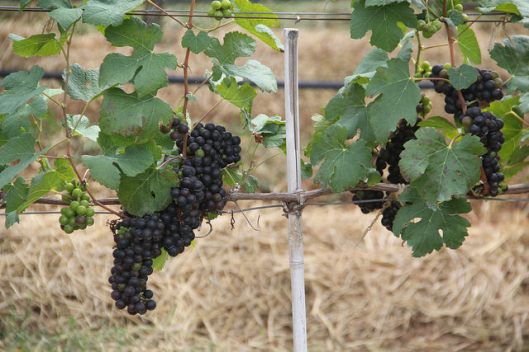
Grapes

“I tell you then, that the Kingdom of God will be taken from you and given to a people who will produce its fruit” (Photo: From the vineyards of Khao Yai, Thailand)


27th Sunday in Ordinary Time

The Silence of Words

The silence of words, the voice of action.

Be politically correct. Be socially sensitive. We are becoming more skilled in providing the answers people want to hear. To get to places, to climb corporate ladders, to build our networks, we shape impressions by carefully chosen words. We identify the setting and the people present and craft our answers. “What is your opinion?” Same question posed on a boys’ night out and in a small discussion group in church may result in us sharing two completely different answers.

It may not be all about gaining mileage as it may just be that we don’t want to be left behind. If we were “the chief priests and elders of the people” in today’s passage, there was only going to be one politically correct and socially sensitive answer to Jesus. So what we say, often, may not be what we mean and what truly believe in.

“My boy, you go and work in the vineyard today”. My people go and be good for one another. We mouthed, “Certainly, sir”.

We are fed a good homily on a Sunday. We read an excellent reflection. More and more we find ourselves convinced and believing. We know how “to make our way into the kingdom of God”. We are excited and we share our answers. We look for more knowledge and find them. We even go on to preach our faith to others. We sound good as we know all the right answers.

Knowledge can make us complacent. It pleases the mind. It soothes us. It can be very satisfying. But we are in danger of living faith only in our minds. We start to feel good about ourselves and perhaps like the chief priests and the elders of the people forget that words are silent until we lend it voice through action.

St Francis of Assisi said, “Preach the gospel and if necessary, use words”. At the end of each mass we are called to “Go and proclaim the good news with the life you live”. In today’s second reading, “Always consider the other person to be better than yourself, so that nobody thinks of his own interest first but everybody thinks of other people’s interests instead. In your minds you must be the same as Christ Jesus”. We live through the action of being humble by emptying ourselves of pride and self-interest assuming the condition of a slave.

The condition of being human and the realities of our earthly life cause us to assume the identities of both the first and the second son. Tiredness and busy schedules may provoke us to say, “No” and self-interest and knowing what to say help us to say “Yes”. This is who we really are in the rhythm of daily life oscillating between words and action.

In truth all of us are created good. Our default setting is that of kindness. We are created to act for the other. The challenges of the world tire us and can change us. It moves us towards becoming more frequently like the second son who said “Yes” but never put his promise into action. There is a voice in our hearts. It is the voice that tells us what is good or bad, what we must do or not do. It is the voice of our Creator consoling us in our tiredness, understanding the “No” we shout out and gently guiding us to go and be good to others again.

By now in life, we would have many times said “yes” to change our ways and to go out and work in the vineyard. Be spiritually correct. Be neighbor sensitive. Our life has to be faith in action lending a voice to all the words that will otherwise remain silent.


Mic 1

“The silence of words. The voice of action”


26th Sunday in Ordinary Time

Is there a Queue?

A queue is a very simple system the world have adopted to maintain fairness. When the last tries to be first and succeeds, the order of things is broken and pandemonium breaks out. We have been working in the same firm for 20 years and they go out to hire another person as business expands and pay the newcomer a higher wage. Or we have been overlooked and someone younger gets promoted. Pandemonium breaks out in our heart.

Queuing overnight for a concert ticket and not getting it is merely tough luck. We envy those who got them but this envy rarely kills. However when it comes to possessions, money and prestige, we jealously guard what we have and race to get even more. The ways of the world has programmed us to compete to be ahead of the other. Such comparisons can fill us with envy. And such envy kills.

What is the end reward of life? We all know the correct answer. Some of us are so focused and live a good life that we are spiritually knocking on heaven’s door. While others continue to indulge in the ways of the world and constantly postponing the decision to wait by heaven’s door. But is there a queue?

Today’s parable where the landowner pays every worker regardless of hours clocked the same wage of one denarius tell us everything about the generosity of God. We must still hurry to  in our worldly ways but there isn’t a queue to get into heaven.

For every one of us, for each of us there is already a room waiting for us in heaven. No one can queue ahead to take it from us. It is ours no matter how far now we are from God in our worldly ways. The room is for us to refuse and God waits till the last hour to hand us our one denarius.

Hence there is no need to jostle among ourselves. But we need to jostle in our self to sort out the pandemonium in our heart. There is no race with the neighbor. The comparison of ‘being better’ does not exist with God. To claim or refuse our room is simply to be good or bad, not better or worse. There is no need for any envy that kills. Instead we are called into life-giving generosity.

To be good is to receive the generosity of God and to pass it on to others. With our own rooms assured, we must generously venture from the daybreak of our life to its eleventh hour to try to bring along others to claim their rooms. God plays us as his instruments to lead others into his heavenly concert.

Generosity is born out of true love. True love in this world is to accept our one denarius and hope that all others get it too. ”For my thoughts are not your thoughts, my ways not your ways”. Love is the ticket to the heavenly concert of eternal life. We all have ours reserved. We claim it by making our ways, the Lord’s ways. Not by queuing to be first.


Queue

Is there a Queue?


25th Sunday in Ordinary Time