Heart Stones

Our life is always a consequence of the action of other people. Sentiments in life will become sediments in our hearts. When what others do, intentionally or unintentionally, hurt and affect us negatively, we take the consequence of their action. Rather it is forced upon us. We don’t want to but we just happen to be in the way of that consequence. A sense of injustice rapidly blanket us. Sediments in our heart quickly turn into stones.

When we feel that we have become a victim of injustice, we naturally feel resentment and anger. Festering in us, these sentiments are like sediments slowly accumulating and soon enough we are filled with a thirst for vengeance. Unable to satisfy it, our heart become hardened with bitterness. Under the weight of despair from injustice, we swear we will never forgive.

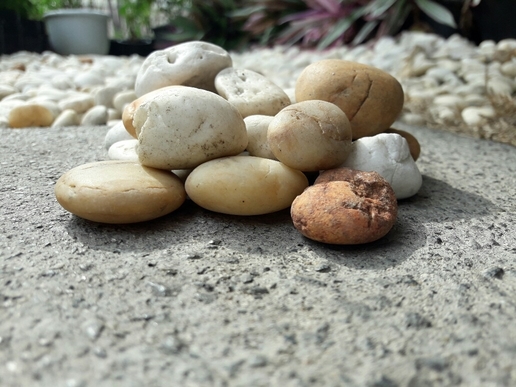
Resentment, anger, vengeance, bitterness, un-forgiveness are heart stones. They are bad for our spiritual well-being. Weighed down by these stones our life cannot move away and we remain in the hole consequences have thrown us into. Today the readings offer us a lifeline. We are told the best way is to “Forgive”.

We are sometimes ourselves a consequence of a misconception of God. “If a man nurses anger against another, can he then demand compassion from the Lord?” We are taught if we don’t forgive others, how can God forgive us? In all these we tend to see God in a harsher light: authoritative, demanding, expecting us to forgive first before he forgives us.

The truth is God is always forgiving. This is the nature of his unconditional love. He desperately want us to receive his forgiveness and the gift of new life that comes with it. But we cannot receive his gift of forgiveness if we have stones in our heart that block and choke this flow of love. Hence the meaning of our prayer, “Forgive us our trespasses as we forgive those who trespass against us”. In order for this to effect, he is asking us to hand over our stones.

Forgiveness on our part is a decision to let go of our stones. We need to reverse that vengeful cry that we will never forgive. Once we say “yes”, God will take care of the rest. We only need to pray once earnestly and sincerely. Asking for the grace to forgive is one of the purest intention in prayer; it is asking to allow love to flow through us. It is guaranteed that this prayer will always be answered.

The effects of forgiveness and the new life it brings will unravel itself in full over time. Reconciliation is a wonderful process. But we must not saddle ourselves with the expectation for the person who hurt us to be quickly re-integrated back into our daily life. Often it will not happen immediately. We allow God to handle that.

For us, we handle our stones. Forgiveness is consequently liberating. We hand over our stones in exchange for it. The consequence of letting go our heart stones is that love will be multiplied seventy seven times seven times.
 

stones 2

Peter went up to Jesus and said, ‘Lord, how often must I forgive my brother if he wrongs me? As  often as seven times?’ Jesus answered, ‘Not seven, I tell you, but seventy-seven times.’


24th Sunday in Ordinary Time
Accountability

Herd instinct. We sit as a rather large group at the bar. We have some innocent fun but we grow louder as the evening progresses. I had always wanted to be part of this popular group. Soon with more alcohol we are having fun at the expense of others and becoming a public nuisance. I feel uncomfortable as this isn’t really me. But I go along because I fear being left out of the group. I surrender to the herd.

Peer pressure. We surround ourselves with family and friends. We are actually surrounding ourselves with love. We need to find acceptance and affirmation. It is good to be loved. But at the same time we influence ourselves to the ‘behavior of the world’ they subscribe to. What is their definition of love? What is good and bad? What is OK and cool? Like it or not peer pressure shape our own behavior and beliefs. We feed off one another.

Deep into our individual selves we will find the spot that will keep saying, “This isn’t me” especially when our behavior begins to conflict with what is proper, right and good. “O that today if you listen to his voice, harden not your hearts”. This is the voice of our Shepherd who desires only for us to be back on the right path that will lead us back to him.

We must act on this voice. Most times the voice is inaudible on its own. It is amplified by a brother or a sister who comes to speak to us out of concern. We must allow them to tell us our faults; to be humble and acknowledge that we have been blinded. They come out of love. We must look for such persons in our herd or peer group. If we can’t find one then we are in the wrong herd.

“If your brother does something wrong, go and have it out with him alone, between your two selves. If he listens to you, you have won back your brother. If he does not listen, take one or two others along with you: the evidence of two of three witness is required to sustain any charge. But if he refuses to listen to these, report it to the community”. 

This isn’t about someone doing something wrong to us personally. It is about the choice of our lifestyle, the herd we choose to belong to. The second reading spoke of the choice lifestyle, “Avoid getting into debt, except the debt of mutual love”. 

We do not live perfect lives. None of us do. Much as we are ready to go and counsel the world, we must first allow ourselves to be counselled. We must be accountable for our own thoughts and actions. It is difficult to do these on our own. We must actively seek out people who can become partners to facilitate our accountability. We must make it easier for that brother or sister to come and speak with us when we do something wrong.

We must find a herd of like-minded creatures where we can be on the look-out for one another, to be accountable to each other. This is the mark of a Christian community where the voice of Christ is amplified by our own voices and actions, “For where two or three meet in my name, I shall be there with them”.

Not a herd but a flock.


2 or 3

“For where two or three meet in my name, I shall be there with them”


23rd Sunday in Ordinary Time

Take it up…intentionally!

A recent discussion with a friend in Brisbane offered an interesting perception on how we choose to live our faith. He shared the thoughts of his Padre from a recent homily on how we should not be confused with being united with the cross and actually, intentionally taking it up.

The Gospel on that particular week was about “carrying our cross” and the homilist shared that personal suffering such as from illness, grief, broken relationships or joblessness isn’t exactly “carrying the cross”. We can unite these to the cross, but it isn’t exactly carrying. To carry is about standing up for Christ, to be Christian and about service to others.

If God is God, why does he allow suffering? This question won’t go away. For some when this question is not answered to their satisfaction, they make a deliberate decision to wander into “the behaviour of the world”. For the rest of us, a large chunk of our personal sufferings are consequences of our own and others’ actions. But some sufferings may remain a mystery that we attribute to God’s will. “If anyone wants to be a follower of mine”; I will allow God to be God and I humbly remain his creature. This humble acceptance is a deliberated action to “take up my cross and follow him”. Let God be God.

Following Christ and taking up our cross does not lead us into a hell of sufferings. Today’s Gospel provides a vision beyond death “for anyone who loses his life for my sake will find it”. This is the promise of eternal life. Embracing this promise and altering our behaviour is to consciously take up the cross and follow him.

The cross will start to feel heavy because to take up the cross is to change our lifestyle into one of service and mission. We adopt this new lifestyle “by offering your living bodies as a holy sacrifice, truly pleasing to God”. We take up the cross of self-sacrifice where we put others before self. We start with family then friends then colleagues and then strangers which is when we feel our body as a sacrifice and the cross that we took begins to weigh us down.

This cross that we intentionally take up becomes particularly heavy when we realise we need to let go of the things of this world that is precious to us; possessions, desires and even opinions. At the same moment the cross becomes lighter when we yearn for eternal glory beyond death. Let go of our earthly desires and exchange it for the cross that will lead us into the heaven of eternal joy.

There is a greater challenge in today’s disbelieving world. The words of the prophet Jeremiah echoes when we take up a cross that seemingly embrace sufferings, “I am a daily laughing-stock, everybody’s butt….The word of the Lord has meant for me insult, derision, all day long”. To be different against popular opinion is also to intentionally take up the cross. We must dare to be different.

The first cross we take up is the belief that our journey does not end with death. But we cannot lounge around and be camouflaged by the trending behaviours of the world. Instead, we must breakout for our faith, move the boundaries of our giving, lose our life for the sake of the other and take up the cross… intentionally!


St Nikolaus Church Pattaya

“If anyone wants to be a follower of mine, let him renounce himself and take up his cross and follow me” (Photo: St Nikolaus Church, Pattaya, Thailand)


22nd Sunday in Ordinary time

Right answer, Wrong method

When I first got involved in church retreats I was always self-conscious that I must give the right answers. Everything was about knowing your catechism. When today’s question by Jesus came around, “Who do YOU say I am?”, I would look around sheepishly and search the floor for an answer. The little consolation to this was that I would have felt like the first disciples on a hot day in Caesarea Philippi when Jesus asked this question of them.

Like them, we need the right answer for the teacher. Unlike them, we have the answer in our books. The difference, and a life-changing difference this can be, is that we search the pages, while the disciples searched their real-life experiences. Then nothing had yet been written for them while today we are taught extensively from volumes of books. We too can give the right answer but the method of our arriving at the answer can be wrong.

“Then Simon Peter spoke up, ‘You are the Christ,’ he said, ‘the Son of the living God.’”

With the wrong process, getting the right answer in this case means naught. It does not bring out the value of what Peter’s declaration mean to our life on earth. Peter’s declaration came about through his personal experience of Jesus. He was further convinced when he witnessed the personal encounters of the disciples around him. Through these experiences and encounters, Peter enjoyed a personal relationship with Jesus.

To answer the question “Who do YOU say I am?”, we must close our books and open our hearts. It is not tough to see Jesus’ presence in our midst when we open the eyes of our heart. We have to respond to all he taught us, to change knowledge into experiences. We must live a life of love. It is in serving, giving and loving where we will encounter and experience him in the people around us and in ourselves. It is only when we allow love to flow through us that we establish a personal relationship with Jesus.

When we allow love to flow through us by loving freely and without prejudice, we hold the keys to unlock the faith life of people around us. By our actions we build the church. By allowing others to experience us, we bring Jesus into their midst. Through good actions, Jesus will be encountered every day in our lives. This is the simple truth when knowledge becomes faith and when religion becomes a lived experience.

Our faith must be hewn out of our daily experiences with Jesus. Through experiences, our personal relationship with Jesus will be rock solid “and the gates of the underworld can never hold out against it”. 

The next time we are asked the question, we open only the book of wisdom. This book of wisdom is in our heart and etched by Jesus himself where each encounter with him is life-giving and life-changing. Through these pages we arrive at the declaration, “You are the Christ, the Son of the living God”. Right answer, right method.


Rock

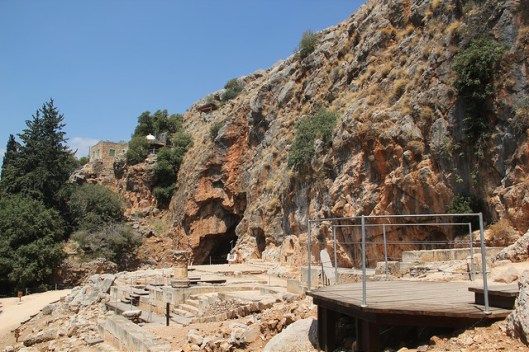
Part of the giant rock at Caesarea Philippi – where Jesus asked his disciples, “Who do YOU say I am?” 


21st Sunday Ordinary Time


Touch-Me-Not

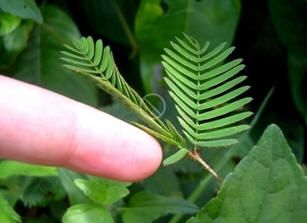
In my childhood decades ago I used to walk to school along the mud track through the kampong. Along the path I came across the creeping ‘touch-me-not’ weed growing in abundance. For the fun of it I would touch it to see its leaves shrivel and close. Decades on, mud tracks have given way to highways and I see much less of this plant. Modernity and progress have also afforded us manicured gardens. We choose what we plant.

Like the gardens around us, we too have grown to be different. Modernity have afforded us abundant choices to be who we want to be. We can choose to weed out what we don’t fancy in life. We can choose from the numerous highways to achieve happiness. Unfortunately for some of us we leave the path of faith.

The ‘touch-me-not’ plant has many nicknames. It is called the ‘shy, bashful, sensitive plant’. It is called ‘sleeping plant’ and ‘prayerful plant’. It is also known as the ‘shame plant’. Today’s gospel touching on the Canaanite woman and Jesus seemingly refusing to help her provoked this reflection about faith in today’s world. And many of us are perhaps like this plant.

The bait of worldly riches has led us down many different paths. We have also grown to become more guarded as individuals. The ‘open door kampong spirit’ has shriveled to be the ‘closed door my-privacy-please’ lifestyle. Our manicured lifestyle has had a great impact on our faith life. We have strayed far into “disobedience of God” where we cannot anymore feel connected or touched by faith.

Try telling someone that the God of the universe, our almighty God is in fact a God who is very personal to us and very involved in our daily life. Try telling that Jesus wants to touch our life every day. Chances are people in this over-informed age will find that incredulous. Until we encounter road-blocks on our highways and find ourselves in desperate situations, will we then only turn to look for God.

One of the biggest obstacle to return along the path of faith is the feeling of unworthiness. Like the ‘touch-me-not’ weed, we shrivel and curl up in shame. When life arrive at the point when we need to be re-connected with God, we don’t have to close up in shyness. For the absolute truth is that our God is a faithful God who waits patiently for our return to the path of faith. There is no penalty, no toll fee to pay.

Today’s second reading, “Just as you changed from being disobedient to God, and now enjoy mercy because of their disobedience, so those who are disobedient now – and only because of the mercy shown to you – will also enjoy mercy eventually. God has imprisoned all men in their own disobedience only to show mercy to all mankind”.

Jesus never refuses mercy and is present every day wanting to touch us. We must not say “touch me not” but instead let our guard down and allow him to. We must re-plant the seed of faith. Faith can only grow when we wake from our sleep, put aside our shame, sensitivities and shyness, open up and prayerfully say, “Touch Me”.

mimosa-pudica-sensitive-plant

20th Sunday in Ordinary Time

Walk on Water

We sometimes feel like we can walk on water. We have enjoyed moments when everything in life clicked into place. ‘Happiness’ hormones flow when effort, hope and desire are rewarded with top results. Sporting results can thrill and leave us euphoric. Outstanding achievements delight and exhilarate us. In the ecstasy of glory we feel so positive we can walk on water.

Enjoy the moment while it lasts. As the hormones ebb, we sink quickly back into the reality of life. Glory and disappointment co-exist; walking and sinking are its simplistic dynamics. And in unsympathetic reality we seem to sink more than we walk. But this imbalance need not be and we can haul ourselves out of the water more often when we trust in God and embrace a faith life.

There is a balance to life’s journey. Faith is a counter force to the gravity of life’s issues that drown us. Without belief, faith and trust we journey alone in the strong currents of fear. With belief we know we have God. But we need to turn this belief into faith and trust in order that the currents of life’s challenges do not suck us under. When we have a faith life many difficulties will flow under our feet as our trust in God buoys us.

Belief need to become faith. A faith life is a lived experience. Trust in born out of experience. Trusting in God comes out of a personal experience of God. A vibrant faith life is coloured by numerous such experiences. When we actively seek out such experiences we grow our trust in God; we allow a lot more water to flow beneath us and we walk our journey knowing we will not drown.

Prayer is the beginning of active seeking. A priest in Bangkok shared this week about the three types of prayer in today’s passage. Jesus “went up into the hills by himself to pray” and so must we spend time to pray so as to develop a personal relationship with God and to listen to him. When the disciple “took fright and began to sink”, we must be like Peter when we are troubled to cry and pray, “Lord! Save me!” “And as they got into the boat the wind dropped. The men in the boat bowed down before him and said, ‘Truly, you are the Son of God.’” When in ecstasy, let us bow in thanksgiving and pray to acknowledge his presence in our daily life.

The prayer we know best is the prayer when we cry out in desperation and fear. And Jesus knows that all too well as he “put out his hand at once and held him”. He knows about the undertow in our life. He understands the hurt when we fail to achieve and when we end last in bitter disappointment because more often this is the unsympathetic reality of our earthly life. But he wants to be there for us to comfort and console in the shattering moments of life. Through this prayer for help we will experience him.

Be quiet. Be still. Be trusting. Be grateful. Be thankful. He comes to us not in a mighty wind or in an earthquake or in a fire. He comes in a gentle wind. He comes to redress the balance of life, to counter its negative forces. Physically and humanly, we cannot but spiritually and in the gentleness of a faith life we can calmly walk on water.

Walk on Water 2

19th Sunday in Ordinary Time

Under the Clouds

I used to stay hidden in my faith life or more correctly I use to hide from my faith. There was very little chance of me going on a church retreat. Simply it was not on the list of things I want to do or think I need to. There was so little to connect my daily life to church. And I was happy to keep the distance. Going for a retreat was perhaps as tough as climbing a mountain. The idea would not even enter my head.

“Suddenly a bright cloud covered them with shadow, and from the cloud there came a voice which said, ‘This is my Son, the Beloved; he enjoys my favour. Listen to him.’” 

I never knew what being spiritually high was about. Actually we do? Or think we do? Reading the words that describe it or hearing about it from a friend, is not knowing at all. To know it, we need to experience it. We need to live the experience because the high can only come about when we are touched deep in our hearts. Only then can we be like Peter to declare, “Lord, it is wonderful for us to be here”. 

The Transfiguration of Jesus had been something I found difficult to relate to. To be in the presence of God, let alone to be in a personal relationship with almighty Him was an idea I couldn’t get my head around to. Until I experienced being spiritually high that opened my heart to search for more.

This Transfiguration of Jesus can occur in our lives daily. It will occur only when our hearts are open to it. Jesus is transfigured into our daily life for us to live in Him. He is transfigured to fit into our daily schedule. He is there at the corner even when we choose to ignore him. He is there to touch us when our own decisions fail us. When we realise this and accept Him, his transfiguration becomes for us a transformation of our life.

The clouds above us want to open up to declare, “This is my Son, the Beloved”, but we must first get into the position of ‘being under the clouds’. We must choose and make a decision to open our heart to “Listen to Him”. It actually only require a sincere “yes” from us, however weak and small our “yes” is to allow Jesus to take us with him up to a high mountain to be alone so that we know who he truly is.

The path up the mountain is made visible by his bright presence in the events of our daily life. But we must first make the choice to want to see him. And the easier way to light up our path is to live with gratitude. When we live all the little moments of our day acknowledging and giving thanks to him, we open our eyes and our heart to see him transfigured in our life. When this sense of his presence become more acute, we can scale up the mountain to reach our spiritual highs. Gratitude can be a start to get us under the clouds.

We must continue to find opportunities to expose ourselves to faith, to narrow the gap and come closer. We must scale mountains for the fresh air of faith. Retreats will help us but daily life is lived down from the mountains. “As they came down from the mountain Jesus gave them this order, ‘Tell no one about the vision until the Son of Man has risen from the dead.’” Holy Communion is the Risen Jesus transfigured in a special way to be with us when we come down from the mountain to live our daily life.

Every day there are moments of opportunity to connect, to be in relationship, and to come under the clouds. But it is up to us if we want to.


Church of Transformation

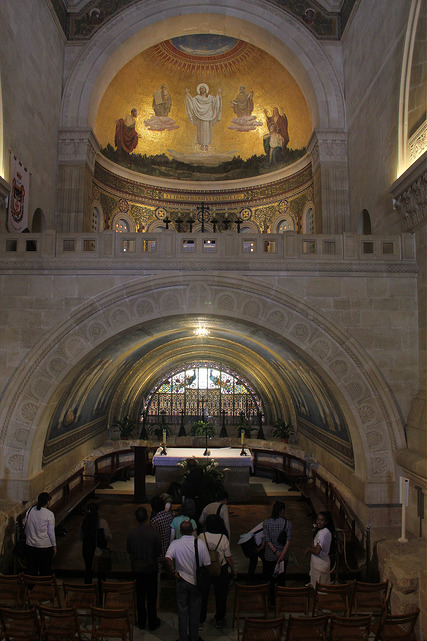
In the Church of the Transfiguration on Mt Tabor where divinity met humanity.


The Transfiguration of the Lord

Sell to Buy

I once bought the car I desired on a balloon scheme. This scheme allowed me an affordable, much smaller monthly instalment until the final month of the loan term when I had to pay a hefty lump sum. Distracted by the prize, I postponed the worry about the price. I gleefully drove off in a brand new car.

“The kingdom of heaven is like a treasure hidden in a field which someone has found; he hides it again, goes off happy, sells everything he owns and buys the field”.

There are a few people, too few, who fulfil this. They generously give up a life for themselves to take up a life in service for God. These are our priests and religious who have sold everything to buy the field. For the rest of us we remain outside the monastery walls very likely not even wanting to look in until we have some sort of a conversion experience.

The difference about this treasure hidden in the field is that God really want us to find it. The Holy Spirit works constantly and tirelessly in our lives to bring us an experience of God in our personal lives. He look to deliver a boost, to bring about that convincing moment in our heart when wisdom crystallise for us to want to trade our life for a new life in Christ. When we have a conversion experience, we are willing to sell everything to buy the field.

The reality of life is that this isn’t quite so easy to transact. A lot of what we have to sell is entangled in our vocation and relationships. We are not quite ready to drop our nets while our children are still at school or when we need income to care for our aging parents. Responsibilities, not greed at all, dictate that we must continue to trade outside the monastery walls, in the market place of the secular world. Much as we like to, we cannot immediately buy the field. And so we think.

Spiritual conversion takes place in our heart. It is in the heart where the transaction to sell everything to buy the field takes place. We will all continue with our life vocation as parent and child but a conversion in the heart simply mean to place God in the centre of the field with our life revolving and evolving around him.

Life will begin to spiritually evolve when our desires for earthly things are lessened. The Spirit will work to loosen our hands gripping fearfully on the wheel of a new car thinking that it will bring us happiness. Like the balloon scheme we are asked to convert our lives little by little in small instalments until we are ready to pay a bigger lump sum to live a new and fuller life in faith. This is God’s patience and generosity for us.

We have time for “the kingdom of heaven is like a dragnet cast into the sea that brings in a haul of all kinds. When it is full, the fishermen haul it ashore; then, sitting down, they collect the good ones in a basket and throw away those that are no use. This is how it will be at the end of time”. But we really do not know how much time we have. Sell, and buy the field before the balloon burst.


field

“The kingdom of heaven is like a treasure hidden in a field which someone has found; he hides it again, goes off happy, sells everything he owns and buys the field”.


17th Sunday in Ordinary Time

Yes, Yeast!

Good and bad. Wheat and weed. Life sustaining and life destroying. They co-exist until the end of our earthly life when the harvest arrives. “The harvest is the end of the world”, or the end of our time here. Then a permanent divide will separate for eternity, good from bad. Which side will we end up?

Along the way of our earthly journey, the sower who sowed us in his field will nurture our growth and protect us from harm. He will guard his wheat from the weeds. “There is no God other than you who cares for everything”. In other words, however complicated things get in life for us, we must know and believe that God is in everything, even the tiniest, seemingly most insignificant event of our day.

So bad things can, and will, happen to us in life. This is not God’s doing but the consequence of the weeds in our life. God only allowed co-existence and that day will come when he doesn’t. If that day is today, will all of us make it to the good side? So, he has “remained mild in judgement and govern us with great lenience”. And has kindly given us a lifetime to make sure we get onto the good side.

We are never left alone each day in our lifetime. Little seeds fall into our life every day. Most of them so small, they are unnoticed. Often they appear in small gestures of kindness or comforting and encouraging words from people around us. Often too the details are so tiny that we cannot yet see any link to what is happening and our limited human mind brush them away as ‘coincidences’.

The good news is that there are no coincidences in life. God cares for everything. He works every day, actually every moment, to untangle us wheat from the choking effect of the darnel. He is ahead of us on our earthly journey and somewhere further up the road, we will find repairs to our hurt and ‘coincidences’ as the work of the Divine; tiny little patterns, intricate in details sewed together in the Sower’s time into a beautiful tapestry that is our personal life on earth.

In the words of a friend, who encountered a little act of kindness this week from a stranger, shared, “Hold on to the little things with mustard seed faith, take heart that the smallest gestures can also move mountains”.

Seeds become wheat which become flour. Mustard seeds become big trees of shelter. The journey of our earthly life is this process. We are good seeds sown by the Sower into this world to become good people. First we make sure that we remain as wheat and then collectively as a wheat field fight off the harming effect of the darnel to become flour to make bread.

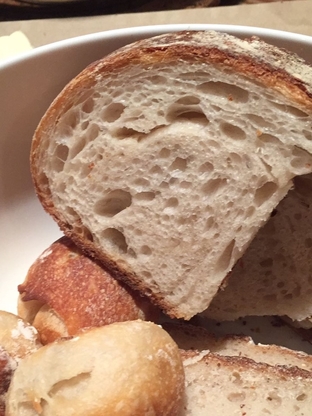
The world is a wheat field, its produce is life sustaining bread. A little bit of yeast will help three measures of flour rise to become the bread of life. We are sharers of this bread. Little gestures from strangers are like yeast to our faith life. We are called to be this stranger to others, to be the yeast in their loaf. Yes, please!


bread-2

The best yeast: “how the virtuous man must be kindly to his fellow men”.


16th Sunday in Ordinary Time

Sow Love

The mind receives, the heart gives. The Word of God comes to us in the form of teachings and doctrines. It falls like a seed into us. This seed must make its journey from the head to the heart. Because it is from the heart and not the mind that love flows. Teachings and doctrines must not remain merely as head knowledge but must be made to come alive through our actions.

“As the rain and the snow come down from the heavens and do not return without watering the earth, making it yield and giving growth to provide seed for the sower and bread for the eating, so the word that goes from my mouth does not return to me empty, without carrying out my will and succeeding in what it was sent to do.”

We are meant to be sowers of love. As the rain waters the earth to make it rich, knowledge nourishes us with understanding. As rain water seeps its way into the earth to find life, the Word of God must make its way into our heart to give life.

But this journey for the seed is a challenging one. Within us, our experiences in life have shaped our emotions, feelings, thoughts, decisions and actions. These have made us who we are. They have formed the landscape along the path from our head to our heart.

Perhaps we relate best to the seed that fell among thorns for we care too much for our worldly needs, choking and distancing us from a life of faith. Part of this path are also like patches of rock when experiences have led us into cynicism or bitterness and un-forgiveness preventing the Word of God from taking root in us.

However, knowledge is a double edged sword. It can also make us proud and arrogant. “When anyone hears the word of the kingdom without understanding, the evil comes and carries off what was sown in his heart.” This “understanding” is this necessity for this knowledge to be coupled with action. We cannot teach or preach when our actions do not testify of this love. Without actions of love, it will only be our pride speaking and often the contraction cuts like a sword.

We live in an over-informed time. Obedience to faith was easy in the yesteryears when life was less complicated and our minds less crowded. Today, overcoming our challenges to faith cannot only be an intellectual battle. Debating on knowledge alone will only leave us in a stalemate.

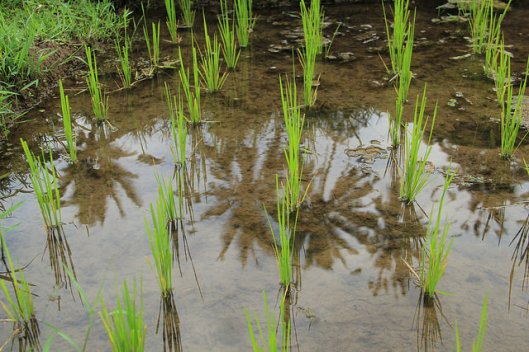
We are called to sow in this battlefield. Catechism alone will be like roots that quickly dry up in the scorching sun if we fail to bring alive this knowledge through love. And love is action that originate from our heart. Our heart is rich soil, and the seed of love must reach it. Only then can our life “yield a harvest that produces now a hundredfold”.

As love rain down from heaven into our life, watering it and making it grow, our life will yield a harvest, so when our journey is complete we return to our Maker, not empty, but succeeding in carrying out what our life was sent to do: Sow Love.

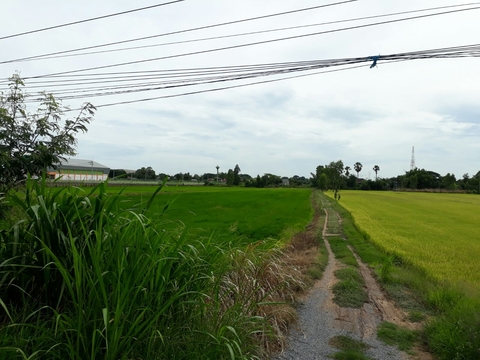
padi field 1

15th Sunday in Ordinary Time