Believe it or not, it isn’t Faith!

I have been faithful to my belief in the Catholic Church all my life. Faith was built on teachings; catechism classes as a kid, and into Christian apologetics fiercely defending the faith as a young adult. There was an unshakeable conviction in my belief. Faith and belief were two of the same. I had always thought so. Without ever pondering on it, the difference in my understanding of belief and faith was probably the size on a mustard seed. 

We will only begin to ponder when our deeply held belief gets challenged. Often this happens when challenges in life turn into a crisis and we realise that our “deeply held belief” are not deeply rooted at all. Faith flickers to life when belief is almost dead. Faith becomes real when we enter into the darkness of a crisis, when we realise our “long held belief” did not buy us that ticket for a smooth sailing life.  

It is in that darkness where our small seed of faith germinates. When the going in life gets tough, when our belief can explain nothing no more, we search for the divine in our life. Our journey in life enters a deep, long tunnel. In that darkness, we see nothing and can only cling on to hope for light at the end of it. “Faith” says St Paul “is an assurance of things hoped for, the conviction of things not seen”. 

Faith grows through our personal encounters with the Divine. When we pull out of the tunnel and look at our life in the light, the journey we had just travelled, we experience hope fulfilled. Understanding from belief becomes wisdom from faith. Such an experience in life gives birth to faith. Faith, unlike belief, cannot be taught. Faith is an experience and it grows from our many encounters with God on our journey through life. 

An encounter with God is an experience in life when we know we are being loved. This is the nature of God: to love us first, unconditionally and most times unseen. Faith open our eyes to see and our hearts to feel. Both love and faith cannot be rationalised in the mind. 

When we ask today “to increase my faith” we make ourselves available to experience the limitless, infinite depth of God’s Love. Imagine standing on the seashore and one tiny drop of the ocean represents the love of God we already experienced in our life journey thus far. “Increase our faith” make available for us the entire vastness and depth of the ocean. It is somewhat like having faith the size of only a mustard seed and we can say to a mulberry tree “Be uprooted and planted in the sea” and it will obey. 

This beggars belief but faith offers “not a spirit of timidity, but the Spirit of power, and love, and self-control” to embrace our journey in life. We cannot, and must not, be limited by the boundaries of belief. 

This is best summarised by the author Rea Nolan Martin who writes, “Belief is the product of the mind, but faith is not. Faith is the product of the spirit. The mind interferes in the process of faith more than it contributes to it. To have faith in the worst of times will no doubt require us to silence, or at least, to quiet the mind. Faith is what happens when our beliefs run aground. The spirit can be buoyed by our beliefs, but can also be brought down by them when they prove inadequate, as they most certainly will at some point in the journey”.  

Life is this journey from the head to the heart. Along the way, a mustard seed is all we need to be assured of things hoped for and be convinced of things yet unseen.
21656130042_fdec625f35_o

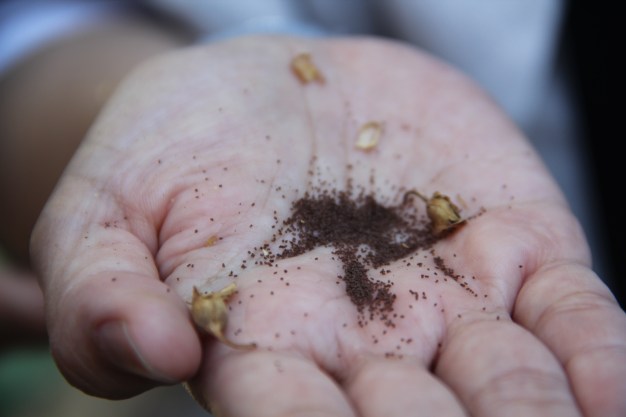
Mustard seeds in the compound of the Church of St Lazarus in Bethany


 27th Sunday in Ordinary Time
Vainglory

We could well be tempted to tune out from this Sunday’s message by simply declaring that we are not rich, “No, not THAT rich”! But let our conscience be pricked. We will be reminded of a “Lazarus” in our life; people who could have done with some help from us when they appeared in our life. If we didn’t see him, then rich or less rich, this reading is calling out to us. Because likewise, the purple rich man did not ‘see’ Lazarus at all in his life.

This is yet again not about being rich but about how we can be blinded by our quest to accumulate wealth for oneself. Money can buy us a lot of fun; short term worldly happiness leading to self-gratification and vainglory. When we are bored with one option, our accumulated wealth allows us to move on to another. The world offers us a wealth of options; lifestyles that will constantly distract us from living an authentically good life.

We begin to get blind when we see more value in spending our next dollar to “dress in purple and fine linen and to feast magnificently every day” rather than to share it with the “poor man Lazarus” who is always ‘sitting’ right before our eyes. This is no debate against wealth but a consideration about what we do with wealth. Being rich is not about how much we have but about how much we give.

Being wealthy is a blessing. It is a blessing of opportunities. The richer we are the more opportunities we have to live an authentically good life. But it is a double edged sword. When we spurn opportunities to use our blessings to do good for others, we create a rift between our spiritual and worldly lives. When we continue to ignore “Lazarus”, the rift widens into a “great gulf”. Yet this gulf remains cross-able as long as we are alive, if we take the opportunity to use our next dollar and expend it to do good for others.

Conversely wealth is this doubled edged sword. It becomes a curse when we continue to spurn opportunities till we are “dead and buried” and then regrettably we end up like “the rich man in purple looking up at Lazarus” for “between us and you a great gulf has been fixed”. 

Before we are dead and out, we have everyday opportunities to choose a lifestyle to “fight the good fight of the faith and win for yourself the eternal life to which you were called”. We have to fight, for disguised under the fine clothing of our worldly needs is the devil of vainglory.

A quote from Dr. Edward P Sri, a professor in theology about vainglory:

“Yet even devout Christians are susceptible to this vice when they plan their lives around the standards of happiness and success set up by the world. For example, a part of us might hope to gain respect from old friends and family members for having a successful career, wearing the latest fashions, having children succeed in school, living in a nice home, etc. These are not evil pursuits in themselves, but they can distract us from pursuing Christian ideals such as charity, generosity, simplicity, and humility. If these worldly pursuits hinder us from living a truly praiseworthy life-a life of virtue and holiness-then we may be seeking the vain glory of this world more than the glory of God.”

We have a wealth of money, time and gifts. They can be used to ensure we end up eternally beside Abraham, regardless of whether we were wearing purple.

img-20160924-wa0005

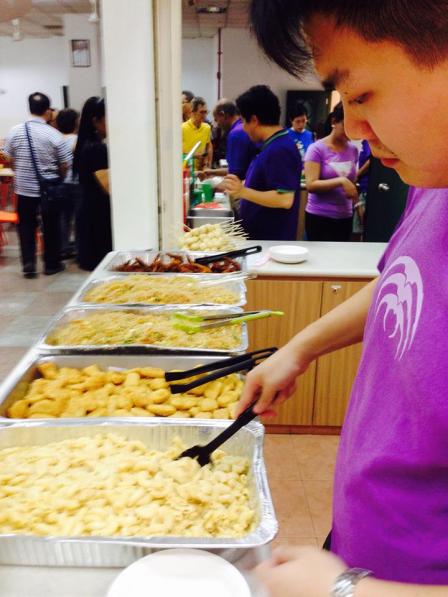
Using his wealth of time and talent to prepare a magnificent feast for others


26th Sunday in Ordinary Time

This Dishonest Steward and I

To be very honest I found it very difficult to write this week’s blog. I find this Gospel passage particularly tough to make sense of despite reading the many reflections online. It perplexes me how a dishonest steward can be made a gospel hero. Until I identified this steward in me in similar situations in life. 

I have stood at this crossroad before. A situation in life knowing ‘what we have’ will soon be taken from us. And we are powerless to stop it from happening. It is at that point we go into a frenzy regretting that we had not done enough for the longer term future which suddenly looks dauntingly near and real. We regret our extravagant attitude and a lifestyle tailored to feel gratified at the end of each day. We wished we had saved more. The steward was on this spot. 

I was on this same spot a few years ago when I knew I was losing my job. I wished I had done more to prepare for the rainy days that has now come. I should have tailored my lifestyle more towards long-term security. Being in that situation woke me up and I became acutely aware that for everyone there is a long-term goal and our need to prepare and journey towards it. But for most of us we may not see it until a situation befalls us.  

I imagine a situation befalling me; not an uncommon one. I am struck with terminal illness. I have more than enough money but suddenly that isn’t my long-term security anymore. With death dauntingly near and real, I suddenly see that my ultimate future is the heavenly security of eternal life. 

Can money buy me eternal life? Surprisingly, yes. In the context of today’s readings, “use money, tainted as it is, to win you friends, and thus make sure that when it fails you, they will welcome you into the tents of eternity”. We can be rich. In fact it is good to have money but it is how and what and who we use it for that will buy us into eternal life. It is in how “astute” we are as a “steward” of money that will win for us the “genuine riches” of being in heaven. 

We sing, “Do not worry over what to eat, what to wear or put upon your feet”. For the rich it is an easy song as they don’t need to worry. For the poor it is like hearing “Here take this dosage of faith …and hope!” And then we continue to sing, “Leave it in the hands of the Lord”. The rich, the people with money are these “hands of the Lord”!  

This is the astuteness that will make us gospel heroes; when we use our money, our gifts and our talents to help those who are poor, who have less than us. We befriend them on their journey towards heaven, sharing whatever we have. In the testimonies of their life, we are the seen, visible hands of the Lord fulfilling hope. And with these testimonies, the poor stand ready “to welcome us into the tents of eternity”. 

Every day, we have a choice in the lifestyle we wish to adopt.  Every dollar we spend accentuates our choice. But through this dishonest steward that we are reminded, “You cannot be the slave of God and of money”. 

20160917_173402

Every dollar we spend accentuates our choice of which Master we serve

25th Sunday in Ordinary Time

Lost & Found

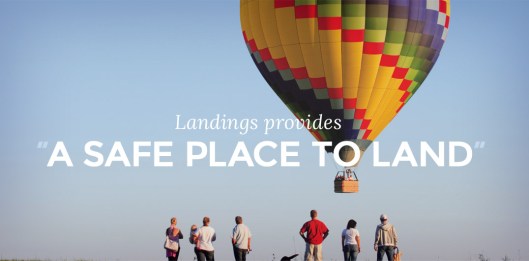
The Landings* mission to welcome returning Catholics is truly a great process. Participated with commitment, it turns out to be a wonderful experience of God’s prodigal love. It helps those who are lost in faith re-discover the presence of God in their personal lives. It brings our faith life into an experiential dimension. If we have done Landings, today’s readings come alive; words in our minds live in our hearts because we experienced them in action.

Who is ‘lost’ or what is ‘lost’? Faith? Belief in God? Rarely, because in the deepest recess of our inner selves our souls will search for its Creator. We are actually dealing with the degree of ‘lost-ness’, its visibility only showing in our behaviour. A manifestation of this ‘lost-ness’ is our disappearance from Sunday mass. This is the most common visible line drawn between one who is lost and one who isn’t. But this isn’t fully correct. Appearance at Sunday mass does not suggest that we live saintly lives! We all have a degree of ‘lost-ness’ as we strive to be perfect in God.

The beauty of this mission of welcoming returning Catholics is while reaching out to “the lost sheep”, “to go after the lost one”, we uncover the ‘lost-ness’ in ourselves. Embedded in us, unconsciously and naturally, is a judgemental nature. We simply classify a person not coming for mass to be a “lapsed Catholic, the lost sheep”; unconscious to the fact that this “sheep” is struggling with some issues in life, faith or otherwise. We are called not to judge but to get out of the pew to reach out. Often we find ourselves immobile and that in itself is a manifestation of the degree of our own ‘lost-ness’.

We are called to constantly energise our faith life; to take off on a run towards where help is needed to bring comfort and love. Like the father in today’s parable of the prodigal son, he began running the moment his son appeared as a speck on the horizon. No judgement weighed him down, and being “moved with pity” lifted him. When he reached him, there was an embrace not a rebuke. Instead of squeezing out words of regret from the son, he generously shut him down by throwing a party. Can we fly out of the pews to do likewise? Do we even feel enough to “celebrate and rejoice” for “he was lost and is found”?

This mission gives us the opportunity to make real the prodigal love of God in our lives; we are unconditionally loved and are urged to be the people God can use to make real his love to others, especially the lost, lost in many other ways too, in our world. In so doing, we ourselves climb a notch up from our ‘lost-ness’ and is found. We have experience the power of this un-judgemental love when we witness in Landings one lost sheep reaching out to another lost sheep to together climb out of their ‘lost-ness’. And we too climb with them.

Faith comes into this experiential dimension in this mission. When we go into cafes or go to where they are most comfortable: we run like the father towards them. We sit down to listen to their stories often laced with guilt and unworthiness like that of the returning son. But we surprise their spirit with non-judgemental words and actions of welcome. We lift their burden of unworthiness and put in affirmations from true love. We remove their blindness by pointing out God’s presence in their personal lives, even when they had been ignoring Him. We open the door to reconciliation; they only have to accept a forgiveness already given. This is the gospel passage coming alive.

This is Christianity as it should be; not a set of doctrines but alive in daily life. We are called into mission to make this prodigal love alive to all who we encounter; to reduce the ‘lost-ness’ in each of ourselves.

We are offered a personal relationship with the shepherd; an invitation we can only start to accept when faith becomes experiential. Only with this relationship can we make real this love of God. When our behaviour expresses this relationship, we become the words and action of God’s unconditional, prodigal love. Such behaviour is a better mark, a clearer visibility between who is lost and who is found.

As we sit in the pews today, hidden in them is our ‘lost-ness’. We can choose to be like the other son ever present at Sunday mass and say, “Look, all these years I have slaved for you and never once disobeyed your orders” or we can be like St. Paul, once lost, who says of God, “who judged me faithful enough to call me into his service even though I used to be a blasphemer and did all I could to injure and discredit the faith”. 

*more information on Landings at http://landings.org.sg and www.landingsintl.org

slider-311

Landings – Welcoming Returning  Catholics


 24th Sunday in Ordinary Time

E V E R Y D A Y D I S C I P L E


Today the Church celebrates the sainthood of Mother Teresa. She had lived her life everyday as a disciple of Christ, and she had lived it well. Today, lightly speaking, she is upgraded from disciple to saint.

Do we aspire to be a saint, or even want to be a disciple? Well, sort of yes and no. For many of us, it is an incredulous question; it is so far-fetched we won’t spend a minute pondering. Then there is also the difficult qualification, “none of you can be my disciple unless he gives up all his possessions”.

When we succumbed to the incredulity of the notion, we are actually undervaluing ourselves. When we exclaim, “no way, me?” we are grossly underestimating our capacity to be good to self and to others. Deep down in all of us, we have this capacity to be a saint. But first we need to want to be an everyday disciple.

“The reasonings of mortals are unsure and our intentions unstable; for a perishable body presses down the soul, and this tent of clay weighs down the teeming mind.”

To start out on this path of discipleship, we must address the mind and set the heart to say a ‘small yes’ so that we have an objective to focus all we decide and do towards it. Few among us with our “perishable body” will be able to say a ‘BIG, hearty, convincing yes’. But a weak ‘small yes’ is all that is required; it is enough for the Holy Spirit to act through us.

Mother Teresa herself answered with many small yeses in the things she did every day. She did small things everyday but with great love. She was an everyday disciple.

Our “everyday” is filled with the same opportunities. The greatest possession we have is not money. It is ‘time’. We can go and be good to others when we have time, even without money. We cannot be good with money only if we have no time. “To be good to others” is to be a fulfilment of “to love your neighbour”. To be good is to be a follower to make real and personal the love of God to others. Christ came and died for this reason. To be a follower our footsteps need to be synchronised with this same reason.

Our ‘time’ is our life. When time runs out for us, life expires. Consequently if we spend our time with someone else to help with a task, to console if there is hurt or to journey as companions in faith, we give our time away. We give away some of our life. In this way we die to self and give life. Every day we have hours. Every day we can give up our possession. Every day we can be a disciple.

We help ourselves to be more specific in the good things we can do by identifying a specific mission of the Church that suit our gifting. We join a ministry, hopefully a community to encircle ourselves with likeminded people. Together as a community it is easier to walk the path of discipleship. With a group of people, as compared to a lone self, undertaking mission we multiply the sense of fulfilment. Together, we make ourselves available to God’s affirmation; He can better affirm us through the words and action of one another.

Gradually through involvement in ministry our priorities for the other things in everyday life will begin to shift. Gradually we will see more importance in what brings happiness to others because we will begin to taste true happiness on this path. Happiness is found when we make others happy by being good for them. Gradually we fall in love with God and grow in passion for his work. These will all happen gradually in the everyday opportunities in our daily life. We gradually become an everyday disciple.

We shape our cross to be this; on this cross we carry our effort and sacrifices to live a redemptive life. And on this cross too hangs our personal struggles. But they will become a little bit more manageable and little less heavy when we are able to live our life in more faith. Faith grows and multiplies in our everyday encounters along the path of discipleship.

“Anyone who does not carry his cross and come after me cannot be my disciple”.He didn’t say that to be a disciple we will be given more crosses. We carry on our cross, the weight on your shoulders our effort to live a life where God’s love can flow through us to touch others. Mother Teresa shaped her cross to be heavy; she worked in tough conditions but she found immense fulfilment to lighten it. She did it in small ways, every day.

We too have this opportunity to be an everyday disciple.

21047866093_ae30849d01_z

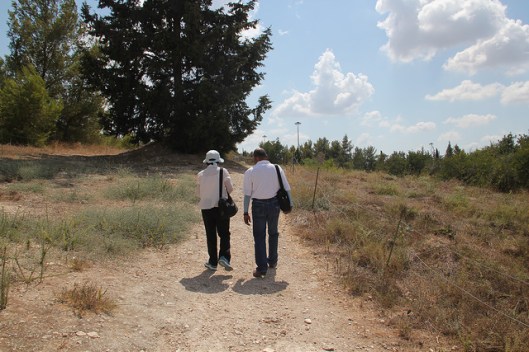
Walking the path of Discipleship with the Risen Christ, Emmaus


23rd Sunday in Ordinary Time

Humility – Life’s Essential App

We tend to live our life in ‘compartments’, wearing different coats and behaving differently depending on what we are doing and who we are with. We are somewhat different as the employee in the office and the family man at home, and perhaps most conspicuously as the believer in church.

The biggest challenge most of us have is in trying not to separate our faith life from our worldly life. Most times we fail. Once a week on a Sunday, we profess our belief in God and all that the Church teaches and ask for “thy kingdom come” and promise “thy will be done”. At the end of that one holy hour, we jump out of the faith life compartment and drive away in our secular lifestyle compartment.

Today’s hour calls us “to conduct your affairs in humility” (today’s readings); to intermix our secular life with the faith quality of “humility”. It does not call us to abandon our secular life but that it should not be lived separate from our faith life. In IT jargon, our ‘faith life’ should be the operating system on which our ‘secular life’ is run, with ‘humility’ as the essential software application.

Humility is our first quality; we are born naked highlighting it. At birth, we are totally dependent on God; life given by God. So to speak, we are 100% in our faith compartment. But grow we must. As we grow and progress in the world, our faith life must grow in a directly proportionate relationship with our worldly life. However for most of us we experience an inversely proportionate growth; secular lifestyle taking us away from faith.

We are constantly reminded about how we are to live, and our end goal beyond earthly treasures. “The greater you are, the more you should behave humbly, and then you will find favour with the Lord”. As we grow in this world, we wear more and more identities covering over our base layer. The ‘greater’ among us can become so thick in wear that we can no longer feel our base layer of ‘humility’.

When we don’t feel it, we “cannot make your way to the lowest place and sit there”. Some of us are already there. These are people with one layer over their base layer: the poor, the marginalised, people at the lower rungs of society’s status ladder and those whose faith life is full.

For the more common among us, not that we are bad people, we struggle being distracted by the world and its attractions. Again, doing well in this world is actually our responsibility. Each of us are blessed by God with gifts and talent. We are damned if we just bury our talent in the ground and sit at the lowest place. We are called to use our gift and talent wisely, and in consideration for the people around us, especially those who have less than us in material and status. Humility in acknowledging that ‘all comes from God’ is key.

When we lose humility, we lose our belief in God. We forget we were born helpless. We become self-made people with thick layers of coats.

When we use our God-given talents, we are rewarded on earth but we will also find heavenly treasures. When we do well, we can afford more of life’s luxuries and life can become a party. But “when you have a party, invite the poor, the crippled, the lame, the blind; they cannot pay you back means that you are fortunate, because repayment will be made to you when the virtuous rise again”.

Being humble leads us to being virtuous. Humility helps us to acknowledge God as our creator and accept his plan for humanity; that we must journey this life to allow God’s love to flow through us and impact the lives of those around us. With faith as our operating system, we are urged to incorporate mission (this flowing of love) and community (these lives around us) into the operating manual of how we live our earthly life.

It’s OK to grow in stature and have a big watch on our wrist, but let that watch remind us to give time to mission and community. It’s OK to have a big position at work but let that also lead to us to having a position in ministry. It’s OK to drive a big car or be driven in one, but let that remind us of God’s daily blessings, and that we must be driven to help Him bless others.

They say that nice, humble guys finish up last. It is true that we may not exalt ourselves to a life partying with this world’s elite, but we will be assured that we will live for eternity.

20786724244_c2b8eaa592_o

(Door of Humility – Church of the Nativity, Bethlehem – Going in on bended knees, humbly, to enter into the presence of God)

22nd Sunday of  Ordinary Time

Race for Gold

Try telling a parent whose child is in the crucial year in a Singapore school preparing for PSLE (Primary School Leaving Examinations) that qualifying for the better secondary school is really not that important by quoting today’s gospel, “Yes, there are those now last who will be first, and those now first who will be last”. In reality, it does matter. In truth, as parents we need to guide our child and try our best to provide for a good education. It is our parental responsibility to try our best. For God has gifted a child into our care.  

The world’s a rat race and for believer or non, we are in the race. 

But the passage does not read, “The last will be first, and the first last” or “The winner is a sinner” or “To believe you must lose”. So yes, we need to race. But for which gold medal? 

Fittingly this passage has popped up during the Rio Olympics. There was a moment this week when 2 women in the 5000m race tangled, fell and got hurt. One did not race away from the other but instead said, “Come on, get up, we have to finish this race”. Encouraging each other they continued to participate in the race till they finished. That moment won the hearts of many. That moment put the spirit into today’s passage. 

They call it the “Olympic spirit”. Then, decades ago, sports was about participation and “spirit”. The world’s ways have changed quite a bit since then. Today, sports and education is about winning, or at least not losing out.  

Gold medals are won by results and not spirit. The world’s judgement is by the end-result. It chooses politically-correct words to ‘reward’ a spirited participation. But sponsors are unlikely to jump onto your bandwagon. You won’t have one anyway. 

We need to be at the race, not to win it at-all-cost, but to participate at-all-cost. We don’t have to be a rat. Our timing and position does not matter. Heavenly gold is won by how we participate, or more precisely our attitude in our participation. This is a race for eternal life. Who we are and what we do will determine if we get “to enter by the narrow door”. The difference in this race is that everyone gets gold when we get pass “the narrow door”; there is unlimited space on the winner’s rostrum.  

We can strive to be in the top secondary schools but our world cannot come to an end if we fail to qualify. Every one of us has a special purpose in life. We must continue participating, we must continue racing and in so doing give ourselves the opportunities to discover the true winners of this race are those who look at other racers as companions rather than competitors.  

In our schooling for eternal life, we must acquire wisdom that losing or winning by the requirements of this world has got nothing to do with it. This week another Olympian completed his race in 50.39 seconds and in so doing won his nation her first ever Olympic Gold. His winning moment brought this entire nation into a dimension of joy none have ever before experienced. When he finished his race, an entire nation finished with him. This role was his, and his alone but it allowed an entire nation to bask in the golden glow of his purpose. 

Each of us too have our special purpose in life, perhaps fulfilled in less glittering circumstances. We too have in us the spirit of a champion that calls us to reach out to other racers, to help as many finish the race of life and arrive at the narrow door with the ability to squeeze through. 

We must participate in life like a true champion with a golden heart, fearless to lose what we have so that others will have, as we race together towards eternal gold.

13938566_1751658895073117_132131699672305805_n[1]

Race for Gold

21st Sunday in Ordinary Time

Let’s set the World on Fire!

“I have come to set the earth on fire, and how I wish it was already blazing!” 

In moments when we are disadvantaged in society, we clamour for the world to change. In moments when we are compromised in values, we clamour for our old-fashioned Church to ‘progress with the times’; to say that what is wrong is now acceptable, and what is sin is sin no longer. We shout in frustration drowning the cries from our inner self that “change begins with me”.

There is no one person unholy, whatever values compromised or advantages siphoned from society. Even a sinner is holy.

We are holy because we are all created good. We are born holy but grow into societies and values which often bring us onto unholy ground. We are holy except only with varied degrees of ‘un-holiness’. Whoever we are, and whatever we have done cannot extinguished that holiness embedded in us when we were created; our holiness is like a fire that can never be put out.

Our challenge in this world is to reduce the degree of ‘un-holiness’ in our self. “Let us rid ourselves of every burden and sin that clings to us and persevere in running the race that lies before us while keeping our eyes fixed on Jesus, the leader and perfecter of faith”. Our life towards perfect faith is to fan the little flame of holiness to set the world around us on fire, the more it blazes the better. The fire to burn a difference begins with ‘me’.

We can sit and complain about our ‘old-fashioned’ Church but in truth God is the only constant in an ever-changing world. For 2000 odd years. God’s love, mercy, patience and faithfulness are all still there, a holy fire that continues blazing. A fire he wishes will consume us.

In truth too, the Church 2000 years on continues to be relevant to the times. But our vision of this is limited. We simply cannot see God’s complete picture for the human race. We are but one tiny piece of this giant, intricate jigsaw that will only be completed at the end of time. Only then will life no longer be a puzzle. Only then will we see how our little acts contributed in a large way to make the picture complete.

But we must first care for the small picture around us, the people in our lives we can impact with the burning fire of our holiness. We all are small pieces of the jigsaw and our holiness will burn us into shape to fit in with the people around us. When we are less holy, and more un-holy, others will have to be burned to shape themselves around us. This holiness in us enables us to be good to others.

It is when we are holy, when we are good that we will encounter God in our personal life. We experience his love, mercy, patience and faithfulness when we allow those to flow through us shaping ourselves and impacting others. It is in little acts that we allow our holiness to burn through.

When we encounter God, we put an experiential dimension to our faith. Each experience renews us; it makes us young. Each God-moment reminds us that we are always returning towards God; it strengthens our faith. Indeed to borrow the lyrics of a song and taking it out of the context of it and quote the words alone, “We are young, so let’s set the world on fire”.

This is a real life experience of mine. A group of friends love to sing this song on social nights out, singing it with this twist of faith. These are friends we met through our personal conversion experiences and in ministries for our parish. Through our journey to become less un-holy, we found a common identity in Jesus, perfecter of faith and were gifted the bonds of friendship. Together we serve in ministry, in mission of faith identifying ourselves as “always returning”.

Together we have shaped ourselves around each other, and together we have gone on to reach out to more and more people. We were once individual, tiny flickering flames and have now become a pocket of fire burning brightly and engulfing more people that come onto our path.

We are all young in faith, so let’s make a difference to this world. Let’s go out and set it on fire. Let’s blaze the world by who we truly are: holy.

IMG-20160504-WA0031

“We are young, so let’s set the world on fire!”


20th Sunday in Ordinary Time

Journeying On…..unknowingly

“For where your treasure be, there will your heart be also”. Does my heart already know its treasure 

The faith journey we undertake in life seems to suggest so. This is even so for those of us who are not fully tuned to our faith or are at-this-moment disbelievers. We sometimes stubbornly refuse to acknowledge the end goal of our journey is to attain the heavenly treasure of eternal life. “Stubborn” because we are focused on earthly treasures, a pursuit that has perhaps blinded us from the end game in which we will all participate. 

But somehow our heart seem to know. How is this possible that ‘my heart’ knows and ‘I’ don’t?

When we are caught up in the treasure hunt for all things valued in this world, we bury our true identity deeper into our inner self. When we place more importance on building barns for material wealth, the importance of our faith life falls further down our list of desires. At some point down there, God becomes unimportant. We have allowed the chase of earthly needs to bury the identity of who we truly are: life created and given by God.  

Our soul will always wander back towards its Creator. Our soul knows the treasure and the Creator himself will lead all souls back to Him. 

But our soul has a human identity. It is with this identity that we navigate the complex maze of our earthly life. As humans, we are associated with ‘human weaknesses’, chief of which is our weakness for earthly comforts to navigate the maze. So the human ‘me’ goes into a frenzy in all directions in search of these earthly comforts, while beneath the line where my true identity is found, my heart beats reminding ‘me’ that ‘I’ should pursue “a treasure no thief can reach it or no moth destroy it”. 

We are all given the freedom of choice to live in our human ways. In the race of life, we will experience joys alongside despair, broken dreams alongside growing hope. In moments of despair or hope, the ‘I’ in me will recoil into the contemplative silence of ‘my heart’. It is here in the heart that human meet divine: where ‘I’ meet my soul. In this silence, we try to make sense of what our life actually mean. We are stirred into a search and unknowingly a journey begin to take on increasing prominence in us. 

This journey is our journey towards our heaven; it manifest itself at some stage in life when we seek to know our God better, when we walk our path to walk closer to Him. This is the result of an unseen force that pulls us in. This is the gift of “Faith”. 

Our heart knows this gift although the ‘I’ in me in my intellectual, human form may not yet accept or make sense of it. Faith is given by God our Creator as a compass to lead us home. 

The readings today comes alive! It is by faith we obey the stirring call to begin searching for meaning. It is by faith ‘my heart’ set out, but the ‘I’ does not know where it is going. This is often true in our experiences of the process where someone who was been away from Church begin returning to faith life. The ‘I’ may not even know what it is searching for but by faith we will eventually discover. It is “by faith ‘I’ set out without knowing where I am going. It is by faith, I will arrive”. 

It is by faith that we go on this journey. It is by faith we will meet people along the way recognizing now the purpose of our journey: that we are “only strangers and nomads on earth”. It is by faith we will know that we seekers of a God yet unknown to us personally. By faith, we will spurn opportunities to return to our old ways. By faith, we take on a new life. “We had the opportunity to go back to it; but in fact we were longing for a better homeland, our heavenly homeland”.

But it is important how we travel our journey. By faith, ‘my heart’ and ‘I’ unite to make God more visible in our journey through the maze of life. We must participate in the game of life, not despairing in unfavourable situations, always playing on in hope. By faith we live life exchanging earthly pawns for heavenly knights, and arrive at the end game in a winning position for our treasure in heaven.

IMG-20160806-WA0023

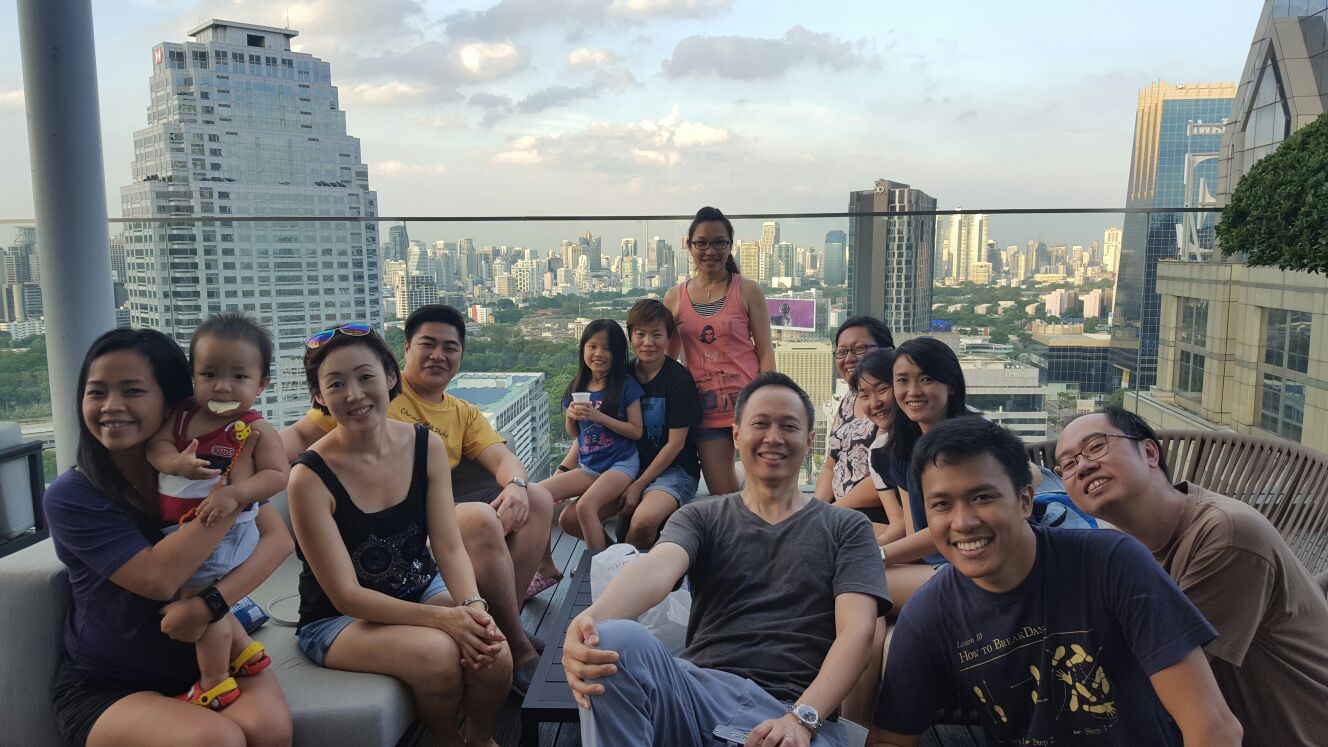
By faith we meet people along the way and form communities

(Bangkok 2016)

“Faith is the realization of what is hoped for and evidence of things not seen”

19th Sunday in Ordinary Time

I can’t be rich?

I think of myself as the average Catholic. I piously fulfil my weekly Sunday mass obligation but faith life does not go much beyond that. God, and my faith is definitely somewhere ‘there’ but it isn’t much at the forefront of my thoughts. Faith isn’t the compass that points the direction towards which my life should take. When I hear the Gospel I pick out key words without attempting to go deeper into what it actually mean, and what it can mean to my life.

For a person like me, hearing today’s gospel without listening, confirms the impression that to be a good Catholic is tough. I hear that ‘I can’t be rich’ rather than carefully listening that it says ‘I shouldn’t be greedy’. “Take care to guard against all greed, for though one may be rich, one’s life does not consist of possessions”. 

We all have responsibilities in life. Responsibilities start to grow when we leave school to feed and clothe ourselves and to find shelter. They grow as we travel the timeline of our life; starting a family, children going to school, looking after our older parents and attending to health issues that comes along. These are life’s issues and in reality, money and possessions are currencies we use to navigate these demands. And so, to be prudent, we start to build a small “barn” to hold our “possessions”. There is nothing wrong with that.

Unless. When we carefully listen to today’s gospel the message is actually quite clear. It is about “guarding against greed (avarice) of any kind”. What is less clear is, “When do we cross the line between responsibilities and greed?

Greed leads us down a blind alley. When we build a barn and more barns, they blind us from the final destination of this life’s journey which is to gain eternal life in heaven. When we are at heaven’s door, we know that we can only travel on without our earthly possessions. But none of us will know when that will be. “Fool! This night your life will be demanded of you and the things you have prepared, to whom will they belong?”

To adapt a famous quote, it is more important how we travel the timeline of our life than to arrive at the final destination.

For me, the average Catholic, messages like these will only hit home when I encounter a crisis in life; when I will realise that I will need to depend on others for help and go knocking on someone’s barn door and hope they will open for me. In reality, we cannot travel through life on our own, we are inter-dependent on each other. We must share our barns. In the “someone”, in this “inter-dependence”, in the “sharing of our barns”, we will uncover the true meaning of our life. This is that our life on earth is the great journey home to heaven and how we take each step determines if we will make it home.

‘Possessions’ can be a loose measure of the gifts and talents we are blessed with as individuals. ‘Greed’ is when we only use them for ourselves. Gifts and talents help us manufacture possessions and wealth and they also help to give us knowledge, status, influence and many other advantages to ride on as we travel our timeline. These are what we store in our barns.

As we accumulate and build barns in the name of ‘responsibility’ we will reach a cross junction on our journey. Our faith will be stirred, our conscience awakened, we are prompted in our inner self “to put on the new self which is being renewed in the image of its creator”. As humans, we will always have greed but because we are built in his likeness, we will also have an equal amount of compassion, if not more. Here, Christ is giving us the option to convert earthly possessions to spiritual riches.

In truth, what matters to God is how we exchange our earthly possessions for heavenly treasures; of how we use our blessings to be a blessing to others. We are called to build barns of love, compassion and mercy and to open these barn doors to share and make a difference to the people in our life who may be poor in possessions but more importantly poor in spiritual wealth. “Thus will it be for all who store up treasure for themselves but are not rich in what matters to God”. 

What matters is not what I own, but what I have shared and given. I am called to help uncover the richness of God’s presence in the lives of others through the life I live. In this, I should be rich.

20140829_123223

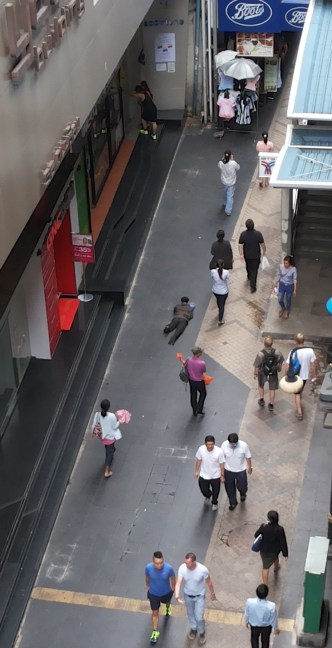
On a Bangkok street, a man without possessions spends life on his belly looking for some.


18th Sunday in Ordinary Time