That voice down our path

Bangkok just recorded its worst day of the pandemic. This third wave is swift and looks exponentially bad. Ironically, this re-emergence filtered through on Easter Sunday sending us back into an unscheduled Lent. It is again noisy inside us, a cacophony of uncertainty, anxiety, fear, and hopelessness. “What if?” Amidst the din, a small voice beckons that we are an Easter people, a people of hope.

We are again reminded about the truth of our worldly life. We have no control of the events that impact us. In moments like this, we borrow Pilate’s question, and asked ourselves, “What is truth?” We reflect on our mortality and when that is in focus, we wonder about what is important in life. As we walk our path through life, what is important for us changes with the seasons of our life. Some discover it young, others only in their final season that what is important is that we want to rise again. And that is the voice down our path.

“I am the good shepherd, says the Lord; I know my own sheep and my own know me.” (Today’s Gospel)

Our path is life meanders its way down valleys of depression and up mountains of joy. But life is always full, life always to be lived. Even the poorest amongst us have days of happiness. The path we walk in life is full of good fruits, but some are the apples from the garden of Eden. Our daily life is very noisy, with voices tempting us with fruits of immediate self-gratification straying us from the right path and creating a mist fogging our vision of this true hope. But every day that voice is recognisable from all the noise.

The noise yells at us to be successful at all costs. Noise says that happiness increases exponentially with wealth; our path can be glittered with comfort, success, and riches. But what hope will those buy us? Against the backdrop of this pandemic, those riches are suddenly less important. In reflecting our mortality, the voice of this pandemic is urging us to follow him. One day in hope, we will return to normal life and it is hoped that we apply the lessons of this pandemic as our new normal. We, every one of us, are in this life together. We are one flock.

“My dear people, we are already the children of God but what we are to be in the future has not yet been revealed; all we know is, that when it is revealed, we shall be like him because we shall see him as he really is.” (Second Reading)

As we walk down our paths through this pandemic, the definition of hope matures in us. When the first wave arrived, ‘hope’ was closing our eyes and when we re-open them the pandemic would have gone. The pandemic is still here. As Easter people, we cling on to the promise of the resurrection. This is truth, and from it our true hope is in the future that has not yet been revealed, all we know is we shall be like him. When we have this true hope in us, we can live through the cacophony of uncertainty, anxiety, fear, and hopelessness in peace, and even in joy.

We are called “Children of God”: “Think of the love that the Father has lavished on us by letting us be called God’s children; and that is what we are”. What it means is that when we are born and the path of life starts, there is a voice down that path that will lead us through our earthly life to claim the promise of our baptism, this of eternal life. We are children being led to our Father.

Life is a journey through a very noisy world where wolves attack and sheep scatter. Down the path is the constant voice of the Risen Christ. We must build and strengthen our claim on the truth and hope of life by heeding his voice. For the voice rejected by us the builders of life will prove to be the key noise.
4th Sunday of Easter

Who is at the door?

There are no public masses in Bangkok from today, yet again. This third wave is looking far more threatening. Even if there is a lockdown, time will never stop. Life will go on seemingly without mercies; if we are already in a challenging time, it will get even worse. Uncertainties, anxieties, anger, despair, and fear aggravate our emotional turmoil forming questions that should ask about our faith life. When churches re-open, we will all be there at the door. The question will then be, “Are you returning or leaving?”

Nothing it seems will be the same again when we emerge from this pandemic. The congregation at mass will certainly not be. There will be familiar faces missing, but there will also be new faces. We tend to be more concern about people leaving, but we must reset our spiritual mindset to keenly embrace those who are returning. Nothing will be the same again. The emotional turmoil from the pandemic will recalibrate our spiritual life. Doors will open into a new church. We will be at the door.

The church in Singapore is making tentative steps to re-open. This week a program welcoming returning Catholics was launched. Maybe not everything is bad about the pandemic. For one it has sent us into the desert to ponder life. In our desert we will surely look at where life have taken us. We will look at the roads we have journeyed, what happened to us? Everyone has a story. Returning to church is no longer returning to the pews to fulfil our Sunday obligation. Returning to church is about re-encountering the Risen Christ in the chapters of our life story. Only then can we believe again.

“The disciples told their story of what had happened on the road and how they had recognised Jesus at the breaking of bread.” (Today’s Gospel)

Returning is a process. Today’s readings all speak of this process: Reconciliation, forgiveness, repentance, and the eventual encounters with the Risen Christ. A person wanting to return to Church first hears the call of the Holy Spirit. No, it did not come from standing atop the mountain in the whispering wind. The call comes from the happenings in our life in the here and now of the present. More often than not the call is louder in despairing situations. And all we want is peace.

“‘Peace be with you!’ In a state of alarm and fright, they thought they were seeing a ghost. But he said, ‘Why are you so agitated, and why are these doubts rising in your hearts?”

We can be lost along the road of life. The happenings create emotional turmoil that confuse us. We can be agitated, doubting the mercy of God. We can be agitated by a false sense of guilt about leaving God somewhere along the road. We doubt if we are worthy to return. We have lost all understanding that God is always forgiving, never judgmental. We are so agitated and doubtful, yet we stand at the door. At the door this week, the church in Singapore offers this journey accompaniment to listen, speak and explain the Risen Christ walking with us.

This pandemic has given us the chance to look at our life in all the details. You will find that God is often found in the little details. If you look at the road you have travelled in life, one of the greatest discoveries is that “I have left Christ, but he has never left me”. When churches re-open, at the door, are you coming or going?

“Lord Jesus, explain the Scriptures to us. Make our hearts burn within us as you talk to us.”

3rd Sunday of Easter

Our need to experience

When we travel these days (let’s hope we are given another chance), we no longer rush from one tourist landmark to another. Instead, we search for places which offer a unique flavour, a local breakfast perhaps to titillate our other senses. Here we linger, not just to see but to smell, taste, hear and feel our travel. It is no longer sightseeing but experience seeking. It is not that travel has changed, but we as human bodies have.

“Unless I see the holes that the nails made in his hands and can put my finger into the holes they made, and unless I can put my hand into his side, I refuse to believe.” (Today’s Gospel)

And so, it is with our faith life too. It cannot remain static as a belief, a religion. The world continues to move on, and our human selves have progressed alongside, with new philosophies in the ever-changing world. We are a modern-day ‘Thomas’; catechism classes are hardly stimulating our youth and adults can no longer stimulate growth by debating faith on intellectual knowledge alone. Intellectual knowledge is important. It forms the foundation for the modern-day Thomas who needs to add to this foundation lived faith experiences to travel this world today.

Lived faith experiences are real-life encounters with the Risen Christ. Like Thomas, we seek conviction and so we need to put our finger into his wounds. Such encounters are never by the sense of sight, but a combination of all our sensory powers to feel and know that the presence of the Risen Christ is intimate in the reality of our personal world. When we arrive at that, we reach Thomas’ point of conviction to soulfully exclaim, “My Lord, and my God”.

Easter is this season to encounter the Risen Christ. When Lent was about coming home and repentance, Easter is about reaching out and witnessing. Repentance is about life transforming, witnessing is testifying to life transformed. Lent must become Easter, as death is raised to life. This is a transition our faith life must make, if not we will be stuck at the foot of the cross. The readings of the Easter season are all about the disciples encountering the Risen Christ. We cannot leave these in history but to bring them into our present, into the centre of events happening to us in daily life.

“He said to them, ‘Peace be with you’, and showed them his hands and his side.”

Our contemplative discipline must continue throughout this season. The Risen Christ is always inviting us to put our finger into his wounds, “Give me your hand; put it into my side.” The Risen Christ wants us to encounter him. So, how can we ‘see’, how can we feel? How can we experience the Risen Christ in our daily routines?

Peace is the fruit of such encounters. Peace the inner calm that takes us through difficult periods in life. Peace the world cannot give. Peace that helps our unbelief. Peace that leaves us so much joy and conviction that we want to share it. Peace.

Easter is a season when suffering bears fruit, when faith blossoms, when it becomes a lived experience. It is a season to bear witness, to become intentional disciples. Bearing witness is not a terrible responsibility, not being saddled with a cross. It comes not out of suffering but from peace. Lent has left a dying grain of wheat in each of us, and Easter is the field for our faith to flourish into a new dimension. When we bear witness the budding grain will turn into a plentiful harvest.

We must find this peace to believe. It can all start with a local breakfast when you sense, feel, and know that the Risen Christ is at the table eating with you.

2nd Sunday of Easter

…and Up

We must be careful not to be stuck at the foot of the cross. When we have had a good Lent, it would have been intense in its discipline and focus. Easter comes with immense joy, and at the same time a relief for our human self. We are more relaxed, and we should be, but almost immediately we must reclaim the discipline to dwell in the fifty days of the Easter season, to try to encounter the Risen Christ in our personal life as when tomorrow comes, our worldly life will continue its course through the ups and downs.

Mystagogy, going deeper into the mysteries, is the final stage of the RCIA spanning the Easter season when the newly baptised are not instructed, but journeyed with to experience the mysteries of our sacramental life brought into the reality of our worldly, secular life. In the Easter season, Jesus is often presented to us as the Risen Christ who accompanies us through our ups and downs. But often many newly baptised, so relieved in achieving their baptismal goal would stop coming.

This can apply to us too. We let Easter go more quickly than we think. We must guard against looking at Easter as a one-day event, otherwise we will always be stuck at the foot of the cross. When the inevitable challenges and sufferings come, the Risen Christ is in those realities to encounter us. When we go through crisis, we feel abandoned, alone and left behind. We feel like being in an empty tomb in which there is nothing.

“Then the other disciple also went in, the one who had arrived at the tomb first, and he saw and believed”. (Today’s Gospel). John entered the empty tomb and saw nothing. In that nothingness he saw everything, The Risen Christ.

In these fifty days we must re-visit the empty tombs of our past. Move the stone away, they were never empty. We can retrace the stories of our life. We find cursed episodes to look at in the Easter light. We will find some that have become blessings in disguise. Others will be getting there. Even today if you are in a dark tomb, you can find evidence from past episodes to embrace the Risen Christ walking with you. Life is not easy, and for this reason He is risen to journey her with you and me. Our tombs are never empty. There is always a presence.

We each have our own empty tomb experiences in our life. For most we want to leave them alone. It is time to move the stone away to find not just healing but that the Risen Christ truly walks with us. This is Easter in the most personal and intimate way.

My own empty tomb experience was my own Good Friday moment when I lost my job unjustly years ago. It does not matter if my employer felt justified as I was left to deal with my own raw emotions. I was first angry and without finding any redress became bitter. In that dark tomb, it eventually became unforgiveness. Meanwhile outside my tomb I was unable to appreciate fully my new and wonderful environment. I was stuck at the foot of the cross, subconsciously choosing to continue suffering until I was guided to move that stone and began to see how my life has since been one full of blessings. You too, if you have not, can experience this resurrection in your own life.

When bad things happen to us, we first descend into a mist of anger. It is likely that we can also be angry with God. We can remain angry a long time and allow this anger to move us away from God and church. In that tomb, we think it became unbelief. But often it is not unbelief but simply because we are human. We must recognize that it is our bad temper, wounded pride or unbearable pain that need to be addressed. Because in a mist, we cannot see the emptiness that tells a story.

This is Easter. It is a time to build hope and faith. It is a time to share about our sightings of the Risen Christ. A time to tell, a time to witness. A time to appreciate that life is full of ups and downs but with the Risen Christ we will always be on the up.

Easter Sunday – The Resurrection of Our Lord

Up and down, and down

We all have had the moment on high, waving our palms and singing “Hosanna!”, vowing that our faith will henceforth never be shaken. It might have been the moment a desperate prayer was answered. Or a spiritual high at the end of a retreat. Maybe when we were baptised or charged up by experiences when we returned to Church. And then as we re-engaged our worldly life, the challenging realities takes us down. We find that despite this, suffering did not go away, and we go down and down.

We are now at Holy Week; the services will be long, full of rituals, and intense. It has been a long Lenten preparation and I can’t wait for this week to go quickly by, after all I have a bottle of wine waiting after the Easter Vigil to break my alcoholic fast. It would be a mistake to want to rush this week. In fact, we would want this week to go torturously slow for us to immerse into the events, allowing them to speak and for us to listen. For in them somewhere, we will find a hold to cope with our many ups and downs in life.

On Holy Thursday, the night before he died, we meditate it as the Institution of the Eucharist, our mass. As we are being vaccinated, churches are looking at reopening the doors but wondering if we will all come in? After all, this pandemic has caused us to go down and down. Where is God? We have all been away from the routine of Sunday mass. Being online has its conveniences, and other routines have taken over.

I read “Why go to Church?” by Fr. Timothy Radcliffe. On the night before he died, faced with fear and the immense suffering ahead, surrounded by disciples about to bolt and be scattered, together paralysed by the uncertainty of the next day, what did Jesus do? “This is my Body, this is my Blood”. “Take, eat and drink of it”. Jesus gives us his body, his physical, bodily presence to accompany us in our sufferings. The True Presence. This is more than a virtual presence which we cannot be completely part of watching it on screen. In the face of the ups and downs in life, we are given this bodily gift to continue our daily life with. To receive, we must come and be physically present.

Unlike the disciples then, now we have the benefit of hindsight, the death and resurrection are historical events. We know what follows death but still it does not make challenges and suffering any easier. In every new, occurring situation, faith becomes fear, trust melts yet again into doubt. Where are you my God, will you come once again for me? And for some, suffering is prolonged throughout life. But as he did at the Last Supper, in the face of crisis, he offers himself bodily to us. Given for us. We must reach out, physically, to take and eat.

“Yet Christ Jesus did not cling to his equality with God but emptied himself to assume the condition of a slave and became as men are; and being as all men are, he was humbler yet, even to accepting death, death on a cross.” (Second Reading)

Life is the pilgrimage to death, death the door that opens into eternal life where suffering is no more. Along the pilgrimage of life, the ups and downs are inescapable. Dwelling in the events of holy week, we will see sense in the humble acceptance of the ups and downs that come our way. For one day surely, we will reach that stairway to heaven.

Palm Sunday or Passion Sunday

The grain must die

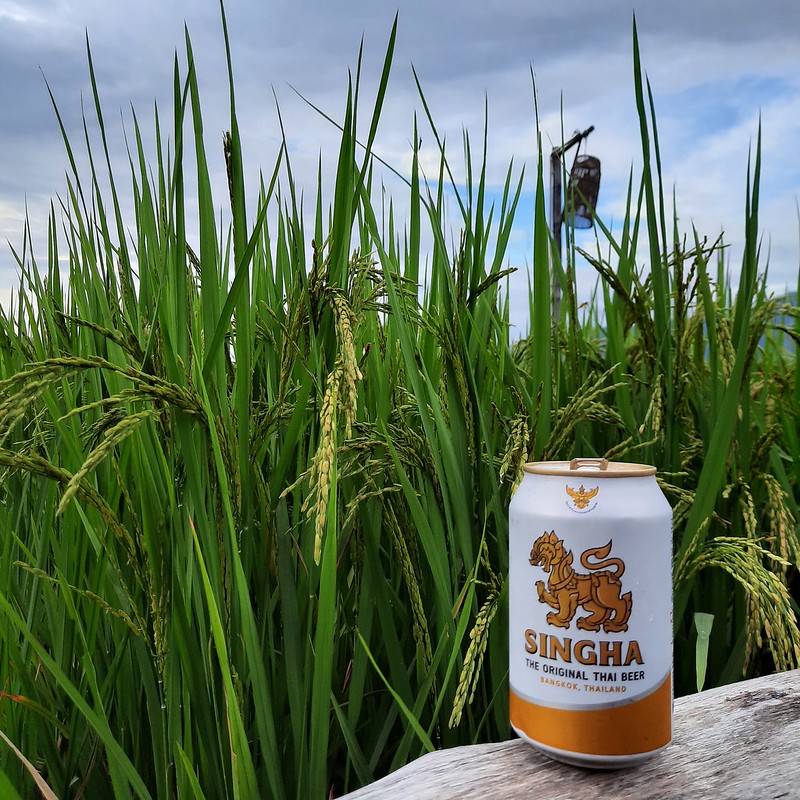
Travelling through the expansive rice fields of Thailand, one will get the idea of a rich harvest. And for those who love our beers, we have a warped understanding of the need for a grain to die to give life. Our worldly life itself is a journey, paradoxically ending in death. Life and death, death gives life. What legacy would we want to leave behind? A rich inheritance of money or a life lived that yields a harvest of wisdom?

“I tell you, most solemnly, unless a wheat grain falls on the ground and dies, it remains only a single grain; but if it dies, it yields a rich harvest”. (Today’s Gospel).

Lent is a time to ponder about our ordinary life in the context of the Paschal Mystery; of making sense and uniting our challenges and difficulties with the life and suffering, death and rising of Christ. Ordinary life is fraught with challenges and difficulties, it is part of the landscape of life’s journey to death. And for many in our world, unfortunately, the landscape is nasty, suffering is life.

The life of Christ is a lighted path on which we are to travel our earthly life. Follow me. His book of wisdom can be summarized in only four words, “Love God, love others”. Failure to live by this code lead into challenges, difficulties, and sufferings in ordinary life. After all, we are a consequence of what we do and not do to one another. A lot of these are what we have created for each another.

In response, we shaped our defence mechanism, not a fault, and adopt an attitude to look out for ourselves. And that too have evolved over time and experiences. Today many of us are plague by (overly) self-concern, insisting on having things our way, and demanding it as a personal right. When we do all these, we become but a single grain. Dying as a grain brings to awareness a hopeless selfishness ingrained in us.

Everyone has a cross to bear, it is about how we lift it up. Christ did not hand crosses to us. Neither do disciples need to go around purposefully looking to suffer. Our cross form and gain in weight over time through our responsibilities and situation and shaped by our attitude through the various stages of life. We realise that we cannot control a lot in life except our attitude, our inner self.

“And when I am lifted from the earth, I shall draw all men to myself”. (Gospel)

We must not deny that we each have a cross to carry. When we deny and do everything in our inner self to avoid, the inevitable will happen; the cross of life will be saddled on us with its full weight, with us the bearer having no control. As a disciple we are invited to take up our cross and follow; invited to consciously shape the fit of the cross on us. We start by dying as a single grain.

In our inner self, we must lessen self-concern and take up self-denial, and always look out the other. We must embrace the wisdom of Christ. Dying as a grain is dying to self, to live the Paschal Mystery in our ordinary life, embracing death, letting go of a limited life to rise into the fullness of life.

As we continue our Lenten journey, we gaze at the crucifix for inspiration and guidance. On it hung a single grain who died and yielded the harvest of eternal life. We too are invited to be a grain who dies and yield a harvest of wisdom for those around us to journey through their ordinary life into eternal life.

“Although he was Son, he learnt to obey through suffering; but having been made perfect, he became for all who obey him the source of eternal salvation”. (Second Reading)

5th Sunday of Lent

Forgive your self

Sin can make us a better person. Not the sin itself, but in the repentance that comes after it. A part of my daily Lenten meditation is this, “Fast from negatives, feast on encouragement”. Throughout Lent we hear the invitation to, “Return to me with your whole heart”, and assuredly reminded that, “I am gracious and merciful”. Lent is a time to remember that we will only be judged at the end of our time and so we should not be too hasty to condemn ourselves.

“For God sent his Son into the world not to condemn the world, but so that through him the world might be saved”. (Today’s Gospel).

Sin is negative. This negativity will eat away at our spiritual life if we do not embrace the antidote of mercy and forgiveness. When we sin, disappointment, anger and unworthiness break out internally. “There I go again, fallen yet again. I am weak, hopeless and ashamed”. This nature of sin sends us into a tailspin. We are unable to break our fall unless we feast on the encouragement that God is always forgiving. Otherwise, it will leave us in a dark space where we give up and condemn our self.

Forgiveness is this saving grace. It is a grace that opens the door into repentance and saving because it transforms us. When we sin, we feel a need to sit it out, beat ourselves to have a period of punishment. This is because we feel unworthy. We end up in a dark space. But saving grace will always shine light on condemnation. Instinctively unworthiness will turn us away from this light. This is not so much because we cannot accept God’s mercy, it is rather that we cannot forgive our self.

“That though the light has come into the world men have shown they prefer darkness to the light….and indeed, everybody who does wrong hates the light and avoids it”. (Gospel)

We must learn to forgive ourselves. Forgiving ourselves is not trivializing sin, nor to take God’s mercy for granted. It is also not our modern-day loss of the sense of sin. It comes from being repentant; from sincere regret, a holy restraint to try not to do it again and a desire to change. It comes from a true and contrite heart. Forgiveness of self is crucial in the process of repentance. Without forgiveness of self, we cannot fully encounter the mercy and compassion of God that will return us closer to him.

Repentance is not guilt-ladened but life-risen. “God loved us with so much love that he was generous with his mercy: when we were dead through our sins, he brought us life with Christ”. (Second Reading)

Sin has tentacle-like reach. Sin has life, bad life we may call it. It uses guilt to crawl into our inner reaches. When we allow ourselves to remain in a state of unworthiness, when we condemn ourselves, when we cannot forgive our self, sin will continue to act like acid on our spiritual life. To fight this, we must consciously receive God’s immediate forgiveness “because he is gracious and merciful”. Then to extinguish this life of sin crawling in us, God need us to “forgive your self”.

So, let’s do a turn on sin and use it to become better people through repentance.

4th Sunday of Lent

Around our belief

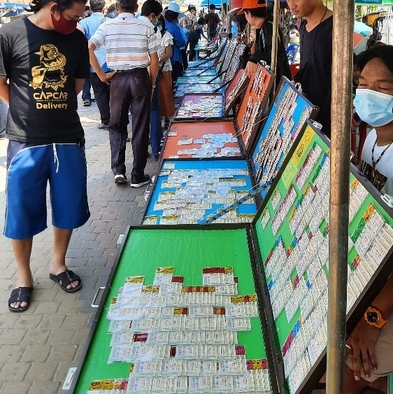
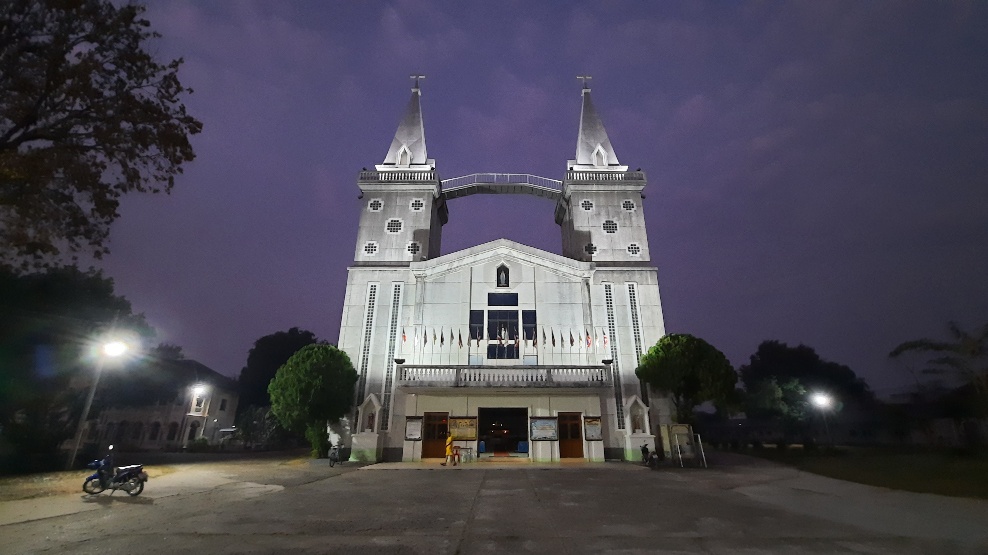
There are many places of worship here, and around each usually is a bustling market doing brisk business. The markets are there without intention to distract the worshipper but to take advantage of the opportunity given the high traffic of people. It however does highlight the gravitational pull religion still have in Asia. Belief is in the centre of our inner self; it will shape how we live our life.

Belief gives birth to faith, and faith dictate our lifestyle. A deep, developed faith decrees our values and way of life.

One of the most popular stalls in the market is the lottery seller. Many people come away from worship knowing they are blessed, and somewhat hoping that this blessing will translate to winning a fortune. Nothing wrong with hoping. There are many permutations to win a lottery, as there are permutation of choices to build our belief to live a life of faith in God.

We believe in God. Around this belief, like in the second reading, we look for signs of God in our material world. Belief is in the core of our being. We must be silent and travel within, to reach it and build on it so that it can flower into faith. But somewhat like the markets around the centres of worship, there are distractions that will distort our belief in God.

Worldly life encircles our belief. Who will want to believe if belief wins me the privilege of carrying a cross my whole life? Like a marketplace, when we believe, we expect to win; we barter faith for material blessings. It is a marketplace not of things to buy but beliefs to subscribe to. One of which is the prosperity gospel, where faith is built upon the belief that being Christian bring us wealth and health.

‘Take all this out of here and stop turning my Father’s house into a market.’ (Today’s Gospel)

Our belief must be based on solid foundations. Repeated rituals are not a formula where our belief can be persuaded towards being superstitious. Rituals are meant to bring us closer to the sacred. Believing must first lead to belonging. Faith decrees that we belong to the sacred Body of Christ. In this body, our belief must be built on the care for one another. Faith flowers in the love of God and for each other.

Lent highlights the wisdom of self-denial at a time when we are consumed by self-concern; when we give up something for self, we want to give it to the other. This is the wisdom of love. Here is part of the Pope’s Lenten message:

“Love rejoices in seeing others grow. Hence it suffers when others are anguished, lonely, sick, homeless, despised or in need. Love is a leap of the heart; it brings us out of ourselves and creates bonds of sharing and communion. Love is a gift that gives meaning to our lives. It enables us to view those in need as members of our own family, as friends, brothers and sisters. A small amount, if given with love, never ends, but becomes a source of life and happiness”.

Belief without acting is limited faith. It must be expressed in deeds. Worldly life is our marketplace where we trade life experiences for this wisdom. And wisdom is the cord that Jesus uses to whip and drive out the wrong notions that form our belief.

“For God’s foolishness is wiser than human wisdom, and God’s weakness is stronger than human strength”. (Second Reading)

3rd Sunday of Lent

Be silent

With God, we expect drama. We stopped going for Sunday Mass because it seems the same every Sunday. We lose our focus in faith life because nothing seems to be happening. After all, in this year-long pandemic, where on earth is God? Fr Timothy Radcliffe wrote on the drama of the Eucharist about how God is slowly revealed in our life; slow because God must be taken in the context of our whole life’s journey.

We live in a hasty age. We expect instant replies to our texts. We want things done fast. We are programmed to expect. We want results; that’s all that matters. We keep our eyes fixed on achieving and become oblivious to what is happening to us in the ruthless strive to attain the result. In this same haste, believing in God becomes an instant expectation of a miracle. We cannot accept God’s silence in between. But is God really silent, or is it us who need to be silent?

One of the main themes of Lent is to return to God. Life will take us on a journey. God expects that at the end of this journey we find happiness in Him. Along the way because of our human nature, we are distracted by other forms of happiness, more so in this hasty age. These cause changes in us, altering our values and behaviors. But God does not alter his expectation of happiness for us and so get to work in these areas within us to return us to him. And God is a silent worker. The dramas and miracles of God often (maybe only) happen inside us.

When we search to return to God, we always make the mistake of looking for him in big, external things. But in truth, God is found in the little details of our internal self. Here in our heart is where the drama of the Transfiguration takes place for us. (Today’s Gospel). Again, it is not the big results of worldly life that matters but who we are and who we have become.

God promotes self-denial especially in this age of self-concern. Giving and sharing, being generous, all require God’s graces to work in us. We are required not only to be kind in material but also in attitude Each time when we bite our tongue when angry or fast on having the last word, we witness the silent grace of God. It is difficult enough to squeeze out even an ounce of forgiveness, let alone to drop that boulder of bitterness, but each time we do, we hear the words of the Transfiguration in us, “This is my Son, the Beloved. Listen to Him”. And this drama occurs in us day in, day out but we must be silent.

After the Transfiguration, Jesus descended the mountain to continue his journey to Jerusalem, through the Cross for the Resurrection. Embracing our faith does not mean a life without suffering. What faith mean is that we know where God is amidst our suffering. We just need to be silent to find Him. The story of Abraham and Isaac is not about God’s unreasonable demand but for complete trust in him. As we close each chapter of our life, it ends with these same words, “This is my Son, the Beloved. Listen to Him”.

The drama we expect from God comes at the end of our last chapter. It comes when we rise again on the final day. In death, there is life. This is the miracle that awaits us of our worldly life. Meanwhile we journey on. Be silent.

2nd Sunday of Lent

Travel within

Lent had begun on Wednesday. Lent is not an event nor an occasion. Lent is a grace-filled period. It is a period for contemplation and action, each day consciously lived with Lenten intent will lead us into a spiritual discovery, or rediscoveries. We must go through Lent, not allow Lent to go through us. A good Lent is this conscious living, an unbroken awareness through the 40 days that takes us inward and deeper into the wilderness of our self.

“Slowly pull back from this material world and travel within”. I stumbled upon these words from a Hindu friend on Ash Wednesday. It had nothing to do with Catholic Lent… She was talking about Vanaprastha, a stage in lifewhich one decides to enter, where “one gives up worldly life”, or literally “retiring to forest”… But maybe it did.

On the outside, Lent is the Church journey towards the Easter Triduum, through the suffering and death, and eventually to the resurrection of Christ. On the inside, it is our own personal journey through all of life adversities to our own resurrection, the many fallings and risings, the much suffering and eventual joys. Lent is this opportunity to make sense of our past and to “Grow in understanding of the riches hidden in Christ” (Today’s collect).

A good Lent is this travel within. As we aged through worldly life, apart from accumulating experiences we also accumulate crosses. We all reach a stage when these accumulated crosses begin to ask questions inside us. There always seem to be an ongoing ceaseless battle between worldly life and the forest. Is there more to worldly life than meets the eye? A travel within is to make sense of our life within this material world.

In the body he was put to death, in the spirit he was raised to life, and, in the spirit, he went to preach to the spirits in prison. (Second Reading)

A spirit preaches in us. The spirit is asking the questions. Joy and suffering are inseparable twins in worldly life, and the material world is a necessary journey. The crosses we accumulate over time form prison cells in us. Hurt, anger, unforgiveness, desires for revenge and bitterness are cells that hide the riches of the Resurrection. Lent is this conscious journey to retreat into the forest to repair, rejuvenate, renew and be released. Entering the forest is entering into a conscious dialogue with the spirit.

“See, I establish my Covenant with you, and with your descendants after you”. (First Reading)

In Lent we listen again to this covenant. A covenant since Noah, manifested in the most privileged way through the birth, death, and resurrection of Christ: He is present in the most personal and intimate way, with us through the ups and downs of our worldly life. A good Lent is a continuous “travel within” for 40 days, going pass our past, revisiting old events and realizing and rediscovering God in our life, more so than we ever thought. It is the opportunity to embrace once again his Covenant with us.

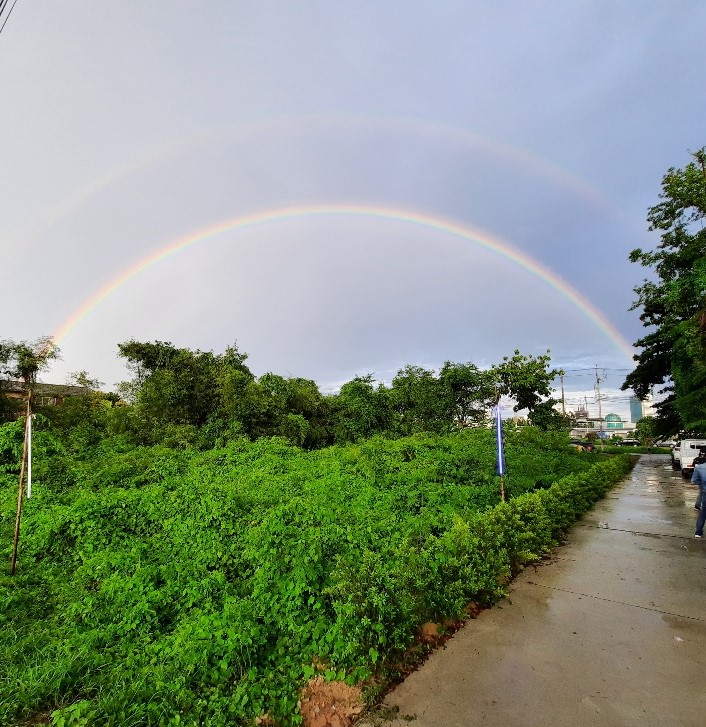
Lent is spiritual detox, to sieve out sediments left by the material world and remove the corruption of values and belief. When we travel deep into our wilderness, we will reach our forest where we see our own personal rainbow made for us, coloured above all the trials and tribulations of our life. Here beneath our rainbow, the spirit will preach, “The kingdom of God is close at hand. Repent, and believe the Good News.” (Today’s Gospel)

First Sunday of Lent

Written as a prayer offering for the intentions of Jeanette Balhetchet, Margaret Johnson, Joan D’Cotta, Agnes Ng, A. Selvarani and the Landings community.

“I set my bow in the clouds and it shall be a sign of the Covenant between me and the earth” (First Reading)