Presentation of Self

Every Sunday we have a precious opportunity to present our ‘self’ before God at mass. Sunday Mass is not an obligation for the sake of it. It is an ‘obligation’ coming from the wisdom of Christ that we need to come for Mass because it does good for us and that, we need. Christ does not gleefully check our attendance, but he offers to check on how we have managed the rhythm of our life, the ups and downs of our week.

Today is the Feast of the Presentation of the Lord. At our baptism we too were presented and consecrated to God to live a holy life. Into us flowed the supernatural virtues of faith, hope and charity. These were infused into us because based on human strength alone we cannot live a holy life. Every opportunity we receive graces to complement our virtues, and we grow and mature in this wisdom of Christ.

Today is also known as Candlemas, also why candles are blessed on this feast day. This was inspired by the words of Simeon, “because my eyes have seen the salvation which you have prepared for all the nations to see, a light to enlighten the Gentiles and the glory of your people Israel.” (Today’s Gospel). Every Sunday we return to focus on this light, our vision having been blurred by happenings of the past week.

Every mass celebrates the Paschal Mystery; the life of Jesus in his passion, death and resurrection. Often the rhythm of our daily life beat to this same tune, the highs we can handle but the lows we need help to crawl out of. Mass offers us this consolation, and this place to replenish and recharge. At mass we appreciate why Jesus came to share in our humanity. “It was essential that he should in this way become completely like his brothers so that he could be a compassionate and trustworthy high priest of God’s religion” (Second Reading).

Every week we are sent into the world. Often, we stumble and fall amidst our challenges, so we come back on Sunday to rise again. Worldly distractions take us away but on Sunday we have this opportunity to return. Challenges break us, leaving us broken, weak and hungry. On Sunday, Christ in broken for us in the bread that is his Body to bless, strengthen and fill us. For every time we come to present our ‘self’ on the altar of God, we are lost, but we will be found.

We come to make sense of this rhythm of life, each experience leads us to an encounter, each encounter refines our holiness. “For he is like the refiner’s fire and the fullers’ alkali. He will take his seat as refiner and purifier; he will purify the sons of Levi and refine them like gold and silver, and then they will make the offering to the Lord as it should be made.” (First Reading). Every Sunday, as we present our ‘self’, we are purified.

We come as equals, the only scheduled meeting in the week where this is possible. On Sundays, we share the same status, we are of equal wealth and inheritance, regardless of who we are in the world. We come equal as children of God to be fed by the Father the Eucharistic meal. We are first forgiven, before we are asked to forgive, those who trespassed us during the week. Every mass we are at Calvary at the foot of the cross, his body broken, his blood flowed just for you and me.
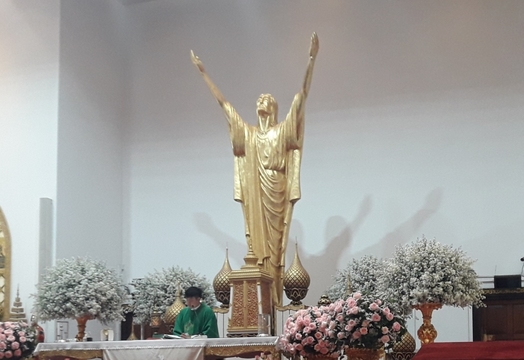
Mass at HR

Enter a caption

The Presentation of the Lord
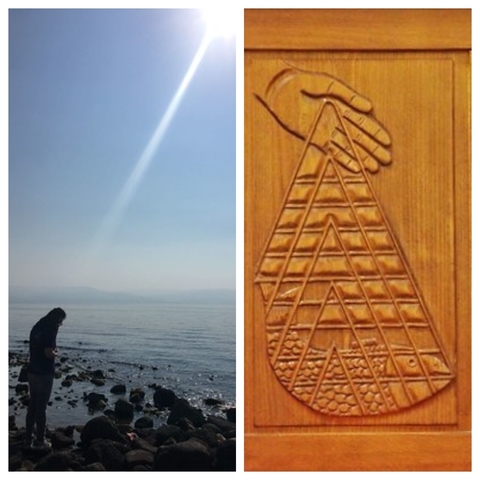
Fisher of Men

Last week we spoke of catechism for the need to expand from merely passing on “head knowledge” because that alone was not leading to evangelization. St. Paul said, “For Christ did not send me to baptize but to preach the Good News, and not to preach that in terms of philosophy in which the crucifixion of Christ cannot be expressed.” In another version, “not by the means of the wisdom of language, wise words which would make the cross of Christ pointless.” (Second Reading)

Our Catholic faith is not static, contained in a book of knowledge. Rather our faith will be the wisdom that write our book of life. Faith stands firmly on strong belief and a complete trust in God’s providence. God generously respond to our faith by coming to be with us in everyday life. This presence is real, tangible and can be felt. Although unseen, we see the effect. Embracing this presence, empowered by the effect, we gradually grow in wisdom to live our life. So, follow.

“Follow me and I will make you Fishers of men”. This is the most basic of our vocation call for us to go and contribute to the lives of others. Almost everyone in this world now know Christ, and this is where now that “head knowledge” need to be coupled with encounters. To fish for men we need to facilitate such encounters. To facilitate we preach the Word of God in terms of the life we live. This life must not “make the cross of life pointless”, where selflessness gives us that capacity to put others first, to love as God does.

To become a Fisher of Men, apart from developing this knowledge of Christ, we must share and testify to bring to life this Word of God. We make unconditional love real through its many fruits: Mercy, forgiveness, selflessness, humility, kindness, generosity among others. We offer the gift of our time to listen, to console, to heal, to affirm, to empower, to be a companion for another in their journey in life. Through being a “Fisher of Men” we become the appointed person through whom God works to touch the lives of those in need. A Fisher of Men demystify this presence of God for others.

A skilled Fisher of Men is like who St. Paul describes, “throwing light on the inner workings of the mystery.” (Ephesians 3:9). A Fisher of Men illuminates life.

A Fisher of Men spends quality time in the personal waters of the spiritually needy. Often the Fisher is a companion during storms helping to pick up the pieces in the aftermath. Amidst the rubble the Fisher is the conduit of this presence of God. The Fisher of Men help the lost to touch and be touched by God. Touch is a tangible dimension of faith; it is healing and empowering, encounters we all need to couple with “head knowledge”. Evangelisation is more telling, more heart felt, in face to face encounters with a fellow person and with God.

“Repent.” This is a call for continued conversion, not a payment of guilt. For both those being fished and those fishing, both have the opportunity through such encounters to purify themselves as they continue to head home on this journey in life. Repenting is like a fisherman mending his net repairing his torn parts. “Come, follow me and I will make you Fishers of Men.”

A Fisher of Men illuminates the life of others:
The people that walked in darkness
has seen a great light;
on those who live in a land of deep shadow
a light has shone.
You have made their gladness greater,
you have made their joy increase;
they rejoice in your presence
(First reading)

Fisher of Men 2c


3rd Sunday in Ordinary Time
Word of God Sunday

Encounters

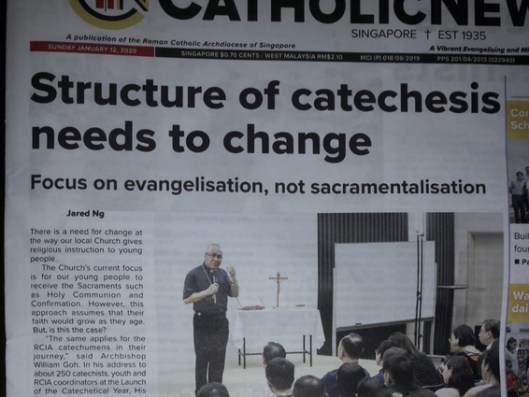
I was interested in a recent front page article of the Singapore Catholic News, “Structure of catechesis needs to change”. Here in is the frustration that after chapter upon chapter of well delivered “religious instruction”, it has not made “our young people truly fervent Catholics”. The Archbishop said, “Our youth are being sacramentalised, not evangelised.”

Quoting the article, “Christianity is all about relationship, about belonging. ‘Unless you have a relationship with Him, there can be no catechesis … there will just be head knowledge.’”

Man and woman have continued progressing. In the times of the Old Testament, God spoke through floods and famine. Perhaps God still does. But man and woman have progressed through time and now communicate on a different wavelength. Head knowledge can reason flood and famine. People have changed, progressed intellectually and perhaps also spiritually. And so we must change our methods of teaching to communicate about God and our faith.

Yesterday’s tourist posing in front of a prominent landmark has become today’s traveller sipping the local flavour in some back alley café. Knowledge must today be enhanced by experiences, otherwise it remains just a picture. A friend recently debated about our education. We teach a lot of algebra and math but we do not teach the young how to manage money in life. We pass on head knowledge without passing on lifestyle skills. We call for change.

Christianity is also a lifestyle; every doctrine is to guide us to live this lifestyle of love for God and for others. If doctrine stands alone, it leads only to sacramentalisation. But love is not a chapter but an experience. And only when knowledge is coupled with encounters with God will it lead to evangelisation.

“Here I am, Lord! I come to do your will. You do not ask for sacrifice and offerings, but an open ear.” (Today’s Psalm).

This is a call not only to catechists. It is actually tough to expect them to make disciples. They have only one hour on a Sunday morning. This psalm is a call to every one of us to become a catechist of life. We all have our personal life experiences, good and bad, joyful and sad. In all of these experiences we must ask ourselves if we encountered God. If we did we need to share our experiences to make God real in the reality of people’s life. Sharing or testifying enhances knowledge. It gives life to doctrine. It evangelises.

Sharing of personal life experiences and encounters with God is the new curriculum for today. It is in the chapters of our life story where we find Jesus. In each episode of life we must be like John the Baptist to point out, “Look there is the Lamb of God”. In our gratitude for who we are today we must testify, “Yes I have seen and I am the witness that he is the Chosen One of God”. (Today’s Gospel). Without this we cannot evangelise.

The Catholic Church has actually been wise to this. RCIA was born out of Vatican II. RCIA was to replace the old catechism method of forming Christians; this old method of drumming knowledge alone. If we take a closer look at RCIA it is modelled as a community of learning, sharing and testifying. Somewhere along our timeline, in our pride of possessing knowledge, some of us missed it.

CN article

2nd Sunday in Ordinary Time

Follow or believe

Every Christmas, after Christmas, we hear this story of the 3 wise men from the East following the star to Bethlehem to worship the Infant Christ.  This isn’t a tale because it is real. We learned this in our catechism class. The meaning behind this is that Christ came for all people in the world so that everyone shares the same inheritance. We are taught to believe and so we do.

Many people believe in Jesus Christ. Historians can tell us about the birth, life and death of Christ. Our calendar mark this significance; B.C. and A.D. Since the 3 wise men, many people all over the world have come to know and believe. Many who believe choose to remain unbaptised. And many who are baptised choose to remain only in believe.

We do not need to be baptised to believe.  Baptism is an intentional act. When we choose baptism we intentionally embrace the teachings of Christ and choose Christianity as a life style of choice. It means that we want not merely to believe but to intentionally follow Christ. We totally surrender our life and put complete trust in him. In whatever we do, in whichever circumstance we find ourselves in, we follow him with total faith and hope like a guiding star on this journey through life.

The 3 wise men set off intentionally on a long journey so that they can follow Christ. They too started with believe. Without intention we cannot follow. Without following there is no life in our believing. Every day life is filled with opportunities. A baptised person should wake up each day with the intention to be a Christian, to use all the opportunities to manifest the presence of Christ and bring him to others.

Like the wise men, we too have our own frankincense, gold and myrrh. We are all gifted and talented, each uniquely in our own way. But the greatest gift we have is life itself; this time on earth. When we follow,  we intentionally give our time, our life, using our unique gifts in the service of others. We believe Christ taught us to love God through loving others. To put this into practice, to be intentional of this in all we do, is to follow beyond just believing.

This path through life is not easy. Life is full of choices for us to believe in so many things. There are so many attractive paths that we have wandered down which eventually turned out to be dead ends. We are in a maze and the Infant Christ have come to lead us through. Follow or believe?

There are many Herods in our life, even more in this progressive time of affluence and technology. These Herods are lurking in our dark recesses to kill the Infant Christ in us. But Herod will never win. Herod is only a cloud of darkness. Behind this cloud is our Guiding Star faithfully watching and protecting us. This, we must believe and follow.

20200103_175055_resized

The Epiphany of our Lord.

Today’s holy family

Families are today challenged to remain holy. To be holy from today’s second reading is to “put on love”. A holy family is centered on the belief in God and the belonging to the Church. But this believe and belonging cannot remain lifeless, it must take on life to put on love. Our faith must be lived, the family the starting place to experience the love for God and love for others.

Christianity is not a religion but a way of life. Families become less holy if belief is merely a religion. We may have mastered the art of preaching about love but we have not done enough to simply love. Society, and now through the power of social media, have promoted many alternative life styles that when put together have become very confusing choices especially for the young entering the adult world. A holy family must put in place a foundation by promoting Christianity as a life style, a life choice.

To simply love, to desire to do good for the other person is something that comes from deep within a person. This is man’s conscience. A Church document says, “Deep within his conscience man discovers a law which he has not laid upon himself but which he must obey. Its voice, ever calling him to love and to do what is good and to avoid evil, sounds in his heart at the right moment…For man has in his heart a law inscribed by God”

This conscience need to be formed at an early age. This conscience can be trained to discern. And all these begin in early childhood in the nest of a family unit. A holy family provides its nutrients. Parents must inculcate values into their children to take with them on their journey through life. Because one day our young will fly the nest.

A holy family will also always be challenged. Being holy does not immune us from struggles and disappointments. Being holy equip us to face them. Life will always take us down some unexpected paths but being holy tells us that God will always accompany us down these.

One day when our young children fly the nest, they may also tell us that they are leaving the Church. This is something not uncommon today. A family holy will be a family pained. But let us take a page out of the parable of the prodigal son.

Our children will squander all their spiritual riches of a faith life bequeathed them (from being in a holy family) to live in the world without the guidance (or interference of the Church). Like the father in the parable, parents give their reluctant blessings and pray for the children’s spiritual safety. On the foundation from being a holy family, the children will go into the world with a good conscience. As for the parents, love will bear them an aching heart but faith will assure that Christ will not forget one of his own. This too is being a holy family.

I myself am a personal witness to this. I myself have strayed and returned. I am also privileged to work with many returning Catholics. They left, but when they returned they came home stronger and wiser, and in each of them they had a fire burning for a Christian life style.

In our time away we encountered the love God mostly through the love of others, a faith experience that left us transformed. What is common among all of us returned Catholics is that we all came from a holy family.

holy family 2

Feast of the Holy Family

Rediscover the present

Advent was all about anticipation, the waiting for an event. In this case the event is Christmas, always happy and merry. So the anticipation becomes exciting; the build-up and waiting laced with fun. This is one wait that is guaranteed to end with delight. Today, Christmas was yesterday. The hangover is heavy but we try to stretch the season for another week but an anti-climactic feel begin to creep in.

The proximity of the New Year to Christmas can have a dampening effect. It used to be a double-header. But the human mind is smarter now, it thinks ahead peeping into the New Year. Where there was once new hope, today there is new anxiety. We now live in a pressure cooker. The New Year re-starts the cycle of anxiety from the fear of losing out. Anticipation become expectations; we must do well in our jobs, our children must do well in school.

Let’s go back to Christmas. Hidden beneath all the revelry, all the wrong reasons for the season, is a gift for us. Let’s go even further to those who are now sensitive to the idea of religion where we cannot say “Merry Christmas” but instead “Happy Holidays”, this gift awaits them too. This gift is “Emmanuel, God is with us”. There is no condition tied to this gift, it is given freely to everyone, not only for believers but also for the ones who cannot bring themselves to mention the Infant Child.

“God is with us” is not for accepting or rejecting. It does not reduce or increase his dwelling among us, if you believe or not. He is present. He is with us. Period.

Life is never meant to be a merry carnival. It can be an emotionally treacherous journey through experiences. “God is with us” to accompany us through this journey; his unconditional love a balm always available to soothe our pains, his infinite wisdom a footprint to follow. God is not in advent, he isn’t anticipating our belief. God anticipates the storms ahead of us in life, he dwells with us to try to pull us into his shelter.

God does not wait for tomorrow to act for us. God is not finished with us because he acted for us yesterday. God acts in the now, in each moment He is present. “God with us” means that. All these moments link yesterday to today to tomorrow. God is also proactive as he anticipates and he moves ahead to show us the way. To make his dwelling among us visible we can retrace events that happened to us, people we have met, angels disguised as strangers, things we have done, things done to us, and link everything together.

These often occur in simple day to day situations. We may get a prompting to write and apply for another job. We do not feel a need for a new job but unexplainably we apply anyway. Then events unfold to put our present job in danger. We get a positive reply for a new job before the storm hit to cause us to lose our current job. That “prompting” is God with us.

Our daily life is filled with such little God moments. These “God moments” are when “God with us” becomes visible to us. It is provoked by a love action or a love thought, a feeling of care or being cared for. They are found even in the very simple insignificant event in daily life, like a smile from a stranger. These are fleeting moments but enough to connect our earth to our heaven.

Let’s reclaim the gift that is Christmas and rediscover the present; this moment by moment when God is with us. Emmanuel.

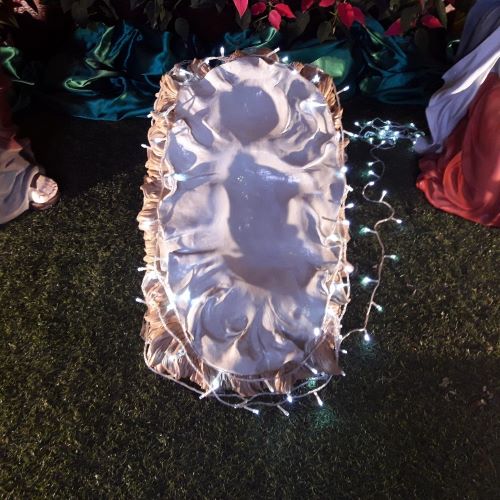
Child Jesus

Day after Christmas

Rediscover wait

Have we gotten rid of the need to be patient? Computers, internet, high speed technology have made available information at the click of a mouse. Apps on our mobile phones tell us the exact time of our bus arriving so that we don’t waste away minutes waiting. To a certain extent we become agitated when we have to wait. How do we now cope with Advent, an extended time of waiting?

Henri Nouwen says Advent is not like waiting for a bus to arrive. Rather, “it is an active waiting in which we live the present moment to the full in order to find there the signs of the One we are waiting for.”

It isn’t difficult to cope with waiting for Christmas Day to arrive. We know for certain when it will arrive. Then we cunningly fill the wait time with parties to celebrate Christmas. Maybe as Nouwen suggest “to live the present moment”? But Advent isn’t about waiting for the big party. Advent teaches us to wait for the Lord to come into the many various challenges we struggle with in daily life. There is no visible timeline, no red letter date circled on the calendar. We wait in darkness, clinging on to hope.

Christmas is about Emmanuel, “God with us”. Christmas is about the Son of God coming to be human like us to journey with us through our earthly life. An inescapable part of our earthly life is the presence of suffering. In all of our sufferings we are invited into an advent, to wait for the Lord to take away our sufferings, to lighten the load on our journey. We pray, we hope, we agitate for him to appear.

Nouwen calls for an “active waiting” but suggests that we be fully alive to this wait. Often we are preoccupied waiting for what we expect of God, blinding ourselves to his unexpected answers and interventions. Nouwen tell us to be aware at each “present moment” in order to see “the signs of the One”. For Christmas comes every day especially when we are challenged; for God is with us, he is amongst us in daily life.

Angels abound in the stories of Advent, but angels abound too in the stories of our daily life. Emmanuel, God has come to be with us in every of our challenges. One of the most visible presence of God when he intervenes in our daily life are the people present to us in the situation. Always God uses the people around us to help us. Often they are strangers appearing as if a coincidence with a timely act, saving the day. These strangers are our angels; they make visible Emmanuel, God with us.

God is often found in the little details of life. It must be so especially if He is a perpetual presence. Being fully aware to the present moment allows us to sense the presence of God, to see Him in the other person and to gratefully accept the helping hand of the stranger because we are alert to know that this is the helping hand of God. Being fully aware of the presence of God will also allow us to realise that God often answer our prayers with a different but better answer. Being stuck in our own expectations can blind us to the fact that God had already answered our prayer quite long ago. We were waiting for nothing.

In His time. There were 42 generations between Abraham and that first Christmas. Even by God’s own standard, that’s a mighty long time to wait. But a lot happened in that long time, our salvation history was sketched. So it in in our personal advent when we wait for God to appear in our troubles. Be aware that at each point he is present and intervening to sketch our own personal salvation.

The click of the mouse is a blessing. It takes away unnecessary wait leaving us more time to spend in advent to know that God is with us. Let us rediscover wait. Merry Christmas.

20191223_000730_resized (2).jpg


Advent 2

Rediscover sin

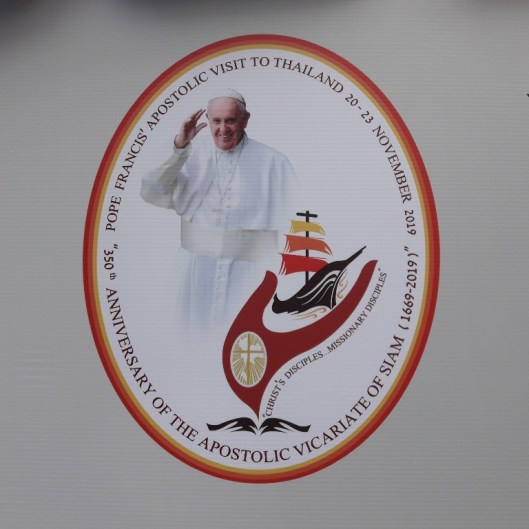
As I entered this Advent, Pope Francis had just visited Thailand. We were closing the liturgical year proclaiming Christ the King. Advent is a time for reflection; a pondering deep within self in order to prepare the way for the coming of the King at Christmas. We live in busy times. For me Advent can be like the blur of a passing high speed train. I must force myself to stop, so as to ponder and to ask myself “Do I want to belong to this Kingdom?”

Pope Francis said in 2014, “When the Kingdom of God is lessened, when the Kingdom of God decreases, one of the signs is that the sense of sin is lost”. When the sense of the Kingdom of God is lost in its place he said, “Emerges a very powerful anthropological vision, in which ‘I can do anything’”.

We can achieve many things on our own, making us less dependent on the Kingdom. We have become creative in expressing our thoughts and ideas. We are experts in justifying what we do, and won’t do. What is sinful can be argued in today’s context to remove the wrong. Have we truly lost this sense of sin?

Have we also allowed the Kingdom of God to lessen in our life? A more comfortable and intellectual life has allowed us the courage to challenge God. Creativity and technology has given us the freedom to wander away from the Kingdom. Our self-confident complacency has brought us nearer the danger of declaring, “I can do anything”.

To have a sense of sin is to have accountability in belonging to the Kingdom. Sin comes with a sense of guilt. But guilt is not condemnation. There is no judgement yet in the Kingdom. Guilt is the fig leaf covering the nakedness of Adam and Eve. It sharpens the awareness of the presence of God. Having this sense of sin mean that we still belong in the Kingdom of God.

We live in more comfortable times blessed by the fruits of technology. Today God and sin are old fashioned concepts in modern life styles. We empower ourselves with personal rights, “I can do anything”. But sin too has made outstanding progress embedding itself in our thoughts and opinions, hiding behind our ‘rights’, so much so that we have lost this sense of sin.

As we enter these final few days of Advent, we should get off our high speed train before we crash into Christmas. It will do us good to pause, reflect and to rediscover sin.

20191206_145644_resized

Advent 1

Turn over a new leaf, return to Church

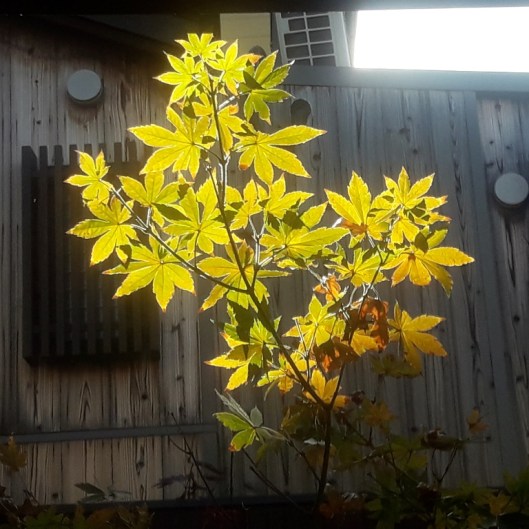
When we learn the phrase “Turn over a new leaf”, it will always be added that we should strive to be better persons. Changes initiate from a tugging urge, promptings of the silent voice of our in-dwelling spirit. Our conscience is like a compass pointing us back onto the path to return to our Creator. Life is a journey through many seasons. At some stage it will be time for our colourful life to take on a different hue.

Returning Catholics find themselves in a season of a major change. Often we in the Catholic Church wonder how we can invite one to return by making announcements during mass since they are not even there. Change is the art work of the Holy Spirit. These silent urgings prompted Zacchaeus to climb the sycamore tree to “catch a glimpse” of Jesus. Likewise returning Catholics, often even unknown to their conscious self, are stirred by the Spirit to glimpse, look and seek a way back. So they sometimes wander into mass, symbolically climbing the sycamore tree on their own.

Retuning to Church is the work of the Holy Spirit. The Spirit initiates this call to return often using events in life. Ministries such as Landings, missioned to welcome returning Catholics, are formed to become the first port of call for them. Here the returning Catholic have time and environment to ponder this prompting of their in-dwelling spirit.

The path of a returning Catholic often meanders through a maze of events in life, a journey through many seasons until they begin to hear this inner voice. It is a journey littered with coincidences; the chanced meeting, the strangers who crossed path, the wander into mass met with the chanced announcement. When we get the chance to look at the complete journey, we see an intricate piece of art made possible only by the Holy Spirit.

Zacchaeus was in a fragile state. He was judged and deemed unworthy. His life journey thus far a catalogue of wrong turnings. But he is someone the Spirit is very interested in “for the Son of Man has come to seek out and save what was lost”. Likewise every returning Catholic. They too are fragile and unsure. Their life journey has taken them into a cul-de-sac. Wearied by issues in life they have run out of options clinging on only to hope. They don’t know where God is. But hope is the invisible hand of the Holy Spirit.

We cannot stand in church and judge other people’s worthiness to return. And when we complain about them we put ourselves outside love. Let us not make it tougher for the returning Catholic. Jesus showed us the way. We must embrace the lost. We ‘find’ them by being welcoming without judgment. We must open our homes and our hearts, eat and fellowship with them so that they can put their guard down and feel safe to come back in.

Often only in the autumn of our life do we change. Our life journey is nearing its end and the tug is getting stronger, the voice louder. Our colourful life is made up of many failures and many reconciliations, a life with many leaves of different colours. But we will reach a final autumn when we change one last time. If we are still away from Church, it is time to return before our last leaf fall.

20191119_144323_resized.jpg

Tuesday of week 33 of Ordinary Time

Increase our faith

Give me more of the good stuff. This is who we are now. We live in more educated times. We are constantly trying to better our lives. We need to protect our heath. We want to increase our wealth. And this has got nothing to do with self-centeredness or greed. It comes from our personal responsibility to take care of ourselves. But in our rush to delight in the seen, we sometimes neglect the unseen: our spiritual life.

“Increase our faith” (Last Sunday’s Gospel). Faith helps us to manoeuvre through life when health and wealth let us down, as they often do. Because faith breeds hope. Even if we do not all believe in the Divine, we all can do with having hope in life. Increase hope, and we increase the quality of life. Hope helps us find peace in life.

To increase faith we must re-discover the sense of awe and wonder about life. There are many little things happening to us in our daily life, almost like an operating system in the background of our daily din. We receive many blessings during our day mostly small in magnitude that they are often unnoticed. In becoming quite educated, we prefer to find explanations instead of acknowledging them as blessings. Worse, we dismiss these as coincidences, a mere confluence of good fortune.

We have to become a bit more simple but a lot more humble to adopt this perspective of life that every little happening is a blessing from above. It is through a sense of gratitude that we can begin to see the unseen. The Divine is present in our daily life wanting only good for us; our faith tells us that. This gratitude comes from being aware of divine intervention, the smaller actually, the sharper the sensing. To be humble and to have gratitude help preserve this sense of the Divine and this helps to increase our faith.

The other way to gain sight of the unseen is to see through the people around us. We can increase our faith when we realise that the people around us are agents for the Divine, angels placed on our life path for a God driven purpose. Some are there just to activate a ‘coincidence’, while others play a lifelong role in our life. God act mostly through people around us; God often answer our prayers through people. Acknowledging everyone around us and entering into communal relationship with them will widen our frequency of encountering the Divine in daily life which lead to an increase in our faith.

We must fan this flame in each other. We fan it by telling each other of how God has intervened in our simple daily life. Our sense of awe and wonder can be an inflammable aid. It will help open the eyes of others and lead to this increase in faith. “I am reminding you to fan into a flame the gift that God gave you when I laid my hands on you. God’s gift was not a spirit of timidity, but the Spirit of power, and love, and self-control. So you are never to be ashamed of witnessing to the Lord.” (Second Reading).

Our faith life must also be trending with our worldly life. Increases in wealth and health must be matched with increases in faith. We will be in serious trouble if we increase everything else and faith is left behind. Faith is good stuff.

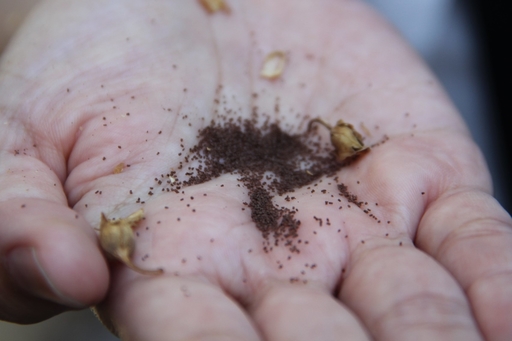
mustard seeds

Faith the size of a mustard seed

27th Sunday in Ordinary Time