Widening gulf

Secularisation is creating a widening gulf. It is reducing the influence of religion in everyday life. There is a strong undertow. Many of us are drifting away from values inculcated from religious beliefs. Younger or future generations are threatened if you are looking from the point of religion. But from the point of an ever modernising secular material world they are being liberated with freedom of more choices.

A great gulf has developed and is widening. When you want to enter the modern material world, you are to leave your religion at its gate. “There was a rich man who used to dress in purple and fine linen and feast magnificently every day. And at his gate there lay a poor man called Lazarus, covered with sores, who longed to fill himself with the scraps that fell from the rich man’s table.” (Today’s Gospel)

Reflecting on today’s message, the poor man Lazarus represents our religion or our faith. It is there sitting in a corner calling out to us every day while we are like the rich man going about our daily life. And like the rich man we are ignoring Lazarus at our gate. It is not so much about being rich with money but being rich with choices. Increasingly we are making choices that are taking us away from the conservative values of what religion has taught us.

“The almighty Lord says this: Woe to those ensconced so snugly in Zion.” (First Reading). Woe to those who live in luxury. Being materially rich is not a sin but material comfort can make us complacent. Without suffering there is no urgency for faith; Lazarus can remain in the corner. As we get more complacent we gradually forget to thank God for the little blessings in daily life. We depart from our faith and Lazarus dies at our gate.

One day this revelry of the material world will end as we will die too. We might end up on the other side of the gulf. ‘In his torment in Hades he looked up and saw Abraham a long way off with Lazarus in his bosom. So he cried out, “Father Abraham, pity me and send Lazarus to dip the tip of his finger in water and cool my tongue, for I am in agony in these flames.”’ We have to account for what we have done in this life. “Between us and you a great gulf has been fixed, to stop anyone, if he wanted to, crossing from our side to yours, and to stop any crossing from your side to ours.”

For us who remain faithful to our faith or religion we too cannot leave the consequences of secularisation at our gates. We cannot be sitting and lamenting but we must rise to “fight the good fight of the faith”. “I put to you the duty of doing all that you have been told, with no faults or failures, until the Appearing of our Lord Jesus Christ.” (Second Reading). It is our duty to continue evangelising. We must change our approach and enter into the world of secularisation. It is time for this New Evangelisation.

In this world today, teaching religion by sharing intellectual knowledge alone is no longer effective. This modern day man seek experiences in the secular world to pleasure their life. And so it must be with their spiritual life. They need encounters and experience of faith. We are prophets sent urgently into the secular world to make real the presence of God through action beyond words. We are sent to make faith and religion an experience. Only then will the gulf stop widening.
widening gulf

26th Sunday in Ordinary Time

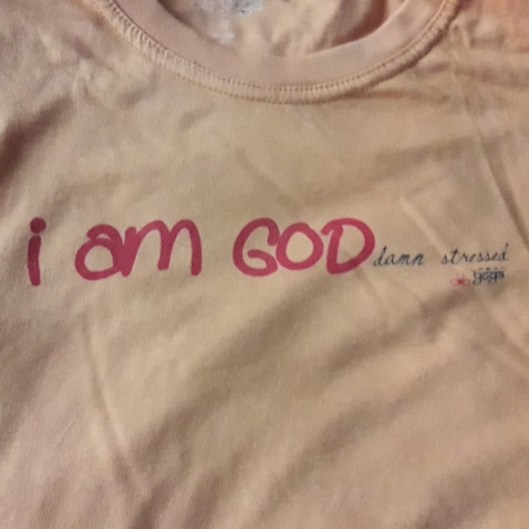
“I am god”

Last week at a presentation I wore a t-shirt proclaiming me, “I am god”. It was to help me emphasise a point then. However it had also provoked my thoughts on today’s passage. “No servant can be the slave of two masters: he will either hate the first and love the second, or treat the first with respect and the second with scorn. You cannot be the slave both of God and of money.” (Today’s gospel)

I live now in a progressive affluent city. Outside of this city in the many provinces there are still many, many poor people. Some money will aid them to become materially more comfortable. I know as I grew up during the years when my country and my family were poor. Money was not initially a temptation; it was a daily need and it drove us on. Today where I am, the middle class has grown, the wealthy are running further away with riches and the rich-poor divide is wider than ever.

Amongst us who have enough, money becomes a temptation. This temptation however is evolving. We are materially comfortable. We have more than adequate food, clothes and shelter. We are also blessed with education. Smarter and comfortable we seek for even more to be gratified. The poor is the government’s responsibility. Self-gratification is an unquenchable thirst. Pursuing it open our door for temptation.

Being materially comfortable is good. It makes us self-confident. God wishes for us to be so. But self-confidence needs proper stewardship without which it can lead to cockiness. Because we are materially comfortable we no longer are happy merely to fill our belly and have a roof over our heads. We can afford more. We want to pleasure ourselves even more. We give up the values of old-fashioned beliefs and enter the brave new world. We desire instant gratification. Heaven can wait.

This cockiness is gradually pushing religion out of our life. We no longer seek basic comforts. Gone are the days when humans huddled together as a community to farm, work and share our basic needs. The world has taken off. Today we dice with danger when we promote ‘self’ and ‘individual rights’. Herein lies the temptation evolved from money. We build kingdoms for the ‘individual self’. In this kingdom there is no longer space for the old fashioned God. “I am god”.

Many perpetuate anger with God’s “old ways” but the truth of religion is that God isn’t angry in return. There is no judgement, only humble waiting. There is an acceptance of this world for its humanness. “There should be prayers offered for everyone especially for kings and others in authority, so that we may be able to live religious and reverent lives in peace and quiet. To do this is right, he wants everyone to be saved and reach full knowledge of the truth.” (Second reading)

The reality of our humanness is that all of us will try to build our own little kingdoms. We will be dishonest to our faith. We have either tried or are tempted to be our own god. We have returned astute from our mis-adventures playing god. Now as heaven waits for us, it is for us to deal with our kind by sharing that despite the evolving world, there is still only one God.

“The master praised the dishonest steward for his astuteness. For the children of this world are more astute in dealing with their own kind than are the children of light.”

20190923_181848_resized

25th Sunday in Ordinary Time

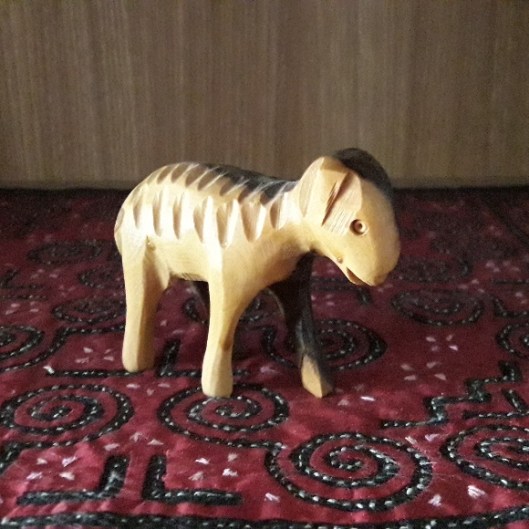
Who is this the lost sheep?

“I” am the lost sheep. I think I would like to return to Church. But… they are many buts. I think I am lost in my doubts, confused by my emotions. I grew up steep in my Catholic belief. I ventured into the adult world and was distracted by its glitzy appeal. A happy life seem promising, money could buy a bit. Releasing myself from the clutches of faith, I found that I could buy even more. Looking back I squandered a rich faith life. Now I want to return.

“I” am the lost sheep. There is typically a turmoil somewhere in my life. I am always in some storm. I am never at peace and a happy life seem elusive. I am feeling desperate, nothing seem to work. But hope continues to flicker, it doesn’t seem able to die on me. I roll back the years, this hope is the hope from my Catholic faith. I am a lost sheep wandering in the wilderness of my emotions. This hope is beckoning. I want to go home but how?

“I” am a lost sheep. I am now very weak in faith. I feel guilty for abandoning my faith. I have an unbelievably long list of sins. Will I ever be forgiven? I do not feel worthy. I have a sense of shame. I feel awkward just at the thought of returning. I am unsure, my mind filled with questions, I need to be sure. I am searching, I am looking for answers. Where? What? How? I am desperate for an immediate fix, yet I need time. I may not realise it but I am emotionally and spiritually wounded. I need help.

“I” am a typical profile of a returning Catholic, someone trying to return to Church. Returning to Church is not simply waking up on a Sunday and deciding to go for mass. For a few, maybe, but for most of “us” we need to be “found”.

“What man among you with a hundred sheep, losing one, would not leave the ninety-nine in the wilderness and go after the missing one till he found it?” (Today’s Gospel)

It was difficult initiating that first connection, writing that email and taking that first phone call. Where do I start, what do I say? I feared what they would ask of me. Would they ask me to go for confession? If they did, I might just postpone this for a little while longer.

“I” was met in a dimly lit pub, a frosty mug of beer in my hand giving me warm comfort. I chose this familiar environment. I feel safe here. The Church had come out to meet me. I heard words of encouragement. There was no reading of the Ten Commandments, no riot act. I did not feel judged but instead, welcomed. I was surprised. I felt in me able to trust this encounter. I opened up, I was listened to. I was made to feel better, I heard words of affirmation. I realise that many people share very similar struggles even those who were practising their faith. My faith was rekindled. I want to return.

“I” am now a restored, returned Catholic. It was not an instantaneous decision. I needed time to journey through my doubts. I needed time to be healed from my emotional wounds. Like the lost sheep I needed to be carried home. I needed spiritual accompaniment. Looking back I encountered the embodiment of this act of God our Father: “While he was still a long way off, his father saw him and was moved with pity. He ran to the boy, clasped him in his arms and kissed him tenderly.”

“I” am now a hunter for the lost sheep. I had made many bad choices in life, did things unworthy of the love of God. But our God is a generous God, He waste not my experiences. Instead he uses them to seek, understand, and bring other lost sheep home. The ‘bad’ in me is useful too. I am affirmed. “I” was once lost but now am found.

“I thank Christ Jesus our Lord, who has given me strength, and who judged me faithful enough to call me into his service even though I used to be a blasphemer and did all I could to injure and discredit the faith. Mercy, however, was shown me, because until I became a believer I had been acting in ignorance; and the grace of our Lord filled me with faith and with the love that is in Christ Jesus.” (Words of St Paul, second reading)

lost sheep

24th Sunday in Ordinary Time

Discipleship

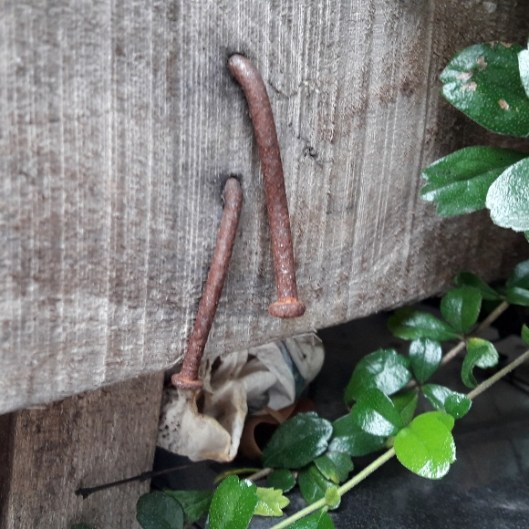
I’d rather be a hammer than a nail. I’d rather be avoiding doing bad than proactively being good. I’d rather be minding my own life than be trying to contribute to the life of others. I’d rather take the easier options in my faith life and then count on God’s mercy at its end. I’d rather be lukewarm than a disciple.

There is a cost to discipleship but come to think about it, there is a cost to our every pursuit. It is just that some costs are immediately rewarded while others will take a lifetime. Pursuing success in career is not without cost. It demands sacrifice; time away from family then maybe riches in place of enriching family ties. Some relationships survive these demands, some unfortunately don’t.

What do we want out of life? Or what does life expect out of me? For many of us especially when we do not have the right pursuit, it may take a lifetime for us to discover our own answer to these questions. If we are fortunate to review our entire life once before we die, what would we have hoped to achieve? What legacy would we want to leave behind?

The Book of Wisdom this past Sunday said, “The reasonings of mortals are unsure and our intentions unstable; for a perishable body presses down the soul, and this tent of clay weighs down the teeming mind. It is hard enough for us to work out what is on earth, laborious to know what lies within our reach; who then, can discover what is in the heavens?”

For me, and I am sure for many of you, I want to leave a legacy of love. Love must survive me. Love must always be passed on. This is my pursuit in life. The faith I have chosen to believe, the spiritual life I try to follow, puts me on the path of this pursuit. This is what discipleship means to me.

The cost of discipleship comes from the tension of different intensions. Love is not self-love or family serving love. It is true love, unconditional in its pouring. Discipleship calls for sacrifice, proactively doing to contribute positively to the life of others, from self for the other, from own family for the other family. There is tension on this pursuit; how much do we keep for self, how much do we give? The further along we pursue this path of discipleship, the more we give, the more the tension, the higher the cost.

“If any man comes to me without hating his father, mother, wife, children, brothers, sisters, yes and his own life too, he cannot be my disciple. Anyone who does not carry his cross and come after me cannot be my disciple.” (Gospel)

Giving is not only material giving. Giving is giving up all our possessions, our earthly desires for self-gratification. The time we have is also a treasured possession. Our time is our life. We are called to give away our time, give up this life so as to follow the way of Christ. Discipleship is intentionally picking up our cross to follow him.

“So in the same way, none of you can be my disciple unless he gives up all his possessions.”

Discipleship. The reward for this pursuit is only found at the end of this earthly journey.  God’s mercy will be accorded at this end by how we had travelled rather than how we arrived. I’d rather be a snail than a sparrow.

nail.jpg

23rd Sunday in Ordinary Time

Humble

Is being humble out of fashion? Looking at values trending it would seem so. These days self-worth seem to be in a toxic mix with pride. We are being conditioned by the competitive environment we are progressing in. Being humble is being squeezed out by self-importance and self-absorption.

We are all parts of the ecosystem of life. We are important contributors to this competitive environment; what we do impact the balance of life. We must contribute positively to this balance by behaving only in ways that promote harmony. We must recognise that we co-exist with other persons; what we do will impact them. Our self- worth comes from this ecosystem. We may be just one out of billions of people but we matter. This is our worthiness. We are good enough to make an impact.

To be humble is first to acknowledge our need to co-exist with every other person. In the harsh reality of this world, there is every chance that the ‘other person’ will let us down and upset our harmony. To be humble is to give the ‘other person’ more space. Giving space does not mean degrading our self. It means only to reduce our self-importance. We will be surprised how much space that takes up in is.

As a simple example, every person has opinions. Many times we won’t agree and we simply won’t give in. But opinions on their own can co-exist, there is enough space. It is self-importance and pride that want to make ours the only opinion. Being humble help us to see that we are fighting many unnecessary battles in life. Being humble will lead us out of such foolishness into greater wisdom.

When we make space for the other person we accept the other persons for who they are. When we make space we also highlight to our self that many times our own opinions and actions are causing disharmony to the people around us. Being humble is pro-actively contributing to the balance of this ecosystem of life.

The natural balance of life comes the virtue of love. True love is self-giving. Humility is a virtue that is the gateway into this greater virtue of love. Without humility, true love cannot exist. Forgiveness is often the vehicle of true love. When there is no forgiveness, there will be no space for the other person. And we cannot forgive when we are not humble.

To be humble is a life transforming choice. It is a question of whether we want to live this life only for our self. Is there a greater meaning? For some it becomes a question of faith.

“For everyone who exalts himself will be humbled, and the man who humbles himself will be exalted.” (Last Sunday’s Gospel)

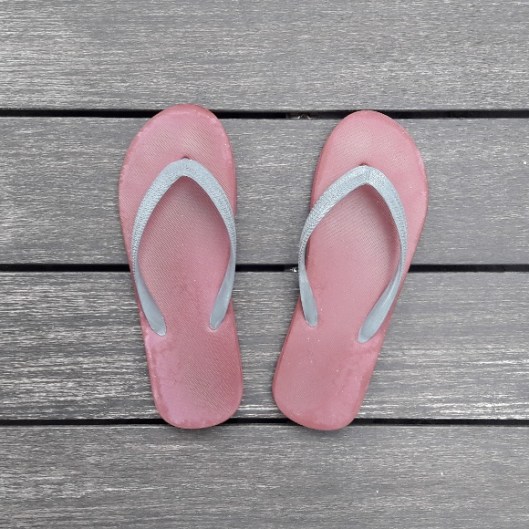
To go deeper into this virtue of being humble is to question our creation. Do I believe in a God who made me? For me it is a simple, “I do.” For I am sized tiny like a micro-organism in this huge world I live in. Yet, I have often been affirmed for my self-worth. Being humble is a good bacteria that will contribute to the harmonious balance of this ecosystem of life.

slippers

22nd Sunday in Ordinary Time

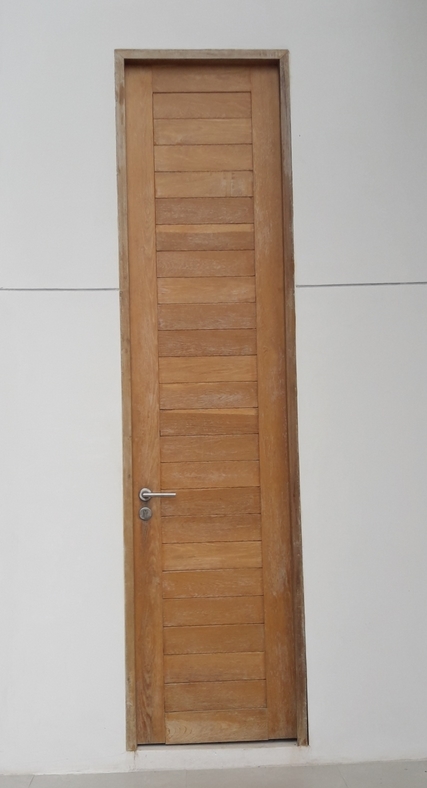
A narrow door

I read an article on the BBC quizzing the future of religion. This paragraph by the writer, Sumit Paul-Choudhury spoke to me in the context of Sunday’s message, “If you believe your faith has arrived at ultimate truth, you might reject the idea that it will change at all. But if history is any guide, no matter how deeply held our beliefs may be today, they are likely in time to be transformed or transferred as they pass to our descendants – or simply to fade away.”

I am one who believe that my Catholic faith has arrived at the ultimate truth. I believe that my earthly life is a journey into the existence of life-after-death which is eternal. My God want me and significantly, every other person regardless of religion, to make it through this door. I try my best to live by this simple law of life, “Love God, and love my neighbour”. My earthly journey is a consequence of this law; life can become tougher through my own actions and those of others in failing to observe this in all we do.

I believe God does not make our life tougher. He allows us complete freedom in our choices. Instead he is present always to pick up the pieces and mend us when consequences go bad. So he is not a judge of our choices nor does he interfere, but uses every opportunity to purify us (second reading). When the choices we make shut the door on him, he does not condemn but instead stands behind that door hoping that it will re-open. He is humble and unconditional in love.

“Someone said to him, ‘Sir, will there be only a few saved?’ He said to them, ‘Try your best to enter by the narrow door, because, I tell you, many will try to enter and will not succeed.’” (Sunday’s Gospel)

We may not all have a religion. We may not all even believe in God. But we all have a conscience. I believe that this conscience in its purest form is never unkind to another person. In its purity it is never self-serving.

I have taken timeout to spend a week on Ko Samui. I was first here more than 30 years ago. Last night I searched out the place I stayed then. It is still here. Then the surrounding was open land with few developments. Today it is built up with a proper street filled with entertainment joints on both sides. It jammed my mind but illuminate the progress the world has made, and with it the many available lifestyle choices we have today. The choice of faith, or religion, is like a narrow door lost somewhere among them.

There is a history we leave behind but this is also the history we come from. It is not world or civilisation history. It is our personal history. It began when we were born with a conscience that was never self-serving. Nothing in world civilisation history has changed that. This conscience is our moral compass that will help us navigate the choices we encounter along our earthly journey. And history will also never alter our final destination: death.

My faith has arrived at the ultimate truth. At the door into eternal life my personal history of my earthly life will be reviewed. I will not be judged by its results, it is not about being first, but by how I have really tried my best to be self-giving and not self-serving, to love the other. Only God knows the challenges we each face in life. He knows every opposition that is in our way. He is the only one who can tell how hard we have tried in our personal circumstance. This Sunday he says, “Try your best to enter by the narrow door”.

I cannot say by what measures I will be judged at that door. All my faith tells me is to try my best to live by that simple law. I have often enough been taken off course by my own choices but each time when I re-opened that narrow door my God was there waiting for me.

narrow door

21st Sunday in Ordinary Time

Harmony in divisions

My eyes are quick to condemn. Hence I need to restrain my opinions to give space to others for theirs. I remember as a young kid in math class learning about length x breadth. My little head spun when they introduced depth, the third dimension. Suddenly everything was cubic, no more linear, no longer vanilla. Along life’s learning curve, I grew to marvel at the beauty of each person’s uniqueness but appreciated that this depth in us can create divisions.

No artificial intelligience can predict our human responses. We may share the same single goal in life but no two persons will do, say or think the same in trying to reach it. We are immensely unique in our personality. Add to that immeasurable variable, culture, religion, education, wealth or lack of, time, upbringing, environment, and many other influences, so we will never ever be united into any common response. We must learn to accept and embrace this division to live in harmony.

Difference in beliefs have split families. Though united in belief faith communities have also split as a consequence of human response. Deep in everyone of us we are united in the one common goal of life: to journey and return to our Creator. For some this is a purposeful walk and for others an accidental wander. Along the way we are constantly divided because of ourselves.

Governments, structures and organisations exist to rein us in. Rules, regulations and laws are in place for our common good. Authority is placed over us like a common roof. Otherwise we will hurt one another through our divisions. Laws at least try to limit hurts.

The Church is such an organisation too. But its laws does not concern your property or wealth. It is concern only with that journey deep inside each of us: returning to our Creator. Breaking its laws has no immediate retribution. Only humans are quick to condemn. For the Church, breaking its laws is met with its higher law of love through mercy and forgiveness, always. Simply because God’s nature is that unconditional love and that is a fixed constant factor in life’s innumerable equations.

God is wise to the variables in each of us. Our progressive world as it is today has a multiplier effect on those variables in each person. We have pushed out on the extremes with our up to date opinions and life styles. We have developed our own personal portfolio of achievements so much so we need our personal rights to protect them. We keep going and going and have started to question the authority in our life.

One constant will never ever change which is that purpose now buried deep under the rubble of life: that journey home to our Creator. Only at that door will our Creator judge us.

We will seek new methods of evangelisation to address this divisive world. Our formula cannot deviate from the basic start point from which we must not judge and condemn others. God will be experienced if there is harmony in divisions.

Divide

20th Sunday in Ordinary Time

Grooming our self-image

Every day we put on an image like we put on clothes. We groom an image for our ‘self’ to be well accepted in society. We must be careful what we think; the need to be politically correct compromises our honesty. Deep in us we like to be well-liked, love to be well-loved. The onset of social media has driven this hunger for affirmation into a craving.

We used to send a worded resume for a job, an accompanying photo merely an option, but we send it hoping it will help, especially if we are good looking. These days it is not only about being “good looking” but more so, looking good. So we alter our behavior by allowing it to be influenced by friends and social media, because their opinions count. We change to create a better accepted self-image. For most of us we end up beautiful on the outside, but ugly in the inside.

Unlike clothes which we can easily change, when we yearn for a certain self-image we actually gradually , become that person. “For where your treasure is, there will your heart be also” (Today’s Gospel). We allow our world to change us, so much so the person we become is in conflict with our created image.

“‘See that you are dressed for action and have your lamps lit. Be like men waiting for their master to return from the wedding feast, ready to open the door as soon as he comes and knocks.'”

We are all created in the image and likeness of our Master. We do not need to crave for love because love is in-built into us at our creation. It is natural for this love to flow out of our created image. Grooming a conflicting image of self can sometimes stifle this flow of love out of us to others. There can develop a chasm between who we have become from who we were created to be. When this chasm becomes too wide, we will be ill prepared when the Master comes knocking.

The Master will come knocking. It’s an inevitability, only that we don’t know the timing. We are all created good and loving, no person is born mean. We are born with a purpose; to contribute to the harmony of people living together. This is our responsibility, our God-given employment. We cannot afford to be slacking from this employment by being too preoccupied with worldly treasures. “Happy that servant if his master’s arrival finds him at this employment.”

The Master, when he comes for us, when death from this world calls, must find us “dressed for action”. We dress our self by the things we do. When we do things that stay true to our created image, we become beautiful on the outside and the inside. Our “lamps are lit” when all we do have a positive impact on the lives of others. The more we harmonize, the brighter our lamps.

Life is not a game of chancing and timing. We do not know the hour the Master will come knocking. To be ready we must always be clothe in the purpose of our created image.

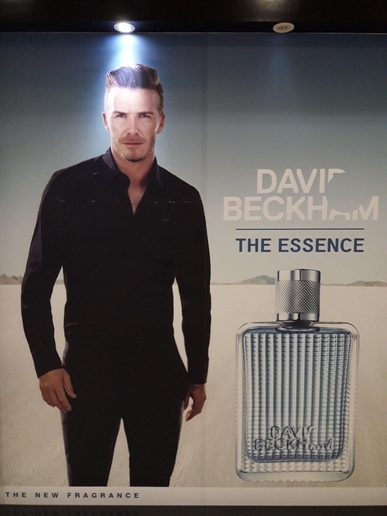
beckham

Not implying that Beckham is a bad image!

19th Sunday in Ordinary Time

Want to be rich

Every other week I spend some change to buy a lottery ticket and pray that it will be my turn to strike it big. I am hoping for a shortcut to have everything I need so I can have it easy in life. Given a chance I will stop toiling and labouring. I crave for a big barn of possessions so I can say to my soul, “My soul, you have plenty of good things laid by for many years to come; take things easy, eat, drink, have a good time.” (Last Sunday’s Gospel)

I make a quiet promise to God that I won’t allow money to change me. I will even donate a portion of my winnings to charity. The balance I will use to build bigger barns for myself. For what end goal? Will I give it all away if having it all will change me to the extent that I will lose my way in life towards achieving the end goal of eternal life in heaven? Will you? The ideal solution is to meet God half way.

It is not a sin to be rich. It is quite natural to be wanting more and more. But it is also quite natural for money and riches to change us. Greed can throw us off guard. Last Sunday’s message is for this self-awareness that many things in life can take our focus away from our end goal. “Be on your guard against avarice of any kind, for a man’s life is not made secure by what he owns, even when he has more than he needs”.

Meeting God “half-way” begins with gratitude; to count our blessings each day and to know that what our soul really need, which is peace, is available all the time. We just need to guard against avarice of any kind to find this peace in us. Then there is humility to acknowledge that God wills us toward the end goal. Humility too is living with this realisation that “this very night the demand will be made for your soul; and this hoard of yours, whose will it be then?” Gratitude and humility help us to build barns for others, not barns of possessions but barns of compassion.

Bigger barns do not make us bigger people. They can actually make us smaller. Greed consumes us, nibbles away at our compassion, leaving us the hollow core of self-centeredness. It loosen the shackles of our moral responsibilities, promote a carefree life style that flirts along the borders of morality. It will cause pain where we hurt most, in our relationships with our loved ones and each other.

“Let your thoughts be on heavenly things, not on things that are on earth.” (Second reading)

We are in relationship with one another. To achieve the end goal of salvation only for self with no thoughts for the other is in itself self-centeredness. We are put into this relationship with one another so that we can help the other along toward their heavenly salvation. The possessions we own are God-given for us to bless the other person with, to make their worldly life easier and to build a barn for them too.

Salvation is this simple but challenging because it goes against the grain of human desire. Human desire can be tamed by believing in the end goal. Sometimes an empty barn is better than a barn full to help us get there. Hence we wait for our turn with that lottery ticket.

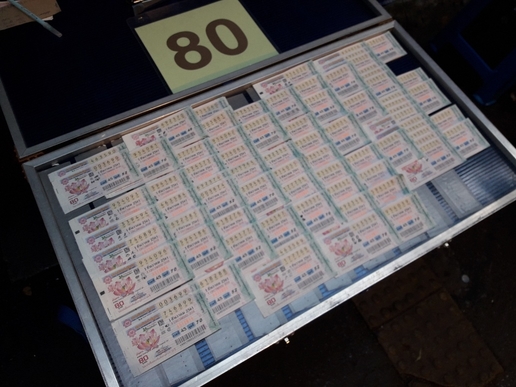
lottery ticket

18th Sunday in Ordinary Time

Prayers unanswered

When I was a lot younger, often when I prayed, I received a stone when I asked for bread and a snake instead of fish. Last week I shared that we may only understand at the age of 50 something that happened to us when we were 25. Now pondering over the ‘snakes’ I was given early in life, I am truly thankful some of my prayers were not answered the way I had wanted them.

We can all look back and find many unanswered prayers. They were like doors that were bolted, despite our heavy banging and desperate pleas. Having those prayers answered then weren’t good for us in the long run. Some we already have the wisdom to understand why, some not yet, the wisdom to be found further along our journey through life.

There is one ultimate goal for this journey which is to go through that open door at the end of it into eternal life. Christ help us to manoeuvre every twist and turn in life, opening and closing doors to usher us there. The Good Shepherd has come to walk this journey with us to lead us into this promise. There isn’t another destination or purpose. For this purpose bolted doors are places not safe for the sheep. Prayers answered or still unanswered are both revelations of his presence in us.

This presence constantly reshape us as we are frequently deformed by worldly distractions and demands. With God there is a time element, with us we desire instant answers. Time is a necessity to gather life changing experiences from which wisdom sprouts. Prayers unanswered is this blessing of time through which we pass from who I was to who I am to who I am becoming.

For it is in prayers unanswered where we sometimes find answers. The more we pray the further the answer seem to get. In that distance prayer acts to transform us. Prayer is this relationship with God. When we pray we allow him the opportunity to act in our life. And when he does, prayerful desires not good for us are taken away. Somehow we will not feel the intense desire to have it. This is the transformative effect of prayer, unanswered as they were, that we become open to the grace to accept that it is better that this particular door remain bolted.

There is another element to unanswered prayers. Not all remain unanswered. Often the answer in our prayers are found in the people around us. We will never receive these answers when we remain bolted behind closed doors in our relationships with others. When we curl up in our privacy, even answers God is sending us through his messengers will not reach us, and we remain wondering. God intervenes actively in our personal life, more than we really know, and always, he uses our friends and often even strangers to deliver to us the answers to our prayers.

We all have a personal salvation history. When we trace back our life story we will find it littered with answered and unanswered prayers, all narrowing us onto a spiritual path that led us to be who we are today. Along this path God has placed many angels in the form of family, friends and strangers appearing in the nick of time (so we think) opening and closing doors to take care of us to ensure we reach the open door of eternal life..

When we are able to look back in this way we find that the snake we got is actually a fish.

“So I say to you: Ask and it will be given to you; search, and you will find; knock, and the door will be open to you”.

prayers unanswered

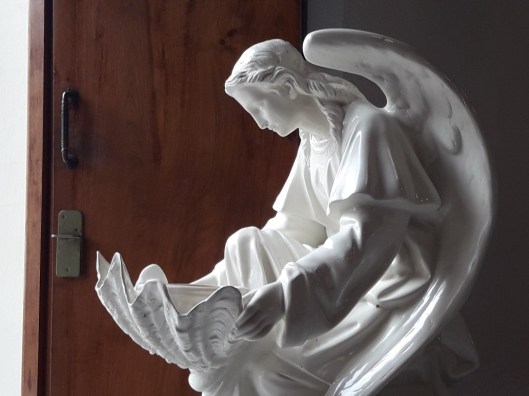
Angels at the doors of our life, opening and closing them for our good.

17th Ordinary Sunday