Precede him in the ordinary

We tend to oversell ourselves in job interviews. We may not be too certain that we can do it but we vocally express full confidence that we can. We quietly tell ourselves that we can always learn on-the-job. However when it comes to doing ministry – to talk about God and Church – most of us grossly undersell ourselves.

Today we celebrate the birth of St John the Baptist. He preceded Jesus. Our true call in life is also to evangelize: to ‘precede Jesus’. But most of us will feel somewhat inept for this call and will perhaps identify our own inadequacy in the undersell quote of St John the Baptist, “I am not fit to undo his sandal”. Well, that’s true.

But what is also true is that to ‘precede Jesus’ in daily life we do not need to be qualified academics. In fact, all of us are needed exactly where we find ourselves in life today; in our job, family and relationships. We are needed in the plain ordinariness of daily life.

To ‘precede him’ can simply be this: to introduce the transforming presence of Jesus into another person’s life. We simply allow Jesus to shine through in what we do or say in ordinary things in everyday life. Most of us are ordinary people but we can do little extraordinary things by simply being kind to others. In so doing a recipient is more prepared to allow Jesus into their life. We “prepare his ways before him” by making straight the path into the person’s heart. When lives around us begin to transform, we are like St John the Baptist “preaching the baptism of repentance”.

Most of us may feel that our most meaningful contribution to Church ministry is to fill up the pews because we are simply ordinary people without a gift. We keep our distance. When we go for any church meeting we go as a non-committed observer. We hold back because we feel unqualified. But Jesus wants us to know we are qualified simply for being who we are. We only need to have this desire to ‘precede him’. With this desire we open ourselves to allow his spirit to come into us.

Too often, we fail to give credit to ourselves. We do not allow Jesus to affirm us for the little, ordinary things we do. Because we always expect to see Jesus in big things and in bigger ways. We must understand that Jesus calls us today because of exactly who we are right here and now. We are like little dots that make up the big picture of salvation. Jesus wants to connect each one of us with the transforming flow of love. Each of us has a unique role in a given situation on a given day. Only we alone can light up the life of the person next to us in that given situation. Jesus need us to do just that.

The task to ‘precede him’ is much ‘on-the-job’ training. We the ordinary are like children in faith. By so doing, we will grow up and our spirit mature. As we go ‘on-the-job’, we will experience the spirit of Jesus in us. “He made my mouth a sharp sword, and hid me in the shadow of his hand. He made me into a sharpened arrow, and concealed me in his quiver”.

We may regard ourselves pew warmers but it is exactly in this ordinary that we are called to precede him. There is no need to oversell or undersell. We are all important pieces in the jigsaw of salvation.

 

21035275463_ac3c2da368_z

Birthplace of St John the Baptist. (Ein Karem, Holy Land)


Birth of St John the Baptist

A tree with shade

The kingdom of God is not a physical destination. In the kingdom, love is dominant. In it, we find peace from the trials and tribulations of the physical world. But we do not ‘get there’ as if it was like the shade under a very big tree. The kingdom of God is indeed like a tree but it is a tree that begins to grow from inside us. We do not have to ‘get to it’. It grows bigger as we grow older, leafier as we toil through life, and with lot more branches as our life intertwined with others.

The kingdom of God is like our own personal tree, unseen in our younger days but majestic in form as our journey in life nears completion. As a baby, instinctively, it is milk over grace. As we grow as a child we needed parental intervention more than divine intervention. Unless we see the need for God in life, we will never see the kingdom of God growing in us. For those who spend a lifetime not believing in God, they would never have seen the majestic tree that shaded them in life.

“This is what the kingdom of God is like. A man throws seed on the land. Night and day, while he sleeps, when he is awake, the seed is sprouting and growing; how, he does not know”.

This tree begins as a tiny seed planted in each of us when we were born. “The seed is the word of God, Christ the sower; whoever finds this seed will remain forever”. The word of God are not chapters in a book. They are not branches of formation that we must pass like squirrels scurrying along to get to the top of a cedar tree. The kingdom of God is his love given generously and unconditionally to guide and protect us through the hard knocks in life. It is a love constantly poured to cool us into peace.

The growth of a majestic tree with a shade begins from a tiny seed.

From our own tree there are seed bearing fruits. Fruits produced in the intimacy of being embraced in the generosity of God’s love. Fruits that came in the form of blessings and interventions in our life. We all have seeds, many unique only to us. We are beckoned to be like Christ to sow our unique seeds. The beauty is that we are only ask to plant them, nothing more. It is a very simple calling. We plant, he nurtures, often using other people and other seeds like branches intertwined in a tree.

“Of its own accord the land produces first the shoot, then the ear, then the full grain in the ear. And when the crop is ready, he loses no time: he starts to reap because the harvest has come”.

Our seeds are unique because no one shares our individuality nor our personal situation in life, our unique place in this world. My parents simply planted the seed of baptism in me. We have many seeds we can sow telling about the story of the presence of this majestic tree that has provided shade for us in life: God’s loving presence.

We sow seeds when we share about an experience of God. We plant seeds when we deny our self and set out to repair a long broken relationship. We scatter our seeds when we are always affirming of other people because by doing so we allow God’s love to pass through. We dig the ground and plant when we have new ideas for a church ministry unsuspecting of how it will turn out because God does not burdened us with that. We are called only to plant our unique seeds; that he cannot do but the rest he can.

We are the kingdom of God because the tree lives in us. Our life is a seed that we can nurture into a majestic tree with shade that provide shelter for the many people who come along our way in life.


umbrella Tree

A tree with shade: The Kingdom of God embraces us in God’s love sheltering us from the hard knocks in life and offering us peace in its shade (Photo: Kursi, Holy Land)


11th Sunday in Ordinary Time

God’s Purpose

Occasionally in life we get bugged by the question about the meaning of our life. Sometimes it remains in our inner self for a longer period of time begging for an answer, depending on the events of life that triggered it. It comes and goes, sometimes gently, sometimes violently, like a wave in our inside ebbing away or crashing against us. It niggles, it provokes and speaks, “What is my purpose in life?”

We seek far and we seek wide. We look high and low. We search externally into the physical world and then finally, internally into our self-preserving self. We try almost everything without finding the answer. There is an answer but it lies beyond the defences of self-preservation. We must realise that we cannot ‘go it alone’ in this world. People’s lives, even strangers to us, are inter-linked with one another more than we are willing to accept.

Not above, but in the maze of these relationship and in the thick of things, God exist with a Purpose that will help us navigate through the alleys of life. We will never find our own purpose in life unless our purpose lies in God’s purpose.

God has one purpose. God is the source of love. God love each one of us generously and unconditionally, without exception, regardless if we are a church-goer or church-leaver, believer or nonbeliever. He desires for us to accept his love more that he desires for us to believe in him as God. Such humble unconditional generosity. God’s purpose is to love us and in order to make his love visible and felt, he calls for each of us to personify his love to the person next to us.

God’s purpose is simply to love. True love is unselfish. It ask that we die to self; that we generously share our time and our talent with every person around us. True love is to love the person next to you, stranger or friend. And God wills that we accept his love to love ourselves and others. This is our purpose in life: to do this will of God to accept his love and allow this love to flow through us to each other. Only in this purpose will we find the fullness of life and satisfy the bugging niggle in our inner self.

We are all rich in this love. It is continuously poured into us. “And it is my desire to lavish my love on you” (1 John 3:1). We will get even richer when we pass this on. But first we must accept his love into us for our life to be transformed. Then through us, love flows to transform others. God’s purpose becomes our purpose; His will becomes our mission.

We need to leap the barriers of self-preservation. Sometimes we harbour a misconception that our mission is to love and take care only of our personal self and the interests of our immediate family. It really goes beyond that unit.

Today’s Gospel passage enlightens us.

He replied, “Who are my mother and my brothers? And looking around at those sitting in a circle about him, he said, “Here are my mother and my brothers. Anyone who does the will of God, that person is my brother and sister and mother”.

I would like to share a commentary from Rev Fr John Foley, SJ:

“Some have taken this speech as Jesus rejecting Mary and his other relatives. Actually it is a statement of Jesus’ mission. He is showing that the most important reason for life is the love of God and one’s neighbours, as opposed to the easy and presumably self-enclosed way of staying home where relatives will take care of you.

Growth in this kind of love must come from God. As Jesus says: ‘Whoever does the will of God is my brother and sister and mother’. He is widening our life-search to include others, not instead of the family but including them in the overall purpose of life itself: letting in the love of God and passing it along to everyone we know.”

Let love flow. Spread it.


IMG-20180610-WA0002

Let Love Flow. Spread it.


10th Sunday in Ordinary Time

It’s in the believing

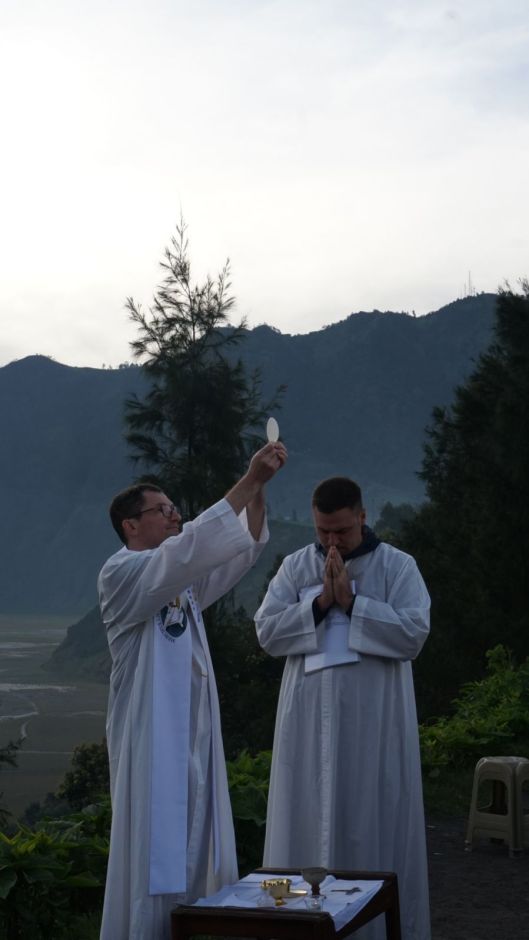
On Sundays we Catholics go for Mass. At mass we receive the Body and Blood of Christ, transformed from bread and wine. Today is the Solemnity of Corpus Christi, celebrating that Christ is truly present in the bread and wine. For many of us, going for mass has been handed on by tradition, and we also go out of obligation. Over time some of us have simply accepted, without depth in understanding. We have the belief without the believing.

We were all not present at Calvary to witness at first hand the bloody death of Jesus. But at every mass we get to be truly present at Calvary because the bread and wine truly becomes his body and blood offered. Hidden in the gruesome scene is the true meaning of the bloody death of Christ: he gave his life, true flesh and true blood so that we can have life. Christ wants us to know that the flow of his blood is given once for the flow of his love to be given eternally.

People can continue to debate our belief but I choose to believe because when he died 2000 years ago for all mankind, I was not yet in existence. Today I am a serial sinner although I try my hardest not to be. When I receive Holy Communion believing that it is truly his body and his blood, I experience him giving his flesh and blood just for me, just so that I can have life. Calvary becomes very personal for me. After all, didn’t he die just for me?

I can fall every day. But the God I know is real, humble and generous. Why else will mass be celebrated every day at every hour around the world? If the bread and wine is only a symbol of his body and blood why do we need an hourly reminder? When I sometimes go for a mass and there are less than 10 people, I am struck by his humility and generosity. He continue to make himself easily available for you and me: to give his body and blood even if there is just one person in the whole of mankind present.

At the end of each mass, we are sent into the world to preach the Good News with the life we live. During mass and at Communion we eat his real flesh and drink his real blood so that he comes into our life in a most unique way, only God can. We draw strength from his presence in us and go to live the Mass in our daily life. In the receiving of the True Presence into our self, we become more like him. In his Presence, we draw strength to preach through our actions.

Believing is living out our belief. It is in the believing that our life will transform. It is in the believing that we will experience the presence of God in our daily life. When that happens tradition is no longer hollow and obligation become opportunity. Otherwise the body and blood will only be bread and wine in us. Our humble God stays ready to illuminate our life with his True Presence when we start believing.


IMG-20180412-WA0054

Mass at Mt Bromo in Indonesia for the Landings community on a social trip


The Solemnity of Corpus Christi

Demystify the Trinity

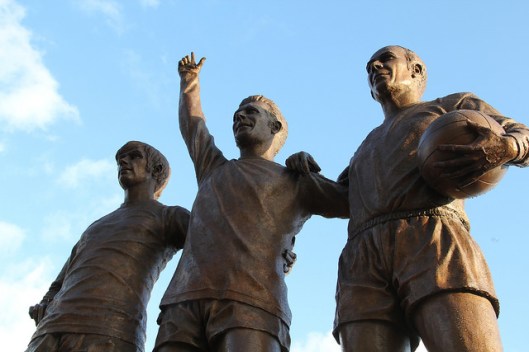
If you love Thai food, it is likely because your taste buds are enticed by the coming together of something sweet, sour and spicy; the Thais have mastered blending these 3 flavours into a perfect trinity. Outside of Old Trafford stands the United Trinity of Best, Charlton and Law proclaiming the legendary forward line. Comparisons using everyday life and sporting trivia borders on the blasphemous when we try to explain the Most Holy Trinity. Yet some of us find these 3-in-1 comparisons helpful.

After all we are merely human creatures, never ever able to fully comprehend the Divine; this almighty, mysterious, infinite, indescribable nature of the 3-in1 God: The Most Holy Trinity. For our limited human minds it is not blasphemous in this sense that we need to begin somewhere.

The Holy Trinity is a mystery. God remains a mystery for some of us. Some are actually comfortable with this image. God is somewhere in the universe. He is distant and authoritative. He is ‘my’ one God and ‘I’ worship no other. Due to my reverence of God, I live a good life, without actually knowing more about Him. In reality God does not want to remain a mystery to us. He desires for us to know him intimately – all 3 of Him.

It is impossible to know God intimately if we do not have a relationship with him. We cannot be in a relationship if we do not experience him in our life. First we need to reach out to outer space and shrink that titanic image we have of God and acknowledge that He is present in our heart and is personal to us. He invites us to have a relationship with him by way of revealing himself to us through the Trinity.

The Landings program which welcomes returning Catholics back to Church is a great program to comprehend the Most Holy Trinity. Its emphasis is on experiencing God in the events of our life and to know God not only from the intellect but also through our heart. A well-experienced Landings program rewards us with a personal relationship with God. It demystify the distant God into the loving Father, the self-giving Son and the empowering Holy Spirit.

When we stray away or leave the Church, God becomes increasingly irrelevant. We push him back into outer space and lose all connectivity. One day when, and not if, we encounter trouble in life that leaves us hopeless with no one to turn to, we will crawl on the underbelly of our faith life desperately searching for divine intervention. We find it.

When a returning Catholic comes home the first image of God he (she) see is the loving Father ‘running’ toward him, readily forgiving him before he even utters an apology. He will soon realize that this Father had been patiently waiting for his return.

It is He, the self-giving Son who makes a relationship with God plausible. He was the one who came into human life to talk and guide us. Through the words of the Gospel, we can almost hear as though he is speaking personally to us. He became human to dispel the mystery of God. He is the ultimate expression of love that connects all of us with God. Through him we can have a relationship.

The returning Catholic reclaims his true identity as a child of God. When that happens the Holy Spirit allow us to sense the presence of God in our daily life. He is the connectivity. The Holy Spirit remains in us always ready to affirm and empower us as we embrace a new life in God. “And know I am with you always till the end of time”.

Life events is always a mixture of sweet, sour and spicy. Sometimes they conspire to leave us in despair. Whenever that happens, our faith must not waver but instead we must descend deep into ourselves, surrender and be vulnerable for God to intervene. It is here amidst the pain and tears where we will meet Jesus. Through our challenges, he will bring us to know his Father’s love. And it is the Holy Spirit who will facilitate this experience.

Three persons united in one God. When we are able to experience each one of three, there is no mystery of the 3-in-1 God. United!


The United Trinity

The United Trinity outside Old Trafford, Manchester


Solemnity of the Most Holy Trinity

Burning inside to tell

When I was growing up I really struggled with this idea of the Holy Spirit. Actually it is not an idea or a concept, the Holy Spirit is a person. That really made my struggle worse. I struggled to define, describe or identify who the Holy Spirit is. Wiser and older Catholics simply said, “Just believe”! So for me then faith was a book of knowledge and blind belief.

A tongue of fire descended on me one day; a ‘eureka!’ moment. I was involved in the parish RCIA program firmly believing that the best way to make new Catholics was simply to teach, pass on facts, retain facts, convert facts into belief and be baptized. My mentor made the class do a simple exercise. “Name the characteristics that will make a good Catholic”. Many, many traits were named mostly characterizing love in action. On the entire whiteboard, prominently missing was the word ‘knowledge’. That moment, a small fire started in me.

I was graced with a spirit of wisdom. I am sure many of you already had this wisdom but I didn’t. I still look back at that moment to say that the conversion of my mind was the work of the Holy Spirit. It was a simple moment of realization, yet complex in its effect. I was suddenly ‘won over’ and a desire started to burn within me about evangelizing in the reality of people’s life; to make God real for others. Accompanying that new found wisdom was excitement and determination. The Holy Spirit hath cometh for me.

It is impossible to define or describe the Holy Spirit in words. He is beyond words. Something inside stirs. It is not intrusive but it won’t let go, yet gentle. It is trying to inspire you to move in a different direction. It patiently waits. There will be sudden moments when total conviction set in. And emotions kick in. The Holy Spirit is always an emotional experience, unreal, surreal and real all at the same time. I felt my calling.

Evangelization cannot happen in a classroom. It takes place in this reality of our personal life. Each of us will only see the relevance of God in this context. Knowledge alone has less traction. The love that is God is found in the chapters of our life stories. He is there in between the lines, sometimes difficult to see in the events that happened to us. Today is Pentecost. A fire will come into us gently nudging us to go evangelize by sharing our lives with one another and to help see God in the difficult chapters.

Every person is different, very different like you and me. But the second reading says the Holy Spirit is, working in all sorts of different ways in different people, it is the same God who is working in all of them”. We are sent into this difference, to speak in their own language. We do not bring words but love in action. We are instruments of the Holy Spirit; we are the realities of this world called to bring the reality of God into their world.

One of the most powerful form of evangelization is to be vulnerable and share honestly and deeply about our challenges and hurts. And how an encounter of love and with love through other people led us into healing and hope. This is a language that will bring out the hidden God in our difficult chapters.

And there is today a small tongue of fire coming within us for this. “We hear them preaching in our own language about the marvels of God”. Fan it.

Fire inside

Pentecost Sunday

‘Into’ – Make visible that hand

We are quite obviously already in this world. We belong in it. A world that is constantly changing, and at a speed I can hardly keep up with. When I see how the world has abandoned some of its values, I wish that it would just leave me behind. I am old-fashioned and conservative. Yet today I hear, “I have sent them into the world”.

One word activated my thoughts: ‘into’. I am already ‘in’ this world but now I am called to go ‘into’ the world. The constant changes and demands have battered and disillusioned me. I had been ‘in’ the world a long time. Often I have wondered why?

Many of us are in the faith. When we remain only ‘in’ the faith, we only oblige the rituals but do not fully embrace the spirit. So we are sent ‘into’ our faith to allow us to be sent ‘into’ the world. For what purpose? To be sent ‘into’ the lives of people we know to make visible God’s love for everyone of us.

God’s love is not old-fashioned or conservative. It is a constant ever since he created the world. Love is sourced from God. It is not something we need to find. It is given freely to all of us. “God will live in us” (today’s second reading).

“We can know that we are living in him and he is living in us because he lets us share his Spirit”.

So we need to get ‘into’ our faith to find the Spirit. We seldom instantly connect because we have our eyes fixed on worldly values. We need to go ‘into’ our true self past the debris of distractions, false promises, elusive happiness, empty joys and disquiet that the world has managed to heap upon us.

We are sent to go into the world. Sharing this same Spirit we are sent ‘into’ the lives of people we encounter in this world. And the one and only way to go ‘into’ another person’s life in through love. There is no other door to get ‘into’.

“No one has ever seen God; but as long as we love one another God will live in us and his love will be complete in us”.

Our lot has already been drawn for us. We have been chosen, set apart and made holy: “consecrated in truth”. Love is already in us. We only draw from it to go into the world.

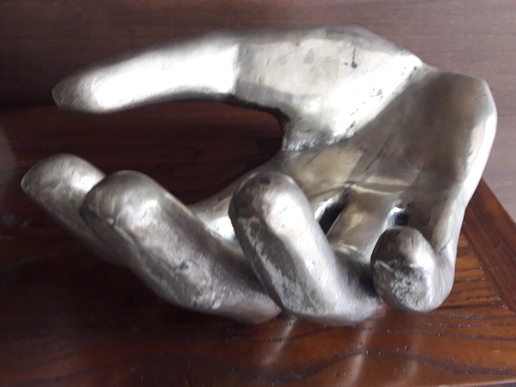
We go ‘into’ to try to make visible the real hand that shape and guide us. This is the hand of God. Make visible that hand through what we do with our life. When we go ‘into’ Love, life becomes fulfilling and we wonder no more about why we are ‘in’ this world.

Hand

7th Sunday in Easter

Suffering Verticality

I would say I grew up on a solid Catholic upbringing. It was in the late 60s and early 70s. I mistook God-fearing for fearing-God. He was somewhere out there in the universe, almighty and authoritative. I was introduced to God at a young age. I remember I was taught about God by memorizing the Ten Commandments.

They all began with “Thou shalt NOT…” It was about being a good kid, and to be a good kid was to avoid doing bad things otherwise God will punish. I grew up very religious, never missing mass. Faith was a personal matter, I never shared about it. Testimonies were for the born-again Christians. He was a distant God and I was comfortable being a slave to a Master. And so perhaps the foundation was laid for me as a Catholic to suffer this verticality in my relationship with God.

There is something wrong in this foundation, solid as it was. I don’t know about you, but the Ten Commandments do not teach me about love. True, it commanded that I must love God but “this is not the love I mean: not our love for God” (today’s second reading). Wisdom in faith dawned very late on me. I grew up full in religiosity but empty in spirituality.

I was religious but I wasn’t spiritual. I had the vertical but not the horizontal. Religion was me looking high up worshipping God. Call me “slave” and I am comfortable. To have a personal relationship with God was an impossibility. Without spirituality I am lost listening to today’s gospel, “I call you friends”.

I must have missed catechism class the day they taught the greatest commandment; a new commandment that add spirituality into our religion. “This is my commandment: love one another as I have loved you. A man can have no greater love than to lay down his life for his friends. You are my friends, if you do what I command you”. “What I command you is to love one another”.

This commandment is everything about life. Without this, religion means nothing. We will remain as kids in faith if we continue to live life in verticality, minding our own business. Love is not about not doing bad; it is about doing good for others. Simply put when we do not do anything, it means we do not have love. We need to make a choice and get involved in the lives of the other persons. Thou shalt love.

Religion is a solid foundation. From this, spirituality flows. Only in spirituality will we know God. He is not a distant, authoritative God but a God who remains in us. From the second reading, “Everyone who loves is begotten by God and knows God. Anyone who fails to love can never have known God”.

When we glance vertically upwards, we must see a tower of love flowing into us. The Son said, “As the Father has loved me, so I have loved you”. Love began flowing. Love is a choice. It is ours to allow it to continue to flow by loving one another. The Son made a choice, “You did not choose me; no, I chose you”. He chose us by stretching his arms on the horizontal beam on the cross to be the sacrifice. He was the first to allow love to flow by being the first to love one another.


Verticality

Suffering Verticality. “This is the love I mean: not our love for God, but God’s love for us when he sent his Son to be the sacrifice that takes our sins away”. (Photo: In Tokyo)


6th Sunday in Easter


Pruning is painfully good

Ever had a disagreement that led to a parting of ways? All of us had. It could have been in friendships, employment and commonly too in church ministries and communities. Did one party wither and die? Commonly, no. Both would have gone on to experience some form of a newness of life. Looking back we understood why we parted.

To ‘understand’ why we parted instead of merely ‘cliché-ing’ it ‘a blessing in disguise’ is to enter into the experience of God’s presence in our life. “We need not be afraid in God’s presence” (Today’s second reading inspires me). We are sometimes asked to leave our comfort zones for the sake of the mission, and in this presence of God, we will never ever be short changed. But we struggle to trust him so we won’t let go.

Few of us would volunteer to be pruned. The disciples had to be persecuted to be scattered. Disagreements causes divide and scatter us. The presence of God does not cause persecution or disagreements; these are caused by our human weakness to guard our comfort zones.

But the love of God understands our weaknesses because “we cannot be condemned by our own conscience” as long as our life is motivated to continue to remain as part of the vine, “whoever remains in me, with me in him bears fruit in plenty”. In other words, we are sometimes forcibly pruned by our own weaknesses but the love of God will ensure that pruning is painfully good!

We can remain in him, with him in me “when we keep his commandment to love one another”. The source of food and growth that will bear fruit for this spiritual vine in this love for one another. We are the branches that must allow this source of life to flow through us. The moment this flow stops we wither, die and fall of the vine. Conversely, when we are rich in this love, we must be pruned to allow for this source of life to get into new areas of mission.

This mission of human life is to spread this love of God. It is like a vine with many branches. It is spread through who we are to one another, a branch creeping generously in all directions to allow for this love to flow through to give new life and new hope in new areas. To go in all directions, we must be pruned.

We come into a comfort zone when we enjoy the fruits of love. Being comfortable can cause us to lose sight of the mission. There will always be a temptation to love ourselves more than to love the mission of life. There will always be a temptation to ‘keep’ this love for ourselves and thus alter the mission. Love cannot be kept, it must flow. A branch cannot grow unless it is pruned.

Pruning is painful but it becomes painfully good when we look back to understand the path our life took to spread the mission. Love is itself painfully good because the fundamental action of love is to give. Giving is pruning.


“Love is not to be just words or mere talk, but something real and active; only by this can we be certain that we are children of the truth and be able to quieten our conscience in his presence”


Grapes

Fruit of the Vine. Work of human hands. (Grapes from a vineyard in Khao Yai, Thailand)


5th Sunday of Easter

Sheep or shepherd

Growing up as a cradle Catholic, I never thought more about just being a sheep following the strict rules and elaborate rituals of the Church. Maybe it was because my first memory were of priests garmented in black, and at mass they had their backs toward us. Also life then was a lot more ‘simple’. Being a sheep was quite alright.

This is the perfect flock. Blind obedience; every sheep following one shepherd. The problem for me was that I did not remain blind. I think most people don’t. As I grew from being a child into a youth and transforming into an adult, my eyes opened, self-awareness matured. With that I began to see every distraction around a sheep that can lead us astray. Following that voice of that shepherd becomes tougher as an adult.

It is quite convenient to blame this modern cyberspace world for every challenge to our faith life. Life was more ‘simple’ for me when I was growing. It was because I saw it through the eyes of a child; I was merely a lamb with no responsibilities. Our parents at that time had to navigate through poverty to provide for food, shelter and education without the amenities and conveniences we enjoy today. Faith life then would have been a challenge too.

We are tempted to remain blind to the challenges of our faith life while we open our eyes and embrace the challenges of the secular world. That grass always seem greener to pasture on. It is common to see many people rejecting the Church; sheep leaving the flock to try to fulfil their responsibilities elsewhere in a different belief system, to follow a “hired man” and not the shepherd. But we know, because we probably experienced it, that we will become the lost sheep.

There is no shame to becoming a lost sheep. It was because of an imperfect flock that the good shepherd came to lay down his life for his sheep. We always wander away from the flock not because we are sinners but because we are humans seeking opportunities to best fulfil our earthly responsibilities. It is natural. And the good shepherd knows this.

Experiences of being lost are invaluable in faith because it matures us. It transforms us from blind lambs into wise sheep. It tells us there is only one pasture, one shepherd. The meaning in life is found in how we fulfil our responsibilities. Responsibilities grow us. And we have responsibilities in our faith life.

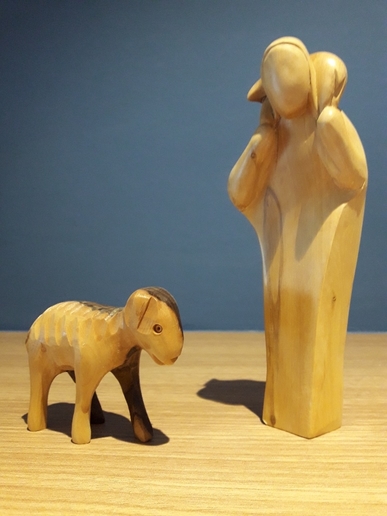
We are called to be the voice of the shepherd. The good shepherd does not want us to remain blind. Our everyday actions are this voice that people around us will ‘hear’. We have to use our actions to lead others back into the flock or at least to remain in it. It is our responsibility to show them not to reject this pasture. Because of this, we are both sheep and shepherd.

“This is the stone rejected by you the builders that has proved to be the keystone”.

sheep or shepherd

4th Sunday of Easter