Two miles, one an extra

An awkward experience in a Bangkok hotel during my early days here has become a valuable lesson on my personal journey to become a better person, to “Be holy, for I, the Lord your God, am holy”.

Upset with the service at the cafe, I launched into a verbal tirade at the server to the discomfort of my Thai guests. Such public display of annoyance is socially ungraceful and it goes totally against how these culturally gentle Thais will treat a fellow person. Refusing to lie down despite the apology from the server, I continued to bark. The manager, and then the chef, came to apologise to soothe this ego that was getting embarrassing, unknowingly then for myself. I refused their apology wanting my points to hit home. “If anyone hits you on the right cheek, offer him the other as well”. I was offered the other cheek and I hit it as well.

Later, unnecessarily, the general manager invited me to lunch. “And if anyone orders you to go one mile, go two miles with him”. This episode has been a valuable lesson. I have learned by being “a wicked man” and was met with the response to “love your enemies”.

Many of us want to be good, we desire to be holy. We know that our earthly life in actually the opportunity to journey towards spiritual perfection to “be perfect just as your heavenly Father is perfect”. But this call to turn the other cheek and to love your enemy seem foolish to the ways of the world we know. To embark on the journey to walk the extra mile is simply too difficult that we give up before we even try.

Our sight is limited by the culture of this world, our eye of wisdom closed. We cannot see beyond a mile, our vision obstructed by the clutter in our life. Yet where do we expect to encounter spiritual wisdom “because the wisdom of this world is foolishness to God”?

We are invited today to walk in the opposite direction. The journey towards perfection begins by walking the extra mile for the other person, not just one we know but everyone who we meet along the way. Often a stranger comes into our life, maybe the first impression isn’t very good, but it is in this neighbour in whom God leads us into wisdom.

It is where confrontation meet gentleness, where conflict meet peace that we will encounter God. It is in the giving of our self to the neighbour that we align ourselves to the nature of God and journey into the spirit of perfection. It is when we turn the other cheek that we come face to face with God. We are invited into this presence of God.

On the other cheek we press against the culture of God and look at wisdom. And along the extra mile, “He must learn to be a fool before he really can be wise”. Two miles we go, one an extra that will make us good and holy.

extra-mile-2

Going the Extra Mile


7th Sunday in Ordinary Time

Mind the Gap

We possess weapons of mass destruction. Social media and instant messaging tools assist us to kill the reputation of a person to a mass audience in an instant. In the past, the tongue used to be the sharpest tool but the cut still had to be inflicted by word of mouth. Today at the click of the ‘send’ button we murder the image of a person.  

The commandment say, “You must not kill”. In the letter of this law, I did not kill but in the spirit of the law I am guilty. We can live quite comfortably on the right side of the letter of the law of all the ten commandments. But today we are invited to reflect on what Jesus said to his disciples: “Do not think that I have come to abolish the law or the prophets. I have come not to abolish but to fulfil”. (Today’s readings) 

To fulfil the law, he came and left us a new and greatest commandment, “Love one another”. We cannot love by merely sitting on the right side of the law. Love calls for action: how much we love and are self-giving fulfils the spirit of the law. Fulfilling the law is life-giving. “Man has life and death before him; whichever a man likes better will be given to him”. We have a free choice to live by the letter or by the spirit. 

We can religiously keep holy the Sabbath day by dutifully fulfilling our Sunday obligation to come for mass. “Mass” means “Go, you are sent forth” to love with the life you live, to go and be life-giving. This is the real law: to go out to love. We cannot love merely by sitting in the pews. The choice is again ours; to keep the law with our head or to fulfil it with our heart. 

Who is a ‘lapsed’ Catholic? The one who is absent from the pews on Sunday or the one who is absent from fulfilling the law to love selflessly with the life we live? 

Faith is always lived. Love is always an experience. Keeping the law and fulfilling the law are two very different points; one a point of departure and the other a destination. Understanding the reasons behind a law will help us fulfil it but still require us to be pro-active. Coming for Sunday mass is a departure point where we are spiritually nourished and strengthen to set out into the week ahead to make a difference to lives around us. Doing so is our destination. 

Jesus saying, “I have come not to abolish the law but to fulfil it” is an invitation for us to set out on a journey to discover “the things no eye has seen and no ear has heard, things beyond the mind of man, all that God has prepared for those who love him”. Going “beyond the mind of man” is walking into the realm of experiences. We must depart from the head and journey towards our heart. 

This must be the wisdom of faith, of keeping the law and fulfilling it: ‘not killing’ does not mean ‘life-giving’. There exists a huge gap. Mind the gap.

mind-the-gap

Mind the Gap


6th Sunday in Ordinary Time

Salty Difference Maker

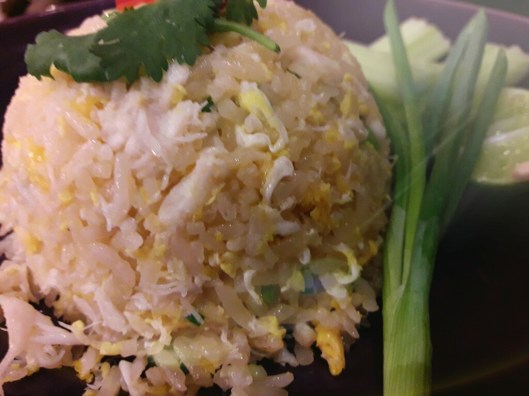
Khao phad poo is aroy maak! Fried rice with crab meat is a popular dish in Thailand. It tastes so good! It is inexpensive, commonly available and very much part of daily, ordinary life. Rice, eggs, and crabmeat are tossed in a wok together with garlic, spring onion, fish sauce and some lime juice. A small amount of salt is added as seasoning, vitally necessary for the overall taste.  

“You are the salt of the earth” 

We are called in life to be this difference maker, to season the lives of people around us. We have heard this call often enough but may not have thought it as a call for you and me. We are just ordinary people, the simple person on the street, trying to juggle resources between self, family and work. We appear in the pew on Sundays and hear calls to evangelise, to become a fisher of men and be “light to the world”.  

We are as ‘ordinary’ as salt. We leave the pews preoccupied with our secular life. These calls do not enter our hearts as after all, “I am just the ordinary person, not knowing enough and unqualified to evangelise”. 

But God is interested precisely in this ‘ordinary’. Ordinary people like you and I are the abundance of the world, like salt abundant in the earth. We are not the highly-valued in society, like salt not the most eye-catching ingredient in the fried rice. In the wok, the crabmeat may look to be the most significant ingredient but in truth, it is in the coming together of all ingredients that a delicious dish can be produced. The ordinary cheap salt share equal importance to the crabmeat, they each play their unique roles. 

In the wok of life, our individual lives are inter-connected in this way. We are unique, all of us different as individuals faced with different situations in life. There is no one else like our individual self in personality and situation. We are uniquely special.

And so, we are uniquely placed in this inter-connectedness with others in our ordinary, daily life. You and I are called to be salt and light to people we are connected with.  

No one else is in a better position to do this. God wants us precisely where we are now, even in our unqualified state, because it is only from precisely this unique position where He can use us to touch the lives of others connected to us. We can be the difference maker.  

A little salt makes a vast difference. The vastness of this difference comes from the inter-connectedness of unique individuals in life, much like the coming together of all ingredients. The whole is greater than the sum of all parts. This math belong to God, it is his work as the master-chef. Our role is that as salt. He will make the result vast. 

When the wok of life becomes heated with challenges, when our juggling start to fail, we will realise that it is only through relying on our inter-connectedness with each other that we will be able to get out of the hot wok. God the master chef will make sure of this. We only have to embrace our role as the salty difference maker. 

The deliciousness of the fried rice with crabmeat belongs to his glory.

khao-phad-poo

Khao Phad Poo


5th Sunday in Ordinary Time

Blessed

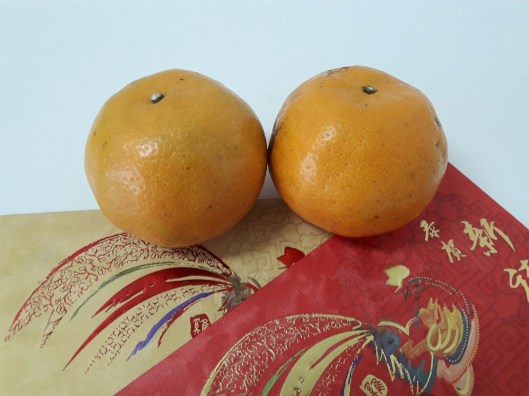
Gong Xi Fa Cai! Wishing you Prosperity in the coming year. Chinese New Year greetings are full of positive energy. Family and friends wishing every great blessing upon us and we fill ourselves with a fond hope that this year will indeed bring happiness. Typically the greetings over Chinese New Year make a lot of references to prosperity, fortune and luck, the believed gateways to happiness.

Celebrations are fun and light-hearted as we gather around the table to test our luck by gambling. We shout “huat-ah!” (“prosper!”), beckoning to the god of fortune to come our way. A hand of 13 wonders in mah-jong is a wished encounter, a god-moment with the god of fortune.

However over time, whether we are learned, self-conscious of a need to be poor or spiritually wise, the Christian in us replaced “happy” with “blessed” and began wishing a “Blessed New Year”, sometimes nullifying the loud, firecracker effect typifying Chinese New Year, but intending to call to heart the true source of all our fortune.

It is not wrong to be blessed with “good fortune”. But we must not allow fortune to carry us away and re-shape our identity. We come together over Chinese New Year purely as family and friends, sincerely wishing a good life to one another. We gather as people, “all you the humble of the earth” and all you “the world thinks as common” with “nothing at all to show” (today’s readings). This is our true identity, for we are “nothing” without the true source of our fortune: God.

Wishing another a “blessed new year” is wishing one’s year to be good through being holy. It is to wish the presence of Christ in their life. Wishing another to be “blessed” is to wish that the person’s life is made holy. It is also wishing upon the person great fortune and riches for “theirs is the kingdom of heaven”.

We begin the year seeking the gateway to happiness and today’s readings tell us to first “seek humility”. Humility is key to dismantling our identity as a self-made person. It allows us to attribute every good fortune we are blessed with in life to the mercy and goodness of God. Humility helps us to live the identity who we are “nothing at all” without the grace of God. If anyone wants to boast, let him boast about the Lord.

Every new year is another year of journey towards the riches of the kingdom of heaven. Every year is a year full of opportunities to make ourselves holy, to huat and prosper in our spiritual life.

We will do well and have a good year when we humbly surrender to be nothing and be totally dependent on God for everything. This is the ultimate process of becoming and being holy by becoming poor to ourselves and rich in God. This is what it means by being “poor in spirit”.

“Blessed are the poor in spirit, for theirs is the kingdom of heaven”. We wish for ourselves a year living in the fullness of Christ, to live a life being a blessing and a happiness for others and for God. To live the Beatitudes and be Blessed and Happy, “Huat-ah!”

orange-small

Gong Xi Fa Cai! Happy and Blessed New Year!


4th Sunday in Ordinary Time

Chinese New Year

Fisher of Men

Our life in its daily routine is much like a fisherman’s net, cast at the start of our day as we set about to earn a living. At day’s end, we haul up our net and harvest the good catch that will provide for family and self. But life is anything but routine. Often when we haul that net up, we find many items that distract us, and worse, things entangled in our net. Life is such: we have no control of what the tides bring in.

It is good practice to sit and reflect at the end of each day, to sort out and discard the debris we had accumulated but often our tired and distracted bodies have no energy left to do so until the tear in our net become too big, and perhaps too late. We have all been in such a situation when troubled by challenging issues, we sit to try to mend our nets, to patch things and make right our life. But often the debris overwhelm us and the tears too many to mend.

For many of us, it is only in a desperate situation, when entangled in our net, that our spirit begin to open to the possibility of divine intervention. We hope for it. In our desperation we cling on to the safety net of our faith that hope springs eternal. When we plunged deep into self, we hear a voice raising the possibility that we must change our life, to cast away the old net for a new one.

In the bartering for divine intervention, we hear this call to “Follow me and I will make you fishers of men”. Who me?

We are called precisely because we are the lowly. We are not bible scholars, nor are we skilled at preaching. We are the ‘normal’ trying hard to live a normal life and in so doing we discover the relevance of faith to real life. We are chosen because we are graduates from the school of hard knocks. In the context of today readings, we swim in a school of fish and thus understand the way the tide flows.

We are called to complement the work of the clergy and to make real their preaching. We are personifications of the Word alive. We are asked to pass on the lessons learned from our nets, to marry our experiences with the knowledge they teach. Only ‘we’ have these unique lessons from the mending of our nets. This is how we attract the other fish: we live an authentic faith life.

There is no other qualification needed to become a “fisher of men”. But to become one needs a radical change from within. We must “at once leave our nets, leave our boat to follow him”. This change is not external. It is not a switch of an office career for life on the high seas, not a call to exchange our car for a sampan. We can remain where we are but internally and radically we exchange vainglory for the glory of God, our ‘self’ for ‘others’.

We are fish and yet we are called to be fisherman. We are fisherman yet we are fish. We have co-identities in the process of becoming holy, and holier. When we as fish are hauled up in someone else’s net, when we find ourselves in the lives of others, let us be a good catch in their net, by being to them the “Good News”. Let our life be authentic in Christ, to be ‘a light shining for those who live in deep shadow and we make their gladness greater and joy increase and not feel the burden of their daily routine’.

It is in this way that humbly as fish, we the ‘normal’ are privileged to be called and graced to become “Fishers of Men”.

fisher-of-men

“Follow me and I will make you Fishers of Men” (Photo: Nam Khan River, Luang Prabang, Laos)


Third Sunday in Ordinary Time

Privileged to be Chosen, Graced to Choose

Baptised with the Holy Spirit (today’s readings), we received graces like a battery fully charged, ready to discharge at the moment of choice. We believe that we are individually called; invited actually by name to be baptised. We are privileged to be chosen and by this power of the Holy Spirit, we are graced to choose.

We are privileged not because we enjoy immediate salvation of an unconditional entry into heaven but rather we are chosen to be an active servant in God’s salvation plan. We are baptised into a mission and privileged to be empowered, “I will make you the light of the nations so that my salvation may reach the ends of the earth”. We are given the graces to make a meaningful difference to people around us, this mission to touch lives.

Through the sacrament of baptism, we are like a rechargeable battery full of graces. This power remains dormant in us until we use our free will to respond to the commissioning call of the Spirit when we say, “Here I am, Lord: I come to do your will”. We respond not with mere words but by the life we are graced to live.

When free will becomes God’s will, we become agents of salvation and through our willingness, God’s graces flow. Through our baptism, we have become earthen vessels of grace. The Spirit leads us into the lives of others and through acts in daily life, we make an impact on them.

We are graced to choose the lifestyle of our shepherd, he himself the “Lamb of God”. And it is through us that others can be touched by the love he came to share. We are missioned to be “John the Baptist” in the life we live, with it pointing out, “Behold, there is the Lamb of God.”

Being lamb, is being sacrificial. To be sacrificial is to go against the grain of worldly life. But to be lamb in spiritual life is redemptive. Like the wheat grain that has to die to give life, baptism harbours this grace in us to die to self so as to light up the lives of others. With this rhythm of dying and rising, salvation will come for all of us.

Usually the opportunities to touch lives come in simple and unassuming little acts. Just this week, our community experienced the sudden death of one of our members. She was physically impaired and we first encountered her only 8 months ago. Her presence was a blessing to our community, her smile an affirmation for the little things we did. In us she found welcome and acceptance. Little did we know that God was preparing her dying and her rising. In these last 8 months of her worldly journey we were human angels forming her guard of honour, lighting the path into her final rest and peace at last. We were graced to mission.

Such is our privilege. Indeed we are privileged to be chosen and graced to choose to say “Here I am, Lord: I come to do your will”. In the moments we choose to do what is good, God’s graces will accompany all our choices.

font-holy-spirit

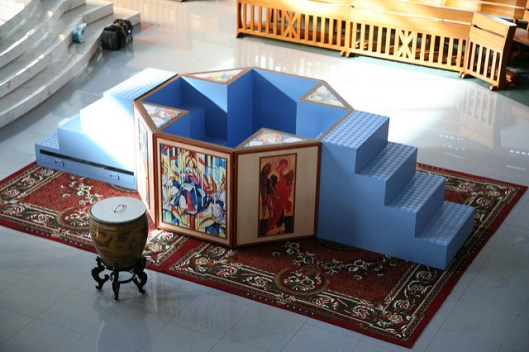
Baptismal font at Church of the Holy Spirit, Singapore (Photo credit: Henry Seah)


Second Sunday of Ordinary Time

Searching for the Star to Follow

Some wise men came from the east following the star they had seen to do him homage. 

We go through life wondering where it is leading us. We look at the signs in our life hoping for direction. We search for happiness in our personal lives. We search for love in family. And we search for success in our work. Searching always, but perhaps never finding. In our weariness as we journey through life, we ponder the meaning of it all. 

Even at the height of our success, we remain unsatisfied. Something seem to be missing. What is it? More happiness, more love, more wealth? We search the universe for it but the signs in our life are often confusing. We look into the darkness of life and see a million stars illuminating the way, but which star do we follow? 

The star we need to follow is hidden from our view. Hidden because we are looking at the wrong places. Wise men look inward to follow this star.  

There is a track in our life marked out by events, both happy and sad, that occurred in our personal life. This star shines brightly on this path and we must know to follow it. This is the path our life has taken to lead us to where we are, and become who we are, today. We must look inward into our self to find it.  

If we have already found this path, there is a surefootedness on our next step as we continue to be guided by this star. If we have not, we will not find it by wandering aimlessly and desperately forward. We will find it by hitting the pause button of our increasingly fast paced, distracting lifestyle to go into the silence of our inner self to ponder on how we have made it to today. To do this, we need to travel backwards rather than forward.  

We need to relook at the events of our life, both major and minor, joyful and sorrowful. It could have been an acrimonious break up of a relationship, a devastating job loss, or just a chanced meeting with a long lost friend that brought us to this point in our life. Events are like dots on a puzzle, a pencil can link them to form the picture of our life. Much like the many stars in the sky, with knowing eyes we see the constellation. 

Every event in life lead us somewhere for a purpose. When we travel backwards along our timeline of events, we experience the meaning of the phrase, ‘blessing in disguise’. When we become wise that ‘unfortunate’ have become ‘fortunate’, adversity transformed into comfort, we search for the lucky star to thank.  

Often when pondering with gratitude we recognise that along our path in life, divine intervention took place when our life path changed from our desired course. We can dwell, or re-dwell, on an event long ago, buried deep in our inner self perhaps because of the hurt it caused, and see it now in the starlight. We see what was previously unseen: the hand of God guiding us in our most difficult moments. 

This is our Epiphany, to see and experience God in our personal life. With billions of people in the world, how can this Almighty, all powerful God of the entire universe be so personal to me? 

Once we experience this epiphany, we wise up to know that there are no coincidences in life, every event of our life eventually joining to form the beautiful constellation we can become at the end of our earthly journey.  

This star sheds a completely different light on life: it gives our journey in life its meaning. We discover the love of God through the infant child and through the gifts we bear of personal life, family and work, life meaning is found when we spread this love to the world of people we encounter in daily life.


matilda-nativity

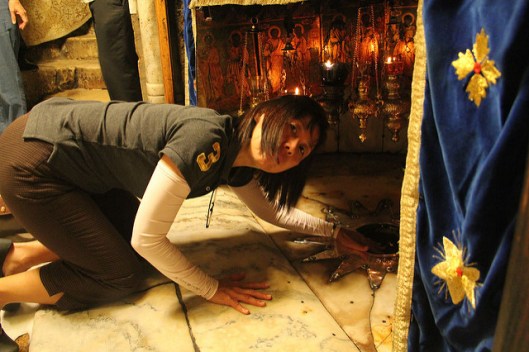
Falling on our knees to venerate the spot, marked by a star, where Jesus was born (Church of the Nativity, Bethlehem)


The Epiphany of Our Lord

Ponder and Wonder for the New Year – Following ‘Impulse’

When I was a lot younger, New Year’s Day was celebrated with optimism and genuine hope deep in our hearts for the year ahead. I sense that it is not so much so these days. We all face seemingly bigger challenges in life each year and the happiness we seek for self is akin to a dog chasing its tail. A child entering school for the first time is cautiously celebrated because not far beyond looms the anxiety for results.  

Anxiety and fear have now become shadows to hope, happiness conditional to end results. 

We seem to have lost the innocence of life – the trust to allow life to grow us each year and to simply appreciate who we are and what we have. It is because such optimism comes from deep within us. Now, we live in ‘google-time’ when we can be too well-informed, educated to analyse and process, where our every thought and possibility must fall within the realm of logic. We have lost the awe and wonder even when life does  sometimes surprise us. 

Today we celebrate this innocence of Mary, a trust in the wonders of God that led her to become Mary, mother of Jesus, Mother of God. There was a lot happening in her life, as there are happening in ours today, but she chose to “treasure all these things and pondered them in her heart” (today’s readings). For her, these things did not fall within the realm of logic and as a believer, it must then come from God.

Today by tradition is a day we reflect on and give thanks for 2016 and make resolutions as we prepare to live 2017. Our conscious mind processes all that has happened in our life thus far and reason out a detailed plan to accomplish more in the year ahead. Reason and logic dominate our thought process sometimes blinding us to the silent working and movement of the hand of God in our life.  

Pondering these things in our hearts allow us to be aware of the presence of the hand of God in our lives. When we ponder, we go beyond the frontal lobe of our brain, beyond the realm of logic to open the door to trust and genuine hope that the Spirit of God will lead us into the new year knowing what is good for us, keeping us on the path of true happiness and joy in life.

Pondering moves us from the conscious mind deep into our subconscious heart where logic no longer dictates but where the Spirit of God speak to us and urge us to act. Often these urges to act is described as ‘impulses’, and they come with a firm conviction, a sureness that it is right. It is in pondering in our hearts where we find the deep-seated optimism for life and reawaken the awe and wonder we can have for the hand of God active in our personal life.  

It happened to me just this week on a visit to California when ‘impulse’ woke me up and urged that I go for mass on a cold winter morning at the church nearby. When I heard the pastor, I had no doubts that the Spirit wanted me there. The pastor gave me the wisdom of what I wrote today, itself a sign of God’s hand as I was pondering what to write this week.

At the end of mass, I knelt in silence in the church. My mind began going through a rather short list of items of thanksgiving for 2016 but proceeded into a rather long list of desires and petitions of 2017. ‘Impulse’ stopped me. ‘Something’ told me just to ponder in my heart. Soon enough thoughts drained away, and in its place was a voice and a conviction that “I Am” present in your life. This presence overwhelmed me and tears washed away anxieties and fears, and hope glistened again. I am ready for 2017.

The pastor shared that we need to place ourselves in environments to lead the head to the heart. He gave the example of a visit to a doctor where we know that ‘something’ will happen to us in relation to our health issues and we become expectant of it. In this new year, we will do well to place ourselves in the hand of God and expect that ‘something’ will happen as it did me when I visited that church this week.

Let us resolve to give space to the presence of God in our life in this new year so that we can ponder and wonder at the movement of the hand of God in us. “May the Lord let his face shine on you and be gracious to you.”

(Thanks to Fr. Jack Gibson, pastor of St. Ambrose Catholic Church in Albany, California for sharing your wisdom with me. Thank you too for this experience of God through your hospitality and welcoming spirit. My thanks to Alan, Jenny, Bob, Lativia (?) and the lady whose name I missed) 


Solemnity of Mary, Mother of God

The Christmas Wrapper

Have you ever wondered about the reason that started this tradition of exchanging gifts at Christmas? If we believe, we will attribute it to the wise men who came to pay homage bearing gifts to the infant born on that first Christmas night. Alternatively we can attribute it to a tradition from Roman times.

But whichever our reasons, we all share one thing in common in that we bear gifts to loved ones and those special to us. Our gifts express our affection and love. Beneath the wrapper, we hope that it brings happiness and joy.

We sometimes get into a frenzy of deciding what gifts to buy, the list of gifts having expanded from the three of gold, frankincense and myrrh. Worse, we have accumulated a list of people we feel obliged to give, for perhaps other reasons, rather than because of true love and affection. These days we search for electronic gadgets that will hopefully contain our gigabytes of love and communicate our affection.

We have increasingly become the Christmas wrapper, colourful and beautiful. But paper thin. We care more about what people would think of us; keen to elevate ourselves amongst them. We have become eager for glory, and hungry to hear praises for self. The ways of this world have shifted us, gradually but seismically. ‘Looking good’ and ‘being good’ is a crater of difference, our image smartly camouflaging who we really are; the beautiful wrapper deceiving the intention of the gift.

Perhaps the one gift we can reflectively unwrap this Christmas is the gift of life, this great gift of our self and who we truly are. Beneath our image of the Christmas wrapper is a person who “would have no ambition but to do good” (midnight mass readings). This Christmas “a great light has shone”. A light that shines into the dark shadows of our inner self affirming that whoever we are, we are truly loved by Him. And that ‘being good, and doing good’ is the better way to true happiness, joy and peace.

Today is Christmas, with the message that we ourselves are the greatest gift, the best possible Christmas present to others.

It is through who we are and what we do that gigabytes of true love and affection flows. It can be as small as a smile, or as gentle as a helping hand that we bring the pure intention of Christmas to others; of the infant being born to bring peace unto us and goodwill to all mankind. We are encouraged not to wrap ourselves in selfish isolation but to unwrap ourselves and be a kind presence in the lives of others around us. When we tear away the paper thin wrapper, we find a beautiful life that will twinkle like the Christmas lights every time we do good with it.

It is only through what we do with love that we will hear echoes of praise and glory in our lives. In every good deed and thought, the angel and the heavenly host will sing “Gloria in Excelsis Deo”. Beneath the swaddling clothes lies an infant born to be the source of this Love, peace and goodwill.

We are the shepherds on that first Christmas night given the gift of the message that life can change for us if we strip off the Christmas wrapper and BE the gift. For WE are the best Christmas gifts to one another. We are messengers of goodwill bearing gifts of love, peace, happiness and joy.

shepherd-field-2

Mosaic in Shepherds’ Field, Bethlehem remembering the first Christmas night when the angel appeared to shepherds and the heavenly host sang “Gloria in Excelsis Deo”


Christmas, Midnight Mass

The Christmas Sign: A Present of a Presence

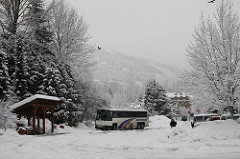
I was privileged to travel in British Columbia. Outside the window of the Greyhound, snow-capped mountains imposed their majesty upon me. The bus rolled across endless miles of country, the windows framing the incredible panoramic beauty of each passing mile. As I rode in admiration, contemplation led me into my deeper self, triggering an awe for Creation. In wonderment, I began singing to my silent self, “How Great Thou Art”.

“Oh Lord, my God, When I am in awesome wonder, consider all the worlds thy hands have made”

No mountain so high, no sea so deep, no land so vast can hold or contain the mystery of the Creator. Not even the entire universe. He is almighty, all powerful and nothing in this world is able or worthy to go near his divine presence.

Yet on Christmas Day, this almighty Creator gives himself as a gift to all of us. His larger-than-the-universe Presence is shrunk to be present in our untidy, unworthy, uncharted personal timelines. He is born as Emmanuel, meaning God-is-with-us (today’s readings) to dwell in us as we travel along our timeline in life.

Do we deserve this presence of God in our personal life, in the heart of all that is happening to us? A question the Almighty never considered. Because He knows and cares. He came to be a compass to lead us through our life; to offer guidance, comfort, assurance, compassion, affirmation, hope, peace, joy, love and belief. Offered even if we didn’t know or care.

This present of His Presence is available to everyone, every day. We only need to be aware and respond as in the psalm “Seek the face of God. Let the Lord enter”. Often the face of God appears in small, insignificant details in the routine of daily life, easily missed if we are not looking for him. This great, almighty God has crystallised his presence into each passing moment of our time; not day, hour or minute but into each moment.

We are graced to capture these God-moments. Our awareness sharpened when we adopt the humility of Mary and Joseph, the possibility of such moments enhanced when we acknowledge with humble gratitude that all things come from the mystery of God.

When we are blessed with a God-moment, it is beyond an intellectual understanding. All the time, it is an experience typified by an emotional stirring deep within us. In between the layers of emotions, something connects. It is in that moment of connection when we suddenly lose all doubts and become crystal clear. Deeper and further away from any logic we somehow are graced with conviction that it is Him present in us.

God-moments are simple moments leading to an encounter with God. And if we “ask the Lord your God for a sign”, it may come as simple as a smile from a stranger. We only need to be aware, and to accept that this Almighty God cares for every little moment of our life. Don’t stop believing.

This Christmas, this gift is wrapped under our tree of life. As we travel through time, we need to look up from the windows of our laptops and tablets, and look out through the windows of the world to see a God dwelling amongst us. It takes only a moment to capture this Magnificence.

greyhound

We need to ride on vehicles of belief. God-moments are such: they lead us into the Presence of God. (Photo: A greyhound in Whistler, British Columbia)

Today in the spirit of Christmas, I share this link wonderfully expressing what God moments are through the eyes of one, rich and richer, with such experiences. Thanks, Joyce.

Why We Ought to Look for God Moments of the Day, Everyday.

4th Sunday of Advent